
 |
 |
 |
 |
 |
 |
 |
 |
 |
 |

| . |  |
. |
Iran sends first home-built satellite into orbit
Tehran (AFP) Feb 3, 2009 Iran said on Tuesday it has launched its first domestically manufactured satellite into orbit, raising fresh concerns among world powers already at odds with Tehran over its nuclear drive. The new US administration of President Barack Obama, which has offered to open a dialogue with Iran if it "unclenched its fist", said that "all elements of our national power" remain on the table in dealing with any threat. "Dear Iranians, your children have put the first indigenous satellite into orbit," a jubilant President Mahmoud Ahmadinejad said on state television after a launch coinciding with the 30th anniversary of the Islamic revolution. "With this launch the Islamic Republic of Iran has officially achieved a presence in space," he said. The Omid (Hope) satellite was sent into space on Monday evening carried by the home-built Safir-2 space rocket, Iranian news agencies reported. White House spokesman Robert Gibbs expressed disappointment with the Iranian move following the overtures made by the new US president. "This action does not convince us that Iran is acting responsibly to advance stability or security in the region," Gibbs told reporters. "All of this continues to underscore that our administration will use all elements of our national power to deal with Iran and to help it be a responsible member of the international community," he said. In London, British Foreign Office minister Bill Rammell voiced "serious concerns" over the launch. "This test underlines and illustrates our serious concerns about Iran's intentions," Rammell said in a statement, adding that Britain was still carrying out technical analyses. The launch comes at at time when Iran is ignoring repeated UN Security Council demands to freeze sensitive nuclear work. The West suspects Iran of secretly trying to build an atomic bomb and fears the technology used to launch a space rocket could be diverted into development of long-range ballistic missiles capable of carrying nuclear warheads. Iran vehemently denies the charges, saying its nuclear programme is for peaceful energy purposes only and that it has the right to the technology already in the hands of many other nations including archfoe the United States. Ahmadinejad said the satellite carried a message of "peace and brotherhood" to the world and dismissed suggestions that Iran's space programme had military goals. "We have a divine view of technology unlike the dominating powers of the world who have Satanic views," he said. Ahmadinejad has made scientific development one of the main themes of his presidency, asserting that Iran has reached a peak of progress despite international sanctions and no longer needs help from foreign states. The state news agency IRNA said the satellite would take orbital measurements and would circle the Earth 15 times every 24 hours. Iranian aerospace expert Asghar Ebrahimi said Omid has an elliptical orbit of a minimum of 250 kilometres (156 miles) and a maximum of 400 kilometres. The launch comes on the eve of a meeting in Germany on Wednesday of senior diplomats from six world powers who are due to discuss the Iranian nuclear standoff, with Tehran still defying calls for a freeze on uranium enrichment. Obama said last month shortly after taking office that he was willing to extend the hand of diplomacy to Iran, after 30 years of severed diplomatic relations. Iran sent its first Safir rocket into space in August. It is about 22 metres (72 feet) long, with a diameter of 1.25 metres (a little over four feet) and weighs more than 26 tonnes . Iran's most powerful military missile, the Shahab-3, has a diameter of 1.30 metres and measures 17 metres in length. It has a range of 2,000 kilometres (1,250 miles) -- putting archfoe Israel and US forces in the region within reach. Last year Iran triggered concern in the West when it said it had sent a probe into space on the back of a rocket to prepare for a satellite launch, and announced the opening of a space station in a remote western desert. Iran has pursued a space programme for several years, and in October 2005 a Russian-made Iranian satellite named Sina-1 was put into orbit by a Russian rocket. Reza Taghipour, head of the Iranian space agency, said Iran would launch another satellite carrier by the end of the Iranian year on March 20, Fars said. Share This Article With Planet Earth
Related Links Microsat News and Nanosat News at SpaceMart.com
 Iran puts first satellite in Orbit: agencies
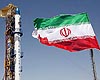 Tehran (AFP) Feb 3, 2009
Iran has placed its first homemade satellite in orbit using a Safir-2 rocket, two local news agencies reported Tuesday without quoting sources. |
|
|

| The content herein, unless otherwise known to be public domain, are Copyright 1995-2007 - SpaceDaily.AFP and UPI Wire Stories are copyright Agence France-Presse and United Press International. ESA Portal Reports are copyright European Space Agency. All NASA sourced material is public domain. Additional copyrights may apply in whole or part to other bona fide parties. Advertising does not imply endorsement,agreement or approval of any opinions, statements or information provided by SpaceDaily on any Web page published or hosted by SpaceDaily. Privacy Statement |
 del.icio.us
 Digg
Digg Reddit
 YahooMyWeb
 Google
 Facebook