
Subscribe free to our newsletters via your
. Military Space News .


NUKEWARS
Isolated Israel, angry with US, denounces Iran deal
by Staff Writers
Jerusalem (AFP) Nov 24, 2013


Waiting to exhale at Iran nuclear talks in Geneva
Geneva (AFP) Nov 24, 2013 - It was a scene we've seen before: the world's top diplomats huddled for crunch Iran nuclear talks as the world held its breath, but this time there was a sigh of relief.

At 2:00 am (0100 GMT) at the posh Intercontinental hotel in Geneva, lavishly dressed party guests at a karaoke bar stepped daintily past bedraggled and sleep-deprived journalists on their way through the lobby, when suddenly word began spreading: There is a deal.

It took five days of marathon talks, with very little official information trickling out, leaving reporters to fend for themselves in a sea of contradictory rumours about what progress, if any, was being made towards a first-step agreement to end a decade-long dispute between world powers and Iran over its nuclear programme.

Just two weeks ago, it was a similar scene: reporters occupied the lobby at the five-star hotel, sipping $10 cups of coffee as they awaited news on progress in the talks.

That time too expectations soared when US Secretary of State John Kerry and his British, French, German and Russian counterparts unexpectedly weighed in on the intense diplomatic talks over Iran's nuclear ambitions, only to crash when the illustrious parties had to go home empty handed.

This time around the talks were if possible an even more of a rollercoaster ride, starting off on Wednesday under the shadow of negative or cautious comments from all sides.

Iran's supreme leader Ayatollah Ali Khamenei insisted his country would not retreat "from its rights," prompting French President Francois Holland to sternly lecture Tehran to "provide answers and not provocations".

Kerry also stressed Wednesday that the United States would not back an agreement that simply let Iran "buy time".

But there is public posturing and then there is what goes on behind closed doors, according to one European negotiator, who insisted Wednesday such "shows of virility" would not interfere with the discussions.

And indeed, by Friday, hopes began rising as it became clear that the countries' top diplomats would again join the talks, this time also including China's Win Yang, leading many observers to conclude that they would only make the trip if it meant signing a deal.

There was meanwhile some confusion over Russian Foreign Minister Sergei Lavrov's motives for setting off the influx of top diplomats when he decided to make the trip uninvited.

EU foreign policy chief Catherine Ashton, who hosted the talks, "is always happy to see Minister Lavrov," was all her spokesman would tell AFP when asked about her reaction to his sudden arrival.

Had Lavrov come for the Iran talks alone, or perhaps for a meeting at the United Nations in Geneva on Monday to prepare for a peace conference on war-torn Syria?

"He came for Iran," his spokeswoman said, adding though that he would meet with UN-Arab League peace envoy for Syria Lakhdar Brahimi at the weekend.

Whatever his reasons, Lavrov arrived stressing that the talks presented a "real opportunity", drawing ever more optimistic analyses.

But as the other foreign ministers began arriving early Saturday, each stressing the difficulties that remained, the narrative shifted again with predictions the sides were too far apart to reach an agreement.

Amid a virtual information black-out at the Intercontinental, reporters took breaks from fighting for power outlets and being shooed off the floor by offended hotel staff to wager over which way the talks would go.

Up until the last minute, an equal number of rumours floated around that the sides had reached an agreement and that the deal was dead.

Finally at dawn, the ministers for the six world powers joined their Iranian counterpart Mohammad Javad Zarif at the UN building to sign the landmark deal.

Isolated and angry with its ally the United States, Israel Sunday bitterly denounced a "bad" nuclear deal between world powers and Tehran while repeating its threat of military action against Iran.

The hostile reaction came as the Jewish state saw months of diplomatic efforts to persuade world powers not to provide sanctions relief to Tehran being swept aside.

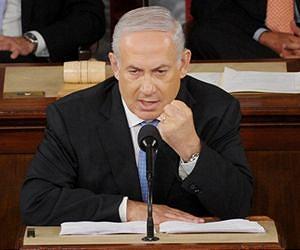
Hours after Iran agreed with the P5+1 group -- the United States, China, Russia, France, Britain and Germany -- to row back some of its nuclear activities in exchange for limited sanctions relief, Prime Minister Benjamin Netanyahu charged that "what was achieved in Geneva is not a historic agreement but rather a historic mistake".

Netanyahu's office had earlier called it a "bad agreement" that "gives Iran exactly what it wanted -- a significant easing of sanctions and allows it to keep hold of the most essential parts of its nuclear programme."

Since the election of Iran's new President Hassan Rouhani, whose diplomatic overtures to the West allowed a resumption of dialogue with long-time enemy the United States, Netanyahu repeatedly warned that Tehran's intentions had not changed.

Israel and the West suspect the nuclear programme is aimed at developing a weapons capability but Tehran insists it is entirely peaceful.

The Israeli premier had called Rouhani a "wolf in sheep's clothing" and repeatedly warned world powers against striking a "bad and dangerous" deal with the Islamic republic, saying it could result in war.

Netanyahu reiterated Israel reserved the right to defend itself through military action, telling the UN Security Council in October that his country was ready to order a strike to prevent Iran gaining nuclear weapons capability.

And on Sunday, Israel's hawkish Foreign Minister Avigdor Lieberman stressed that "all options are on the table".

"The responsibility for the security of the Jewish people and the population of Israel remains the sole responsibility of the Israeli government," he told public radio.

Experts, however, were sceptical that Israel would imminently take such action.

"It's not a great deal, but it's not a disaster either," said Dr Emily Landau of Tel Aviv University's Institute for National Security Studies.

"In terms of (US President Barack) Obama's project of putting time on the clock and not allowing the Iranians to move forward with their nuclear programme during the months of negotiations, the deal is more or less something that can be lived with (for the Israelis)," Landau told AFP.

"As long as the international community is moving into this six-month period where there's supposed to be a negotiated comprehensive deal, it's hard to believe Israel would take action."

Israel's President Shimon Peres was more cautious in his response, pointing to the fact the agreement was "an interim deal" which allowed time for a diplomatic solution.

In a statement, however, he did not rule out a military response.

"Reject terrorism," Peres pleaded with the Iranian people. "Stop the nuclear programme. Stop the development of long-range missiles. Israel like others in the international community prefers a diplomatic solution.

"But ... if the diplomatic path fails, the nuclear option will be prevented by other means," Peres warned.

US Secretary of State John Kerry sought to assuage Israel, insisting the deal was a "first step."

"This first step, I want to emphasise, actually rolls back the programme from where it is today, enlarges the breakout time, which would not have occurred unless this agreement existed.

"It will make our partners in the region safer. It will make our ally Israel safer," Kerry told reporters.

The Geneva deal came just days after Netanyahu, in an apparent snub to the US and a last-ditch effort, travelled to Moscow to try to convince Russian President Vladimir Putin not to enter a deal with Iran.

That trip lived up to predictions by analysts that it would achieve little.

.


Related Links
Learn about nuclear weapons doctrine and defense at SpaceWar.com
Learn about missile defense at SpaceWar.com
All about missiles at SpaceWar.com
Learn about the Superpowers of the 21st Century at SpaceWar.com


Comment on this article via your Facebook, Yahoo, AOL, Hotmail login.

Share this article via these popular social media networks
del.icio.usdel.icio.us DiggDigg RedditReddit GoogleGoogle


NUKEWARS
Iran judge condemns American to death for spying
Tehran (AFP) Jan 9, 2012
An Iranian judge sentenced a US-Iranian man to death for spying for the CIA, media reported Monday, exacerbating high tensions in the face of Western sanctions on the Islamic republic's nuclear programme. Amir Mirzai Hekmati, a 28-year-old former Marine born in the United States to an Iranian family, was "sentenced to death for cooperating with a hostile nation, membership of the CIA and try ... read more


NUKEWARS
US has time to boost bid for Turkey missile system: FM

US to keep Patriot missiles in Turkey for another year

Unprecedented Dual Intercept Success for MEADS at White Sands Missile Range

Patriot delivers another flawless performance in Japan test firings

NUKEWARS
Javelin Joint Venture awarded contract for Javelin Weapon System

Russia and Egypt on verge of missile deal: Moscow

Lockheed Martin Conducts Second Successful LRASM Flight Test

Turkey hopes to finalise China missile purchase in six months

NUKEWARS
A new, flying jellyfish-like machine

Thousands rally against US drone strikes in Pakistan

US drone strike kills senior Haqqani leader in Pakistan

Protest against US drone strikes in Pakistan postponed

NUKEWARS
Intelsat General To Provide Satellite Services To US Marines

Manpack Radios in Arctic Connect with MUOS Satellites Orbiting Equator

Self-correcting crystal may unleash the next generation of advanced communications

Northrop Grumman Receives Contract to Sustain Joint STARS Fleet

NUKEWARS
Airbus and Cassidian play key role in Perseus maritime surveillance program

US firm claims first 3D-printed metal gun

Chemical arms treaty meets love-gone-wrong in US high court

Northrop Grumman Demonstrates Micro-Gyro Prototype for DARPA Program

NUKEWARS
EADS chief warns jobs cuts coming in defence unit

India's defense minister wants DRDO investigated

AgustaWestland fights to keep graft-hit Indian chopper deal

Russia 'offers Egypt MiG-29s in $2B arms deal'

NUKEWARS
US backs Japan as China tensions soar on air zone

Turkey mending ties with Shiite powers as regional clout wanes

China creates air defence zone over Japan-controlled islands

US criticizes new China zone, vows to defend Japan

NUKEWARS
Graphene nanoribbons for 'reading' DNA

New hologram technology created with tiny nanoantennas

Nano magnets arise at 2-D boundaries

Structure of bacterial nanowire protein hints at secrets of conduction


The content herein, unless otherwise known to be public domain, are Copyright 1995-2014 - Space Media Network. AFP, UPI and IANS news wire stories are copyright Agence France-Presse, United Press International and Indo-Asia News Service. ESA Portal Reports are copyright European Space Agency. All NASA sourced material is public domain. Additional copyrights may apply in whole or part to other bona fide parties. Advertising does not imply endorsement,agreement or approval of any opinions, statements or information provided by Space Media Network on any Web page published or hosted by Space Media Network. Privacy Statement