
. Military Space News .


.
WAR REPORT
Israeli army trains hard to fight old foe
by Staff Writers
Tel Aviv, Israel (UPI) Nov 14, 2011

Army chief warns of 'aggressive action' in Gaza
Jerusalem (AFP) Nov 15, 2011 - Repeated rocket fire from Gaza will push Israel into taking "aggressive" action in the Gaza Strip," the Israeli chief of staff warned MPs on Tuesday.

"One round after another; we shall in the end need to move to broader, more aggressive action in the Gaza Strip," Benny Gantz was quoted by a parliamentary official as telling the committee on foreign affairs and defence.

Hours after he spoke, Palestinian militants in the Gaza Strip fired two rockets into southern Israel, damaging a farm outbuilding but causing no casualties, Israeli police said.

Low-level unrest has rumbled on in and around Gaza over the last two weeks but it has not deteriorated into all-out fighting as it did on October 29-30 when tit-for-tat violence left 12 Palestinian militants and an Israeli civilian dead.

Militant groups say they are observing an Egyptian-brokered truce agreement, but during the last two weeks rockets have still landed in southern Israel and the army has responded with air strikes, which have killed five Palestinians and injured at least 11.

"Every few months, we have to go back for another round of fighting" to stamp out rocket fire, Gantz later told reporters at a briefing.

"It would be in Israel's best interest to shorten the duration of future rounds of fighting through intelligence, through force and through ongoing activity," he said.

Israel has always laid responsibility for the rocket fire at the door of Gaza's Hamas rulers, although officials acknowledge it is not Hamas militants who are behind the fire.

And both the political and defence establishment have said they do not believe Hamas is interested in escalating the situation with Israel at this stage.

"Our deterrence with respect to Hamas is very high," Gantz said, noting the Islamist movement was "very concerned by the continued growth in the power of Islamic Jihad in the recent round of fighting."

He also confirmed long-running media reports about the infiltration of Libyan weapons into the Gaza Strip.

"In our estimation, as part of the collapse of the regime in Libya, weapons were transferred into the Gaza Strip," he said without elaborating.

Unnamed Israeli officials have frequently warned that weapons smuggled out of Libya, where a revolt against the late leader Moamer Kadhafi left an abundance of arsenal, were finding their way into Gaza.

Gunrunners are believed to smuggle the weapons into the coastal strip through a network of tunnels which are also used to take food and other contraband into the blockaded Palestinian enclave.


Israel is swirling with speculation about a possible war with Iran, a new kind of conflict in which its cities and towns face an unprecedented missile blitz that could last for months.

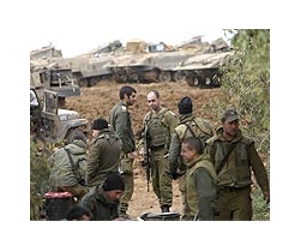
But the Israeli army's training hard to do battle with an old enemy right on its doorstep: Hezbollah in Lebanon.

The Iranian-backed movement has a vast arsenal and thousands of diehard Islamic fighters who battled with Jewish state's ground forces to an inconclusive standstill in a 34-day war in 2006.

The war left Israel feeling dangerously vulnerable. But Maj. Gen. Sami Turjeman, the current ground forces commander, is pushing his troops to be ready.

"On a tactical level we'll see an attempt to wear us down with urban warfare, which is characteristic of the fronts we face today," the Moroccan-born tank veteran said during an exercise in the occupied Golan Heights.

"There will be a close battle between ground forces."

On a more strategic level, he says he's preparing for the possibility the next conflict with Hezbollah will also lead to a war with Syria.

When Hezbollah was formed following Israel's 1982 invasion of Lebanon, it was little more than a group of hit-and-run Islamic fundamentalist militants.

But, aided by Iran and Syria, it soon developed into a deadly enemy that launched a campaign of suicide attacks that had the Israelis reeling.

In May 2000, after years of an unrelenting Hezbollah guerrilla war, the Israelis finally abandoned their "security zone" in south Lebanon.

Six years later, Hezbollah, had the trappings of a conventional army, with a brigade structure.

It didn't have tanks and helicopters, but it had vast numbers of missiles, high-tech communications, an elaborate network of defense bunkers and launch sites, and a highly rated intelligence organization.

In the 2006 war, Hezbollah operated as what military experts call a "hybrid force" employing irregular and conventional weapons and tactics.

This is seen in military circles as the warfare of the future.

"The conflict … that intrigues me most … and speaks more toward what we can expect in the decades ahead, is the one that happened in Lebanon in the summer of 2006," Gen. George Casey said in 2009 when he was the U.S. army chief of staff.

In 2006 Hezbollah showed Israel the future. It hammered Israeli civilian targets, mostly in the northern Galilee region, with some 4,000 missiles and rockets in the most sustained barrage the Jewish state has ever experienced.

Equipped with Iranian weapons, including deadly anti-tank and anti-ship missiles, and electronic intelligence systems, Hezbollah's veterans held off the might of the Israeli army, the first time Arab forces had ever done that.

Israel's northern border has been quiet since the war. But both sides know there's unfinished business here.

Hezbollah, pushed by Iran, is now believed to have 50,000 missiles and rockets, some capable of reaching anywhere in Israel. That's three times more than Hezbollah had in July 2006.

Israeli analysts say Hezbollah could sustain a bombardment of 100-200 missiles a day for several weeks, a nightmare scenario that would likely produce Israeli civilian casualties on a hitherto unknown scale.

Hezbollah leader Hassan Nasrallah warned Oct. 21 that next time his forces will first attack the heavily populated center of Israel, not the less strategic north.

That region includes the large urban sprawl around Tel Aviv, Israel's financial hub, and the country's industrial heartland.

Hezbollah has also indicated it plans to push ground forces into the Arab-populated Galilee in the event of hostilities.

That would be another first in the annals of Arab-Israeli warfare that has raged since 1948.

No Arab force have ever invaded the Jewish state since it was founded, although in the 1973 war, Syrian and Egyptian forces briefly recaptured swathes of Arab land conquered by Israel in 1967.

The Israelis learned some harsh lessons in 2006, particularly how decades of occupation in the West Bank and Gaza had dulled their war-fighting capabilities and diluted their offense-oriented military doctrine.

"The next war will be completely different," said Maj. Gen. Gadi Eizenkot, until July head of Israel's Northern Command. "Hezbollah will be better prepared. So will we."

Eizenkot's blueprint for hammering Hezbollah is simple. It's known as the "Dahiyeh Doctrine," after the Shiite stronghold in south Beirut that was flattened by the Israeli air force in 2006.

Related Links


.
.
Get Our Free Newsletters Via Email
...
Buy Advertising Editorial Enquiries


Quartet has 'failed' to revive peace talks: Erakat
Ramallah, Palestinian Territories (AFP) Nov 15, 2011 - Attempts to convince Israel to stop building settlements as a prelude to reviving stalled peace talks have failed, Palestinian negotiator Saeb Erakat said on Tuesday.

"Quartet attempts to create an atmosphere suitable to relaunch negotiations and convince Israel to stop building in settlements have failed," Erakat told AFP after Israel said it was poised to announce tenders to build 800 new homes in annexed east Jerusalem.

Envoys from the international peacemaking Quartet held separate meetings with Israeli and Palestinians officials on Monday but made no visible headway.

After the talks, Israel said it was extending a freeze on the transfer of tax revenues to the Palestinian Authority (PA) while the Palestinians restated their demand for a halt to Jewish settlements before talks can resume.

On Tuesday, Israel's housing ministry said it was to invite tenders for the construction of 749 homes in Har Homa neighbourhood and another 65 in Pisgat Zeev, both settlements in Arab east Jerusalem.

"Israel responded to Quartet attempts to relaunch the negotiations and meetings yesterday with a new settlement building declaration in east Jerusalem," Erakat said.

"It also responded by continuing to withhold PA tax funds which is a robbery and an act of piracy and is a response to Quartet and international efforts," he added.

"We hold the Israeli government solely responsibility for the failure of the peace process and the results that will come from it."

Under the terms of an economic agreement between the sides signed in Paris in 1994, Israel transfers to the PA tens of millions of dollars each month in customs duties are levied on goods destined for Palestinian markets that transit through Israeli ports.

The remittances constitute a large percentage of the Palestinian budget.

Israel often freezes the transfer of funds as a punitive measure in response to diplomatic or political developments viewed as harmful.

Israeli-Palestinian talks have been on hold for over a year, grinding to a halt shortly after they began in September 2010 over the issue of settlement construction.

Israel has so far refused to renew a partial 10-month settlement freeze, which expired last year and says it will only talk if there are no pre-conditions.

The Quartet, composed of the United Nations, United States, European Union and Russia, is trying to bring the two sides back to the table under a proposal laid out in September shortly after the Palestinians submitted a request for full UN state membership.

The proposal sought the resumption of talks within a month, with the goal of an agreement within a year, but there has been no sign of progress so far.


.

. Comment on this article via your Facebook, Yahoo, AOL, Hotmail login.

Share this article via these popular social media networks
del.icio.usdel.icio.us DiggDigg RedditReddit GoogleGoogle


WAR REPORT
Libyan officers fail to name new military chief
Tripoli (AFP) Nov 15, 2011
Officers and soldiers from the former Libyan regime gathered on Tuesday to name a new military chief and relaunch a national army, but the attempt ended in quarrelling amid widespread divisions. "We were indeed meant to nominate a new military chief, but there are still differences and outsiders infiltrated to make the meeting a failure," Colonel Nasser Busnina told AFP. Between 200 and ... read more


WAR REPORT
Northrop Grumman Plays Key Role in Unprecedented Joint Service Air and Missile Defense Demonstration

Israel speeds up anti-missile systems

Space Tracking and Surveillance System Demonstration Completes Mission

Israel holds major missile defence drill

WAR REPORT
Raytheon Develops Wireless Integration For Combat-Proven Enhanced Paveway

Dotting the i's after Iran missile blast

Iran mourns death of missile expert as report links Israel

Iran Guards say missile unit pioneer killed in blast

WAR REPORT
US drone kills six militants: Pakistani officials

US shifts drones from Iraq to Turkey: Pentagon

Lockheed Martin Wins Major Contract From US Army To Maintain Aerostat Detection Systems

LONGBOW Data Link Controls UAV From Apache Helicopter For First Time

WAR REPORT
Raytheon Reaches Fielding Milestone in Airborne Communications System

Raytheon Provides First Hybrid Cellular Capability For Soldier Networks

Harris Extends Tactical Networking to Dismounted Warfighter

LockMart Provides Affordable Smartphone Tactical Network Capability to US Marine Corps

WAR REPORT
Boeing Receives US Navy Contract to Develop New Mission Computer for Super Hornet and Growler

MEADS Demonstrates Advanced Plug-And-Fight Capabilities in Integration Test

Gender bias in Israel army 'may endanger state security'

Boeing Receives Phase II Contract for High Power Adaptive Optic System

WAR REPORT
Gulf arms sales vital for U.S. companies

Israel, South Korea scrap over jet deal

EADS chief calls on France, Germany to give up control

UAE asks Eurofighter to counter Rafale offer: statement

WAR REPORT
US joins East Asia summit in challenge to China

US presses China ahead of Asia-Pacific summit

Rising China a 'work in progress': Aquino

Outside View: 600, 2012 and 0

WAR REPORT
LockMart Directed Energy Leader Receives Purdue's Outstanding Aerospace Engineer Award


.

The content herein, unless otherwise known to be public domain, are Copyright 1995-2011 - Space Media Network. AFP and UPI Wire Stories are copyright Agence France-Presse and United Press International. ESA Portal Reports are copyright European Space Agency. All NASA sourced material is public domain. Additional copyrights may apply in whole or part to other bona fide parties. Advertising does not imply endorsement,agreement or approval of any opinions, statements or information provided by Space Media Network on any Web page published or hosted by Space Media Network. Privacy Statement