
 |
 |
 |
 |
 |
 |
 |
 |
 |
 |

| . |  |
. |
JSTARS Adds Blue Force Tracking Capability
Norfolk VA (SPX) Jan 19, 2006 The ability to distinguish between friend and foe, an overarching concept known as blue force tracking, is a critical aspect of conducting effective network centric military operations. The Joint Surveillance Target Attack Radar Systems Group recently made its first steps toward that goal with an initial installation of an existing system called Force XXI Battle Command Brigade and Below in what the program calls, "a rapid response effort for a Global War On Terror requirement." "Combat ID is a persistent problem that we are endeavoring to improve," said Lt. Col. Andrew Beaudoin, chief of the Battle Management Command and Control Systems Division. "FBCB2 gets us one-step closer to solving that problem on Joint STARS." The Army has employed FBCB2 for years. Army units use the system to stay updated on the location of friendly troops in near real time by continually transmitting their actual locations over the FBCB2 network. FBCB2 then actively monitors the location and progress of friendly forces and sends those specific coordinates to a central location called the Army Tactical Operations Center, where the data is consolidated into a common picture and sent back out to units, the colonel said. "This near real-time process gives war fighters an integrated picture of the location of friendly troops," Colonel Beaudoin said. "Now, Joint STARS can access that powerful information as well." With minimal development, the Joint STARS Systems Group completed a development effort and five initial installations of hardware and software designed to tap into that blue force information directly from the Army TOC and display it on the Joint STARS Operator Work Stations, the colonel said. Each plane is equipped with a laptop which will receive regular updates from the FBCB2 system. Using specifically designed software, the Joint STARS system sends the blue force data to each of the work stations, where the information is overlayed on existing displays, giving operators the opportunity to associate FBCB2 data with real-time GMTI data, the colonel said. "FBCB2 provides the operators examining the GMTI data with a tool to associate location of friendly forces with surveillance data," he said. "Once friendly forces are identified, operators will have the opportunity to narrow down potential targets with higher confidence." Ultimately, FBCB2 gives decision makers a crucial tool for combat identification, the colonel said. For such a critical capability, the team added it with minimal investment in time -- less than 90 days -- and resources -- well under the $5.7 million ceiling for the development and first five installations. On Dec. 9, the team completed software development and integration and delivered the software to the 116th Air Control Wing, Robins Air Force Base, Ga. The Joint STARS team plans to begin retrofitting the remainder of the fleet beginning in the spring, subject to depot maintenance and deployment schedules. All FBCB2 installations are scheduled to be complete by September 2006. "The safety of our forces and the potential for fratricide are ever-present concerns for the war fighter. FBCB2 is a first step toward a more robust capability to addresses those concerns," said Col. Michael Graham, commander of the Joint STARS Systems Group. "The JSTARS program continues to bring new capabilities that will secure its place as a key player in the war fight for decades to come." The addition of the blue force tracking capability is the first of two increments for the Joint STARS FBCB2 program. The team is currently working on Increment II, which will utilize additional capability from the existing information on the FBCB2 network. "There is a host of information on the FBCB2 system that we currently don�t use, but we hope to in the near future," Colonel Beaudoin said. Should funding come available in Fiscal Year 2006 for the second increment, the colonel said the team is ready to implement those improvements for our war fighters.
Battle Management Command and Control Systems Division 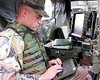 Washington (UPI) Jan 18, 2006
Basil H. Liddell Hart was long considered one of the world's foremost military thinkers - a man many experts regarded as the "Clausewitz of the 20th century." What Clausewitz was to war, Sun Tzu was to "The Art of War" 25 centuries ago. And what Mao Zedong was to guerrilla warfare, Adm. Arthur K. Cebrowski was to Net-centric warfare. |
|
|

| The content herein, unless otherwise known to be public domain, are Copyright 1995-2006 - SpaceDaily.AFP and UPI Wire Stories are copyright Agence France-Presse and United Press International. ESA PortalReports are copyright European Space Agency. All NASA sourced material is public domain. Additionalcopyrights may apply in whole or part to other bona fide parties. Advertising does not imply endorsement,agreement or approval of any opinions, statements or information provided by SpaceDaily on any Web page published or hosted by SpaceDaily. Privacy Statement |

