|
 |
 |
 |
 |
 |
 |
 |
 |
 |

| . |  |
. |
Japan Needs Three To Five Years To Build Nukes
Tokyo (AFP) Dec 25, 2006 Japan has conducted a secret study showing it will need three to five years if it decides to develop nuclear weapons, a newspaper said Monday. The report contradicts government statements since North Korea's October nuclear test that Japan can quickly develop nuclear weapons but chooses not to take the long-taboo step. The conservative Sankei Shimbun said the government commissioned a report by experts completed in September on the possibility of creating indigenous nuclear warheads. The study found that Japan needed three to five years, investment of 200 to 300 billion yen (1.7 to 2.5 billion dollars) and hundreds of engineers just for the prototype of a small-scale nuclear warhead. "Even if Japan says hypothetically it can defend itself with nuclear arms, it could not deter the North Korean nuclear threat immediately and independently," the newspaper wrote, summarizing the report. Even though Japan has plants for uranium enrichment and the technology for reprocessing, technological constraints would prevent converting the facilities to develop nuclear weapons, it said. "Japan would have to address technological issues that are not yet familiar to the nation to create small nuclear warheads," the daily wrote. Officials denied the reported study. "The government is absolutely unaware of it," said Chief Cabinet Secretary Yasuhisa Shiozaki, the government spokesman. Japan, the only nation to have been attacked with nuclear bombs, bans the production, possession or presence of atomic weapons on its soil. Prime Minister Shinzo Abe has said his government will not change its stance, but two of his top aides have repeatedly called for Japan at least to debate going nuclear. One of them, Foreign Minister Taro Aso, said last month that Japan could already produce nuclear weapons if it chose to, due to its high level of technology and civilian nuclear industry. Japan, which is almost entirely dependent on foreign oil and gas, relies on nuclear production for one-third of its energy requirements.
earlier related report Japan's Defense Agency, following the US approach, is considering the plan, in light of Japan-US Security Treaty, which demands "providing security of Japan and keeping peace in the Far East" as conditions for offering US troops facilities in Japan, the report said. Japan was prompted to boost its missile defenses in cooperation with the United States in 1998 when North Korea sent a suspected long-range missile over its main island and into the Pacific. North Korea's October 9 atom bomb test, in addition to its July 5 firing of seven missiles into the Sea of Japan (East Sea), also fueled the drive for the joint missile scheme. Japan's post-World War II pacifist constitution bans waging war as means of resolving international conflicts, and providing support to foreign troops except for the purpose of Japan's self-defense is politically controversial.
Source: Agence France-Presse Related Links Learn about nuclear weapons doctrine and defense at SpaceWar.com  Russia Seeking To Extend Use Of Cold War Missile Stocks
 Moscow (AFP) Dec 21, 2006
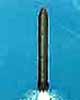
Russia tested a 19-year old intercontinental ballistic missile Thursday as part of a move to prolong effectiveness of old Cold War stockpiles, the defence ministry said. The SS-18 Satan missile was launched at 11:20 am (0820 GMT) in the Orenburg region south of the Urals, successfully reaching its target in the far-eastern Kamchatka region, defence ministry spokesman Igor Kostyshin told AFP. |
|
|

| The content herein, unless otherwise known to be public domain, are Copyright 1995-2006 - SpaceDaily.AFP and UPI Wire Stories are copyright Agence France-Presse and United Press International. ESA PortalReports are copyright European Space Agency. All NASA sourced material is public domain. Additionalcopyrights may apply in whole or part to other bona fide parties. Advertising does not imply endorsement,agreement or approval of any opinions, statements or information provided by SpaceDaily on any Web page published or hosted by SpaceDaily. Privacy Statement |