
 |
 |
 |
 |
 |
 |
 |
 |
 |
 |

| . |  |
. |

Greenbelt MD (SPX) Jan 14, 2011 New NASA satellite data indicate the current La Nina event in the eastern Pacific has remained strong during November and December 2010. A new Ocean Surface Topography Mission (OSTM)/Jason-2 satellite image of the Pacific Ocean that averaged 10 days of data was just released from NASA. The image, centered on Dec. 26, 2010, was created at NASA's Jet Propulsion Laboratory (JPL), Pasadena, Calif. "The solid record of La Nina strength only goes back about 50 years and this latest event appears to be one of the strongest ones over this time period," said Climatologist Bill Patzert of JPL. "It is already impacting weather and climate all around the planet." "Although exacerbated by precipitation from a tropical cyclone, rainfalls of historic proportion in eastern Queensland, Australia have led to levels of flooding usually only seen once in a century," said David Adamec, Oceanographer at NASA's Goddard Space Flight Center, Greenbelt, Md. "The copious rainfall is a direct result of La Nina's effect on the Pacific trade winds and has made tropical Australia particularly rainy this year." The new image depicts places where the Pacific sea surface height is near-normal, higher (warmer) than normal and lower (cooler) than normal. The cooler-than normal pool of water that stretches from the eastern to the central Pacific Ocean is a hallmark of a La Nina event. Earth's ocean is the greatest influence on global climate. Only from space can we observe our vast ocean on a global scale and monitor critical changes in ocean currents and heat storage. Continuous data from satellites like OSTM/Jason-2 help us understand and foresee the effects of ocean changes on our climate and on climate events such as La Nina and El Nino. The latest report from NOAA's Climate Prediction Center (CPC) noted that "A moderate-to-strong La Nina continued during December 2010 as reflected by well below-average sea surface temperatures (SSTs) across the equatorial Pacific Ocean." The CPC report said that La Nina is expected to continue well into the Northern Hemisphere spring 2011.
Share This Article With Planet Earth
Related Links NOAA's latest prediction on La Nina Goddard Space Flight Center Earth Observation News - Suppiliers, Technology and Application

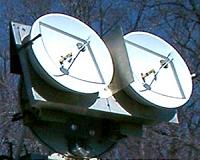 Under Pressure: Stormy Weather Sensor For Hurricane Forecasting
Hampton VA (SPX) Jan 11, 2011 It's hard to believe that, in this day and age, we don't have a way to measure sea-level air pressure during hurricanes. NASA researchers, however, are working on a system that will improve forecasting of severe ocean weather by doing just that. The device measures sea-level air pressure, a critical component of hurricane formation - and one that has been extremely difficult to capture. Th ... read more |
|
|
| The content herein, unless otherwise known to be public domain, are Copyright 1995-2010 - SpaceDaily. AFP and UPI Wire Stories are copyright Agence France-Presse and United Press International. ESA Portal Reports are copyright European Space Agency. All NASA sourced material is public domain. Additional copyrights may apply in whole or part to other bona fide parties. Advertising does not imply endorsement,agreement or approval of any opinions, statements or information provided by SpaceDaily on any Web page published or hosted by SpaceDaily. Privacy Statement |


 del.icio.us
 Digg
Digg Reddit
 YahooMyWeb
 Google
 Facebook


