|
 |
 |
 |
 |
 |
 |
 |
 |
 |

| . |  |
. |
 by Staff Writers Pasadena CA (JPL) Mar 24, 2019
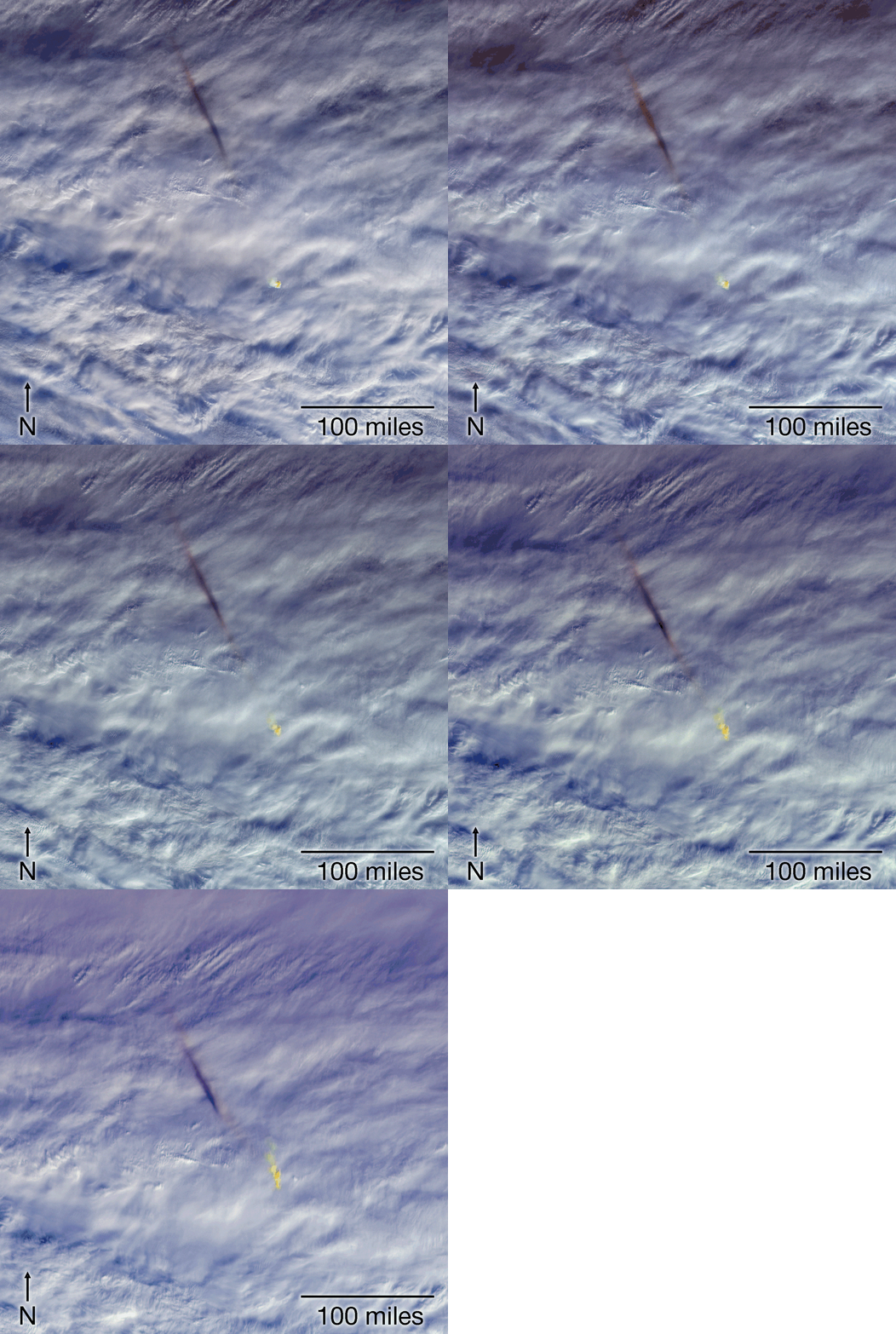
On Dec. 18, 2018, a large "fireball" - the term used for exceptionally bright meteors that are visible over a wide area - exploded about 16 miles (26 kilometers) above the Bering Sea. The explosion unleashed an estimated 173 kilotons of energy, or more than 10 times the energy of the atomic bomb blast over Hiroshima during World War II. Two NASA instruments aboard the Terra satellite captured images of the remnants of the large meteor. The image sequence shows views from five of nine cameras on the Multi-angle Imaging SpectroRadiometer (MISR) instrument taken at 23:55 Coordinated Universal Time (UTC), a few minutes after the event. The shadow of the meteor's trail through Earth's atmosphere, cast on the cloud tops and elongated by the low sun angle, is to the northwest. The orange-tinted cloud that the fireball left behind by super-heating the air it passed through can be seen below and to the right of the GIF's center. The still image, captured by the Moderate Resolution Imaging SpectroRadiometer (MODIS) instrument, is a true-color image showing the remnants of the meteor's passage, seen as a dark shadow cast on thick, white clouds. MODIS captured the image at 23:50 UTC. The Dec. 18 fireball was the most powerful meteor to be observed since 2013; however, given its altitude and the remote area over which it occurred, the object posed no threat to anyone on the ground. Fireball events are actually fairly common and are recorded in the NASA Center for Near Earth Object Studies database.

The powerful meteor that no one saw except satellites Washington (AFP) March 19, 2019 At precisely 11:48 am on December 18, 2018, a large space rock heading straight for Earth at a speed of 19 miles per second exploded into a vast ball of fire as it entered the atmosphere, 15.9 miles above the Bering Sea. From below, the only witnesses to this fiery event may have been the fish that inhabit the frigid waters between Russia and Alaska, as no human eye caught sight of it. A meteor is the luminous phenomenon that results when an asteroid or other celestial body enters the Earth's ... read more
|
|||||||||||||
|
|
| The content herein, unless otherwise known to be public domain, are Copyright 1995-2024 - Space Media Network. All websites are published in Australia and are solely subject to Australian law and governed by Fair Use principals for news reporting and research purposes. AFP, UPI and IANS news wire stories are copyright Agence France-Presse, United Press International and Indo-Asia News Service. ESA news reports are copyright European Space Agency. All NASA sourced material is public domain. Additional copyrights may apply in whole or part to other bona fide parties. All articles labeled "by Staff Writers" include reports supplied to Space Media Network by industry news wires, PR agencies, corporate press officers and the like. Such articles are individually curated and edited by Space Media Network staff on the basis of the report's information value to our industry and professional readership. Advertising does not imply endorsement, agreement or approval of any opinions, statements or information provided by Space Media Network on any Web page published or hosted by Space Media Network. General Data Protection Regulation (GDPR) Statement Our advertisers use various cookies and the like to deliver the best ad banner available at one time. All network advertising suppliers have GDPR policies (Legitimate Interest) that conform with EU regulations for data collection. By using our websites you consent to cookie based advertising. If you do not agree with this then you must stop using the websites from May 25, 2018. Privacy Statement. Additional information can be found here at About Us. |


 del.icio.us
 Digg
Digg Reddit
 Google