
 |
 |
 |
 |
 |
 |
 |
 |
 |
 |

| . |  |
. |
NASA spacecraft soars past Mercury
Washington (AFP) Oct 6, 2008 A US space probe successfully flew by Mercury on Monday to photograph the solar system's smallest planet, in the second of three planned passes, the US space agency NASA said. The spacecraft MESSENGER (MErcury Surface, Space ENvironment, GEochemistry and Ranging) flew past the innermost planet at an altitude of 201 kilometers (125 miles) at a speed of 23,818 kilometers per hour (14,800 miles per hour). "Everything went well as planned," said spokeswoman Helen Johnson of the Johns Hopkins University Applied Physics Laboratory which is running the MESSENGER project. The first pictures from MESSENGER's bypass were expected to be available at 1400 GMT, with 1,200 images of the cratered surface to be seen. MESSENGER first flew past Mercury on January 14 this year, and will make its final pass in September 2009. Monday's trip aims to investigate the opposite side of the planet than the one seen on the first visit, said Louise Prockter, instrument scientist for the spacecraft's Mercury Dual Imaging System at the Johns Hopkins University Applied Physics Laboratory, in Laurel, Maryland. Mercury is the closest of all the planets to the Sun, and because of the high-risks of its proximity -- the Sun's enormous gravitational pull, and massively high levels of radiation -- it is one of the most mysterious bodies in the solar system, even though it is relatively close to Earth. Scientists and observers hope the probe will yield more answers to the physical processes that govern Mercury's atmosphere, along with more information about the charged particles located around the planet's dynamic magnetic field. The January visit showed scientists that volcanic eruptions produced many of Mercury's expansive plains, littered with meteor craters, and that its magnetic field appears to be actively generated in a molten iron core. Before MESSENGER, the only other craft to visit Mercury was Mariner 10, which passed the planet three times in 1974 and 1975. Community Email This Article Comment On This Article Share This Article With Planet Earth
Related Links News Flash at Mercury Mars News and Information at MarsDaily.com Lunar Dreams and more
 MESSENGER Beams Back First Approach Images Of Mercury
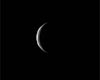 Laurel MD (SPX) Oct 06, 2008
MESSENGER mission operators at the Johns Hopkins University Applied Physics Laboratory (APL) in Laurel, Md., have received the first optical navigation images from the spacecraft. |
|
|

| The content herein, unless otherwise known to be public domain, are Copyright 1995-2007 - SpaceDaily.AFP and UPI Wire Stories are copyright Agence France-Presse and United Press International. ESA Portal Reports are copyright European Space Agency. All NASA sourced material is public domain. Additional copyrights may apply in whole or part to other bona fide parties. Advertising does not imply endorsement,agreement or approval of any opinions, statements or information provided by SpaceDaily on any Web page published or hosted by SpaceDaily. Privacy Statement |
 del.icio.us
 Digg
Digg Reddit
 YahooMyWeb
 Google
 Facebook