
 NJIT Distinguished Professor Dale Gary will lead a $5 million NSF to upgrade and expand the Big Pine, Calif. facility, which NJIT has operated since 1997. Credit: NJIT |
"Space weather incidents such as coronal mass ejections and solar flares can cause problems with cell phone reception, GPS systems, power grids and other technologies," said NJIT Distinguished Professor Dale Gary, a world-renowned expert in solar radio physics and instrumentation, who will lead the project.
"We hope that by improving radio frequency observations of the Sun we can learn better information and make new discoveries about the nature of these phenomena."
Making images of the Sun at many radio frequencies is the only way to measure the magnetic fields that power flares, and can be done while the solar flare is in progress.
"Radio observations can also track solar eruptions longer and at greater distance from the Sun than other ground-based techniques, so researchers can visualize them better," said Gary.
NJIT has operated the California facility in Big Pine under Gary's direction since 1997. "When the expansion of this facility is completed three years from now, it will be the largest of its kind in the US," said Gary.
Recent research by Gary and others included "The Generalized Spectral Kurtosis Estimator," Monthly Notices of the Royal Astronomical Society, 406L, 60 (2010) and "A Wideband Spectrometer with RFI Detection," Publications of the Astronomical Society of the Pacific, 122, 560 (2010).
The three-year grant will more than double the size of the existing telescope array from 7 to 15 radio antennas. Two antennas, 90 feet in diameter and 100 feet (or 10 stories) tall, will be refurbished and equipped with a low-noise receiver system, to be used for non-solar research such as detecting unpredictable changes (so-called transient radio sources) in our galaxy and elsewhere in the universe.
The 90-foot antennas will also be used as a calibration system for the remaining antennas.
The other antennas, which are 6 feet in diameter, will be the work horses that will constantly monitor the Sun each day. The new array, operating in the frequency range 1-18 GHz, will increase the number of available radio frequencies from 86 to 17,000.
"The key is in the number of frequencies," said Gary. "Images in thousands of narrow frequency channels will allow researchers to decode the flare spectrum, which contains the clues to the physical makeup of flares. The narrow frequency channels also allow us to chop out occasional interference from, say, unwanted cell phone, wireless, or satellite signals."
Gary noted that as low frequencies grow more saturated with such interference, techniques for removing it have become a research topic itself.
"Interference is the radio analog of light pollution, which frustrates optical astronomers. Eventually we can look to a time in the not so far future when even the high frequencies will be spoiled," he added. Gary and colleague Gelu Nita, a research professor at NJIT, have published a number of recent articles on the subject of radio frequency interference mitigation.
The current plan is to complete the project in three years. Engineers hired on the project will design the new systems and the antennas will be commercially built. The digital part will be done on the NJIT campus; the analog aspects at OVSA. Gary is very familiar with the system, having constructed several antenna systems himself on the NJIT campus.
"Eventually we hope to see the Owens Valley Solar Array become the blueprint for the development of a $100 million telescope project still in the concept phase known as Frequency Agile Solar Radiotelescope (FASR)," said Gary. FASR recently received a priority ranking in the National Academy of Sciences Astro2010 decadal survey. "We're hopeful that FASR will move forward in two to five years, if this project succeeds as we feel it will," said Gary.
 del.icio.us del.icio.us |
 Digg Digg |
 Reddit Reddit |
 YahooMyWeb YahooMyWeb |
 Google Google |
 Facebook Facebook |

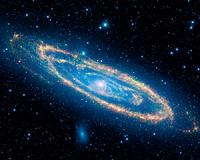 NASA's WISE Mission Warms Up But Keeps Chugging Along
| The content herein, unless otherwise known to be public domain, are Copyright 1995-2010 - SpaceDaily. AFP and UPI Wire Stories are copyright Agence France-Presse and United Press International. ESA Portal Reports are copyright European Space Agency. All NASA sourced material is public domain. Additional copyrights may apply in whole or part to other bona fide parties. Advertising does not imply endorsement,agreement or approval of any opinions, statements or information provided by SpaceDaily on any Web page published or hosted by SpaceDaily. Privacy Statement |


