
 |
 |
 |
 |
 |
 |
 |
 |
 |
 |

| . |  |
. |
New Comet Discovered In Canada
Calgary, Canada (SPX) Oct 16, 2008 Rob Cardinal was looking for an asteroid, but ended up finding a comet. It is the first time a comet has been discovered at the University of Calgary's Rothney Astrophysical Observatory, which is located about 35 kilometres southwest of Calgary, and only the second Canadian discovery of a comet using a Canadian telescope in nearly a decade. On Oct. 1, Cardinal thought he saw something move while observing a patch of sky near the North Celestial Pole while using the observatory's Baker-Nunn telescope. A subsequent computer analysis of the images taken showed a moving object that, although faint by visual standards, was actually exceptionally bright for what was a suspected asteroid at the time. A few more pictures taken about a week later verified that a never-before-seen member of our solar system had been discovered. It was confirmed by other observations by astronomers in the U.S. and Japan and the Minor Planet Center, based at Harvard University, that it was a new comet. As per protocol, it was named after Cardinal and is officially designated as C/2008 T2 Cardinal. "I was so excited when I found out," says the astronomer. "It's satisfying to see your hard work pay off." Russ Taylor, the head of the Physics and Astronomy department, called the find a tribute to the team of scientists and the dark sky quality at the observatory. "Alan Hildebrand, who holds the Canada Research Chair in Planetary Science, and his research team at the Rothney have put together the premier wide-field telescope for space imaging in Canada. The discovery of comet Cardinal is an exciting achievement," he said. There is not much known yet about the Cardinal comet. U of C scientists are trying to determine more information about its orbit, whether its passing by Earth is periodic or whether it will only come by the sun once, which would mean its orbit is parabolic. "The vast majority of the known comets, and the comets now being discovered, are found near a region of the sky called the ecliptic - that's because their orbits are similar to the orbits of the planets," says Phil Langill, the observatory's director. "Comet Cardinal is on a very unusual orbit compared to normal solar system objects - it's almost 60 degrees out of alignment with all the others. It is currently near the north star. It was brilliant for Alan and Rob to search that part of the sky, because everyone else is looking where the likelihood of asteroid discovery is high." Cardinal says the comet is visible right now only in the northern hemisphere until June and after that it will be visible, and likely brighter, in the southern hemisphere. Langill says that if you could get hold of cometary material, you would be holding a 4.5 billion year old piece of history, with clues about how things were when the Sun and the solar system came together. Comet Cardinal is made up of bits of debris and ice left over when the solar system was created. Langill adds he credits the local community for remembering to keep their lights off at night. The observatory has been working with the MD of Foothills to educate folks about smart lighting choices, light abatement, and what the astronomers at the U of C's observatory do. "This discovery can, in part, be attributable to them," he says. Community Email This Article Comment On This Article Share This Article With Planet Earth
Related Links University of Calgary Asteroid and Comet Mission News, Science and Technology
 UM Astronomer Michael A'Hearn Awarded Kuiper Prize
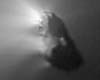 College Park MD (SPX) Oct 16, 2008
University of Maryland astronomer Michael A'Hearn has won the 2008 Kuiper Prize in recognition of his seminal contributions to, and leadership of, the study of comets. |
|
|

| The content herein, unless otherwise known to be public domain, are Copyright 1995-2007 - SpaceDaily.AFP and UPI Wire Stories are copyright Agence France-Presse and United Press International. ESA Portal Reports are copyright European Space Agency. All NASA sourced material is public domain. Additional copyrights may apply in whole or part to other bona fide parties. Advertising does not imply endorsement,agreement or approval of any opinions, statements or information provided by SpaceDaily on any Web page published or hosted by SpaceDaily. Privacy Statement |
 del.icio.us
 Digg
Digg Reddit
 YahooMyWeb
 Google
 Facebook