|
 |
 |
 |
 |
 |
 |
 |
 |
 |

| . |  |
. |
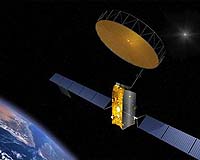
Northrop Grumman's AstroMesh Reflector Deploys On Inmarsat 4 Satellite
Carpinteria CA (SPX) Mar 30, 2005 Northrop Grumman's AstroMesh deployable reflector system has successfully deployed aboard the Inmarsat Limited I-4 satellite, launched March 11 from Cape Canaveral, Florida. On March 25, following a release command by ground controllers, the nine-meter (30-feet) diameter AstroMesh furlable mesh reflector and boom support system successfully deployed. Further radio frequency testing will confirm that the shape and pointing of the reflector are as expected. This is the first of three reflectors delivered by Northrop Grumman's Astro Aerospace unit for EADS Astrium, and is the fourth AstroMesh reflector to be deployed in space. The reflector provides a key part of the antenna system used by the spacecraft to provide broadband Internet communications. The antenna sensitivity enabled by the large reflector allows the use of mobile, laptop-size modems by users in Europe, Africa, the Middle East and Asia. "This achievement underscores our commitment to reliable space deployable products," said Tom Romesser, vice president of technology development for Northrop Grumman Space Technology. "Our AstroMesh reflector is an enabling technology for this new service." In addition to EADS Astrium, Astro Aerospace has built five AstroMesh reflectors for other space companies, three of which are already in operational service in orbit, Romesser noted. Related Links SpaceDaily Search SpaceDaily Subscribe To SpaceDaily Express  Iridium Satellite Constellation Passes Milestone for Longevity
 Bethesda MD (SPX) Mar 23, 2005
Iridium Satellite has reported that its constellation of low-earth-orbit communication satellites has achieved a world record of more than 500 satellite-years of in-orbit performance. |
|
|

| The content herein, unless otherwise known to be public domain, are Copyright 1995-2006 - SpaceDaily.AFP and UPI Wire Stories are copyright Agence France-Presse and United Press International. ESA PortalReports are copyright European Space Agency. All NASA sourced material is public domain. Additionalcopyrights may apply in whole or part to other bona fide parties. Advertising does not imply endorsement,agreement or approval of any opinions, statements or information provided by SpaceDaily on any Web page published or hosted by SpaceDaily. Privacy Statement |