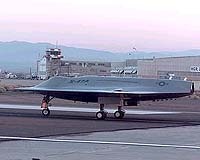
Northrop Grumman's Integrated Systems sector has achieved another milestone in preparation for the first flight of its X-47A Pegasus experimental unmanned air vehicle (UAV) with the successful completion of the vehicle's first taxi test at the Naval Air Warfare Center Weapons Division, China Lake, Calif.
Northrop Grumman designed and built the unmanned system with its own funds to demonstrate aerodynamic qualities suitable for autonomous flight operations from an aircraft carrier as part of the company's naval unmanned combat air vehicle (UCAV-N) program. Shaped like a kite, Pegasus was built largely with composite materials. The air vehicle measures 27.9 feet long with a nearly equal wingspan of 27. 8 feet.
The low-speed taxi test conducted July 19, was designed to exercise the X-47A's command and control, steering, brakes and navigation. The test consisted of five segments, each conducted autonomously after initiation by a ground controller. The first verified movement of the air vehicle and validated start and stop taxi commands. The remaining four segments allowed the vehicle to move down the runway in increments of increasing length from 20 to 300 feet. All test objectives were met.
Northrop Grumman's X-47A Pegasus team will analyze the data in preparation for additional taxi tests leading to first flight.
Previously, the team completed a series of engine runs and conducted avionics and software integration at the company's Advanced Systems Development Center in El Segundo.
The results of the Pegasus flight demonstration program will be used in Northrop Grumman's UCAV-N work for the U.S. Defense Advanced Research Projects Agency (DARPA) and the U.S. Navy. The goal of the joint DARPA/Navy UCAV-N project is to demonstrate the technical feasibility for an unmanned system to effectively and affordably conduct sea-based surveillance, strike and suppression of enemy air defenses missions within the emerging global command and control architecture.
With more than 50 years of experience in unmanned systems integration, Northrop Grumman has leveraged its expertise with unmanned systems such as Global Hawk and Fire Scout on the Pegasus and UCAV-N programs.