|
 |
 |
 |
 |
 |
 |
 |
 |
 |

| . |  |
. |
Operation Dark Dune
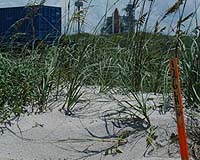
Houston TX (SPX) Aug 21, 2007 On Launch Pad 39A at NASA's Kennedy Space Center in Florida, the Space Shuttle Endeavour sat bathed in glowing light, silhouetting the vehicle against the dark night sky over the seaside complex. It may sound like an awesome and idyllic scene, but not for nesting sea turtles and their newly hatched babies. During their summer nesting season, these turtles emerge from the ocean along the pristine beach within 200 yards of the space shuttle launch pads. The light emanating from the pads can deter the adults from coming ashore to lay their eggs and disorient the hatchlings as they emerge from their nests and head toward the moonlit sea. As part of keeping the balance with its natural surroundings, the space center's environmental management system has as one of its goals to minimize controllable impacts to wildlife, including the nesting sea turtles. The natural height of the dune normally provides a necessary buffer, but the dunes along Florida's Space Coast have been severely eroded in some spots by hurricanes, particularly during the 2004 season. That year, the space center was impacted by two hurricanes just three weeks apart. And while some dune restoration was completed and more is planned, some stop-gap measures were needed until the nesting season ends at the beginning of November. Enter some inventive individuals with a novel idea: Use what they have on hand to help block the launch pad lights so the nesting process can continue undisturbed. As those charged with helping to protect the environmental balance debated how to shield the beach from the lights, Doug Scheidt with Kennedy's life sciences support contractor Dynamac had an idea. "Boxcars are about the right height," he offered. He thought using freight train cars was "a shot in the dark" that just might work, shading the dunes in the most severely eroded spots. And since the space center has the unique situation of having a rail line that parallels the beach, it was a viable solution that would also avoid the pitfalls inherent in trying to erect some type of temporary barriers that would require permits and funding. Uniquely bringing together employees from both the operations and environmental sides of the space center's management team, the railcar idea took shape. The cars were big enough and mobile, and some that were scheduled to be removed from service were coincidentally parked just a few miles away from the launch pads. The solution would be quick, easy and cheap. Somewhere along the way, the project was affectionately dubbed "Operation Dark Dune." Moving day arrived on a hot Florida day in July, and the team relocated and strategically placed 25 railcars along the rail line in their temporary seaside location. "As a former environmental protection specialist at Kennedy, I realize how fine a line it is between our operations and the protection of our natural resources," said Propellants Mobile Equipment Manager Gail Villanueva, who is in charge of the railcars. "I was happy I was in a position to help out, although the request was unique, to say the least." The relationship between space exploration and nature goes back as far as the space program's roots in the region. When the Kennedy Space Center was carved out along the vast coastal area, its first director, Kurt H. Debus, arranged for a large portion of the center to be designated as a wildlife refuge. Known as the Merritt Island Wildlife Refuge, it now encompasses 140,000 acres and is managed by the Interior Department's Fish and Wildlife Service. The space center also borders the Canaveral National Seashore, which provides an important nesting area for the sea turtles. If innovative thinkers at the space center can continue to come up with creative solutions like Operation Dark Dune, then the center's dedication to the delicate balance between nature and space exploration can continue to flourish. Community Email This Article Comment On This Article Related Links Life Beyond Earth Lands Beyond Beyond - extra solar planets - news and science
 Frigid Enceladus: An Unlikely Harbor For Life
 Champaign IL (SPX) Aug 17, 2007
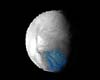
A new model of Saturn's icy moon Enceladus may quell hopes of finding life there. Developed by researchers at the University of Illinois, the model explains the most salient observations on Enceladus without requiring the presence of liquid water. |
|
|

| The content herein, unless otherwise known to be public domain, are Copyright 1995-2006 - SpaceDaily.AFP and UPI Wire Stories are copyright Agence France-Presse and United Press International. ESA PortalReports are copyright European Space Agency. All NASA sourced material is public domain. Additionalcopyrights may apply in whole or part to other bona fide parties. Advertising does not imply endorsement,agreement or approval of any opinions, statements or information provided by SpaceDaily on any Web page published or hosted by SpaceDaily. Privacy Statement |