U.S. Vice President-elect Joe Biden was wrong when he said, "It will not be six months before the world tests Barack Obama like they did John Kennedy." Well, it was more like six hours.
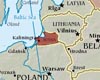
The day after the election, as other world leaders were sending the U.S. president-elect congratulatory messages, Russian President Dmitry Medvedev apparently thought that a hostile theme was more appropriate. In his first state of the union address, Medvedev threatened to deploy short-range missiles against Poland if a missile defense system, the so-called Third Site, were deployed in that Eastern European country. The Russian president went on to list other hostile steps his country might take, including electronically jamming the missile defense.
It is ironic that President-elect Obama's first test should be about missile defenses. He has expressed skepticism about the current Bush administration's missile defense program, saying he would cut investments in unproven systems. During a mid-2007 visit to Poland, the Democratic senator from Illinois said the United States and Poland should cooperate on effective missile defenses, perhaps indicating his opposition to the Third Site.
The Kremlin may believe it is pushing on an open door when it comes to the new Obama administration's willingness to deploy missile defenses in Eastern Europe. However, Medvedev's quintessentially Russian strategy of threaten first, negotiate later may backfire.
Medvedev's actions are reminiscent of Russian Premier Nikita Khrushchev's behavior when he met newly elected President Kennedy in Vienna, Austria, in 1961. JFK's failure to stand up to the Russian leader's bluster led the next year to the Cuban Missile Crisis. In this most "Camelot" of moments, can the new American president afford to appear weak by acquiescing to Russia's demand that the Third Site not be deployed?
The Russian president's threats open up a larger issue. Forward-deployed fixed-site missile defenses could be vulnerable to a host of countermeasures. The Russian president may be deterred from making good on his threats, but what about other U.S. adversaries? Medvedev's statements underscore the importance of mobile missile defense systems that can be deployed when and where needed.
The United States has effective mobile missile defenses against short-range threats -- the sea-based Aegis Ballistic Missile Defense System and the land-based Theater High Altitude Air Defense and Patriot systems. What it lacks is a mobile system that can counter long-range threats.
The technology for such a system is within reach: It is the land-based Kinetic Energy Interceptor. KEI could backstop the Third Site, deploying only when a threat emerged and thereby rendering moot any Russian threats. Without a fixed infrastructure, KEI also could provide a flexible solution to the appearance of new long-range ballistic missile threats.
In the event a friendly country changes its mind about supporting missile defense deployments, the KEI entire system is not placed in jeopardy.
Unfortunately, the current Bush administration put KEI on a slow development track. If the new president wants effective missile defenses, he should consider putting KEI on a fast track to deployment.
(Daniel Goure is vice president of the Lexington Institute, an independent think tank in Arlington, Va.)
(United Press International's "Outside View" commentaries are written by outside contributors who specialize in a variety of important issues. The views expressed do not necessarily reflect those of United Press International. In the interests of creating an open forum, original submissions are invited.)
 del.icio.us
 Digg
Digg Reddit
 YahooMyWeb
 Google
 Facebook