
 |
 |
 |
 |
 |
 |
 |
 |
 |
 |

| . |  |
. |

Islamabad (AFP) Nov 29, 2010 Pakistan on Monday conceded that the United States wanted to remove nuclear fuel from a reactor amid security fears, but said the request had been refused and defended its atomic policy. The New York Times reported top secret US efforts to remove highly enriched uranium from Pakistan since 2007, worried it could be used to make an "illicit" nuclear device as part of a massive leak of American diplomatic cables. Pakistan condemned the "irresponsible disclosure of sensitive official documents" and denied that the reactor produces highly enriched uranium, but said the US suggestion to have fuel transferred was "plainly refused". "Pakistan is an advanced nuclear technology state. No one can touch Pakistan's nuclear facilities and assets," said the foreign ministry. "Reports concerning Pakistan's experimental nuclear reactor acknowledge that Pakistan did not allow any transfer of the fuel from the experimental reactor." The ministry said the reactor was installed in the mid-1960s with support from the United States, which also initially provided the fuel. "The suggestion that the reactor is producing HEU (highly enriched uranium) is completely incorrect," it said. Pakistan also rejected scathing comments attributed to King Abdullah calling President Asif Ali Zardari the greatest obstacle to progress in Pakistan. "When the head is rotten it affects the whole body," King Abdullah was quoted as saying by the New York Times. Zardari is deeply unpopular at home. Tainted by corruption allegations and nicknamed "Mr 10 Percent," he spent 11 years in jail on charges ranging from corruption to murder, but has never been convicted. His spokesman on Monday dismissed the reported insult from one of Pakistan's closest allies, saying Zardari considers King Abdullah "his elder brother". "The so-called leaks are no more than an attempt to create misperceptions between two important and brotherly Muslim countries," said Farhatullah Babar. The country's nuclear arsenal is one of the most sensitive topics for the United States as it tries to improve relations with the conservative Muslim nation on the front line in the campaign against Al-Qaeda and the Taliban. Parts of Pakistan's northwest is gripped by a homegrown Taliban insurgency. Its semi-autonomous wild border area with Afghanistan is subject to a covert US drone war targeting Taliban and Al-Qaeda leaders. Islamist militants embarked on a nationwide bombing campaign in 2007, the same year that the Times said the US began attempts to safeguard Pakistan's enriched uranium. A quarter of a million confidential American diplomatic cables are being released by whistleblower WikiLeaks from Monday. The New York Times, Britain's the Guardian, Germany's Der Spiegel, France's Le Monde and Spain's El Pais has published a first batch of the documents. The Times quoted then US ambassador Anne Patterson as saying in May 2009 that Pakistan was refusing to schedule a visit by American technical experts. A Pakistani official, who declined to be named, said: "If the local media got word of the fuel removal, they certainly would portray it as the United States taking Pakistan's nuclear weapons". Islamabad has been adamant that its nuclear weapons are in safe hands and US President Barack Obama has publicly agreed. Pakistan announced that it had nuclear weapons in 1998, scrambling to secure the technology after India's first nuclear test in 1974. Experts now estimate that Pakistan has up to 100 nuclear weapons. The United States has longstanding concerns about proliferation from Pakistan and is reported to have set up an elite squad that could fly into the country and attempt to secure its weapons should the government disintegrate. In 2004, Abdul Qadeer Khan, the father of Pakistan's bomb, confessed to running a nuclear black market that sent secrets to Iran, Libya and North Korea. He was put under house arrest for five years. Although he retracted his remarks, US officials say he is still a risk. Pakistan also opposes a proposed Fissile Material Cutoff Treaty, which would limit access to highly enriched uranium and plutonium used to make weapons.
Share This Article With Planet Earth
Related Links Learn about nuclear weapons doctrine and defense at SpaceWar.com Learn about missile defense at SpaceWar.com All about missiles at SpaceWar.com Learn about the Superpowers of the 21st Century at SpaceWar.com

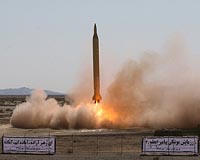 US asked China to stop N.Korea-Iran trade: leaked documents
Beijing (AFP) Nov 29, 2010 Washington demanded China block shipments of missile parts from North Korea to Iran, according to US documents leaked by WikiLeaks and cited by the Guardian on Sunday. The British newspaper, citing a diplomatic cable from 2007, said the United States gave China specific details about a shipment that was expected to transit Beijing. "We... insist on a substantive response from China to th ... read more |
|
|
| The content herein, unless otherwise known to be public domain, are Copyright 1995-2010 - SpaceDaily. AFP and UPI Wire Stories are copyright Agence France-Presse and United Press International. ESA Portal Reports are copyright European Space Agency. All NASA sourced material is public domain. Additional copyrights may apply in whole or part to other bona fide parties. Advertising does not imply endorsement,agreement or approval of any opinions, statements or information provided by SpaceDaily on any Web page published or hosted by SpaceDaily. Privacy Statement |


 del.icio.us
 Digg
Digg Reddit
 YahooMyWeb
 Google
 Facebook


