|
 |
 |
 |
 |
 |
 |
 |

| . |  |
. |

|
|
. |

 by Staff Writers Sydney, Australia (SPX) Sep 23, 2011
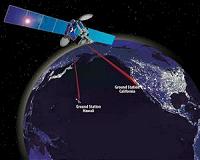
PlusComms Pty Limited based in Sydney, Australia has announced that it is building a Global Space Network (GSN) subject to financing. The project involves 3 x 30m dishes in key locations around the world. The Project, called MissionTrax could be operational by second quarter 2012. The driver for the project has been to locate large dishes with a 30 year or more lifetime and bring them back to full service. Not only is this a very environmentally friendly approach, but it also has the added benefit of costing 1/10th the price of building a new service with the same specifications. The first dish is located in California on the east coast of the USA. The site will be purchased and refurbished to operational standards, but it will be no longer used as a satellite "Earth station". It will soon be part of a global network able to continuously track almost anything around the equatorial plane + or - 40 degrees. Although the coverage has yet to be tested at a range of frequencies, it is expected that missions as far away as Mars will have continuous coverage from Earth (excluding the rotation of Mars). The distance to Mars at the at the furthest point from Earth is 401 million km / 250 million miles - that is just under 3 Astronomical Units - or just under 3 times the distance from the earth to the sun. The three sites need to be on longitude that is 120 degrees from each other. Manager of PlusComms, Robert Brand said "The extent of the coverage of course depends on the frequency being used and the power of the spacecraft. It is expected that communications with spacecraft near outer planets will also be part of the GSN's capabilities but further testing will be done to confirm the overall performance of each dish and the complete network". "Modern satellite technology now allows dishes to be small and able to be placed in city locations. These older 30m dishes were built big to gather the weak signals and were located in "radio signal" quiet areas because the signals were hard to process. This makes these original workhorses redundant for tracking communications satellites, but perfect for building a GSN. Each GSN site will provide overlapping coverage of the previous site at a distance around 30,000 to 35,000km from the Earth's surface (the blue circle in the attached diagram. These dishes were also built to a high tolerance and have specifications to over 15GHz. They are also Beam Wave Guide (BWG) dishes and thus the signal is beamed in a big tube right to the control room. This allows us to build a railway track to quickly disconnect and shunt in new equipment for different bands and capabilities. It is expected that it will take 45mins to connect and align a unit and 15 minutes to disconnect, allowing a one hour booking for a quick link with a spacecraft or rover / experiment on Mars or the Moon. The site will also provide full TT and C capability to fire engines and control satellites. In addition to the GSN capability, the US site will also be equipped as a large hosting centre for servers and other systems, with the ability to have individual partitions for companies. These sites were built to withstand a nearby blast from a nuclear bomb. With massive concrete walls the US site has amazing security and the ability to act as redundant site for most applications and secure the continued data operations of companies. The site already has fiber connectivity and plenty of room for more dishes. It is expected that this site will have multitenant uses. "We would also like to return something to the global community and stimulate students by allowing automated access for basic Radio Telescope work when not booked for space tracking. We will employ automated systems via the Internet to explore the sky. The large dish may also be used for special events by other not for profit groups" Brand said. "The service will be headquartered in Sydney Australia. With the number of private space missions predicted to climb rapidly and a focus on the Moon and Mars, we expect a real growth in business over the next few years." Potential users of the facility should contact: Robert Brand [email protected] Related Links PlusComms Space Technology News - Applications and Research
|
. |
|
| The content herein, unless otherwise known to be public domain, are Copyright 1995-2011 - Space Media Network. AFP and UPI Wire Stories are copyright Agence France-Presse and United Press International. ESA Portal Reports are copyright European Space Agency. All NASA sourced material is public domain. Additional copyrights may apply in whole or part to other bona fide parties. Advertising does not imply endorsement,agreement or approval of any opinions, statements or information provided by Space Media Network on any Web page published or hosted by Space Media Network. Privacy Statement |


 del.icio.us
 Digg
Digg Reddit
 Google