
 |
 |
 |
 |
 |
 |
 |
 |
 |
 |

| . |  |
. |

London, UK (SPX) May 24, 2011 In the opening editorial to the latest edition of the Journal of Radiological Protection, published, Wednesday 18 May, radiological protection expert Professor Richard Wakeford of the Dalton Nuclear Institute, The University of Manchester, gives a detailed account of events at Fukushima Dai-ichi Nuclear Power Station, and poses several questions that remain unanswered, several weeks on from the earthquake and tsunami on 11 March. Taking a close look at information disclosed by Japanese government ministries, the World Health Organisation, the International Atomic Energy Agency and others, Professor Wakeford details events at the six different reactors, and the consequent releases of radioactivity. While praising the organisational abilities of the Japanese authorities and the heroic efforts of emergency workers, Wakeford is critical of alarmist pronouncements from some of those in authority outside Japan, and offers perspective on the radiological hazard the emergency poses. Professor Wakeford highlights a peculiarity of the International Nuclear and Radiological Event Scale (INES). The INES, designed to communicate to the public the severity of events at nuclear facilities, rather confusingly brackets Fukushima with Chernobyl as a Level 7 major accident, despite Fukushima only having released 10% of the radioactivity released by Chernobyl at the time the INES announcement was made. Professor Wakeford explains, "Since Level 7 is the highest rating on INES there can be no distinction between the Fukushima and Chernobyl accidents, leading many to proclaim the Fukushima accident as 'another Chernobyl', which it is not....... A situation which has led to criticism of the INES." Wakeford also highlights how lessons have been learnt since Chernobyl and have helped guide the actions taken by Japanese authorities, including the establishment of a 20km radius evacuation zone, banning the consumption of contaminated foodstuffs, issuing stable iodine tablets, and the monitoring of the thyroids of nearly 1,000 children in badly affected areas. Professor Wakeford also compares the reality on the ground - sad but orderly evacuations and low level radiation risks among the most vulnerable - with the pronouncements from some of those in authority outside Japan which, Wakeford writes, "have been breathtaking in their extravagance." "Gunther Oettinger, European Commissioner for Energy, was reported on 15 March as saying, 'There is talk of an apocalypse and I think the word is particularly well-chosen.' Such remarks could have triggered panic in Tokyo and flight on the roads south, which would almost certainly have caused accidents and deaths." While the monitoring of radiation levels across and beyond Fukushima Prefecture, and among those most likely to be affected, has returned results more encouraging than much of the speculation would suggest, Wakeford does point to some serious ongoing concerns. One difficult decision facing the Japanese authorities is when and if evacuees are allowed to return to their homes. This will be especially problematical in the sector to the north-west of the site that has been particularly badly affected, and measures are likely to be needed in certain areas to reduce radiation levels before people are permitted to live there permanently. Another key concern is how authorities will contain and deal with the highly contaminated water that has been found to be present on the Fukushima site. Many questions surrounding events in Fukushima remain unanswered, most hinging on whether emergency systems were adequate to meet foreseeable, even if unlikely, circumstances. Professor Wakeford concludes, however, in admiration of Japanese courage, "Given the difficult background circumstances pertaining in Fukushima Prefecture as problems mounted at the Fukushima Dai-ichi NPS, the organisational abilities of the Japanese authorities in dealing with the evacuation, monitoring and protection of the public has to be admired. In particular, the heroic efforts of the emergency workers, battling under conditions that were often atrocious, should not pass without respect and praise. I for one bow to their courage." From Wednesday 18 May, Professor Richard Wakeford's editorial can be found at http://iopscience.iop.org/0952-4746/31/2/E02
Share This Article With Planet Earth
Related Links Institute of Physics Space Technology News - Applications and Research

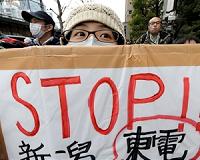 Japanese protest revised school radiation limit
Tokyo (AFP) May 23, 2011 Furious parents at the centre of Japan's atomic crisis and hundreds of their supporters rallied in Tokyo Monday against revised nuclear safety standards in schools they say are putting children at risk. Japanese children can now be exposed to 20 times the radiation that was permissible before the March 11 tsunami caused a meltdown at the Fukushima nuclear plant, sparking the world's worst nu ... read more |
|
|
| The content herein, unless otherwise known to be public domain, are Copyright 1995-2010 - SpaceDaily. AFP and UPI Wire Stories are copyright Agence France-Presse and United Press International. ESA Portal Reports are copyright European Space Agency. All NASA sourced material is public domain. Additional copyrights may apply in whole or part to other bona fide parties. Advertising does not imply endorsement,agreement or approval of any opinions, statements or information provided by SpaceDaily on any Web page published or hosted by SpaceDaily. Privacy Statement |


 del.icio.us
 Digg
Digg Reddit
 YahooMyWeb
 Google
 Facebook


