|
 |
 |
 |
 |
 |
 |
 |
 |
 |

| . |  |
. |
Reaching The Parts With Herschel And SPIRE
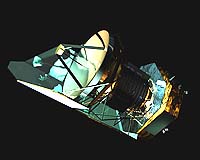
London, UK (SPX) Apr 05, 2007 A UK-led instrument which will study a previously unexplored part of the Universe leaves the UK this week to be installed on the European Space Agency's Herschel spacecraft in Germany. Herschel, a multi purpose space observatory, is scheduled to launch in 2008, in a dual configuration with ESA's cosmic microwave background mission, Planck. The spacecraft will view the Universe in the far and sub-millimetre wavelength bands and will study the process of how stars form and evolve. As well as looking at our own galaxy and its evolution, Herschel will look at how galaxies formed in the early Universe on a grand scale. Professor Keith Mason, CEO of the Science and Technology Facilities Council, said, "What is particularly exciting about Herschel is that it will be able to study, in an unrestricted way, a large area of the Universe (between 200 and 400 microns) that cannot be viewed from Earth. The instruments onboard really will be probing the hidden areas of our Universe." With a sophisticated payload the spacecraft will also be able to study the atmospheres around planets, comets and satellites. There are three instruments onboard Herschel:- SPIRE (Spectral and Photometric Imaging Receiver), HIFI (the Heterodyne Instrument for the Far Infrared) and PACS (Photodetector Array Camera and Spectrometer). The SPIRE instrument has been built, assembled and tested at Rutherford Appleton Laboratory in Oxfordshire by an international consortium from Europe, US, Canada and China. Professor Matt Griffin from Cardiff University who is Principal Investigator for SPIRE said, "SPIRE is designed to exploit Herschel's unique capabilities in addressing two of the most prominent questions in astrophysics:- how and when did galaxies form and how do stars form?" He adds, "Herschel will have the largest astronomical telescope yet flown in space, and it will cover a part of the spectrum that is vital to our knowledge of the universe, but poorly studied so far. Previous missions with much smaller telescopes have started to look at this area, and now Herschel will do so with far better sensitivity and image quality. SPIRE is being transported to Astrium's test facility in Friedrichschafen in Germany where it will be tested alongside the other instruments before being assembled onto the spacecraft next year. Eric Sawyer, SPIRE Project Manager from Rutherford Appleton Laboratory said, "SPIRE is made up of three elements - the focal plane unit which will be inside the Herschel cryostat, responsible for keeping all the spacecraft's instrumentation cool, and two boxes of warm electronics which will be used to control the instrument and collect data. This is a huge milestone for the SPIRE team, many of whom have been working on the project since its initial conception more than a decade ago." There will be an opportunity to find out more about the mission and see the Herschel spacecraft being assembled at Astrium in Friedrichshafen, Germany. Further details will be available in due course. Email This Article
Related Links  Paris, France(ESO) Apr 03, 2007
On the evening of 25 March 2007, the Multi-Conjugate Adaptive Optics Demonstrator (MAD) achieved First Light at the Visitor Focus of Melipal, the third Unit Telescope of the Very Large Telescope (VLT). MAD allowed the scientists to obtain images corrected for the blurring effect of atmospheric turbulence over the full 2x2 arcminute field of view. This world premiere shows the promises of a crucial technology for Extremely Large Telescopes. |
|
|

| The content herein, unless otherwise known to be public domain, are Copyright 1995-2006 - SpaceDaily.AFP and UPI Wire Stories are copyright Agence France-Presse and United Press International. ESA PortalReports are copyright European Space Agency. All NASA sourced material is public domain. Additionalcopyrights may apply in whole or part to other bona fide parties. Advertising does not imply endorsement,agreement or approval of any opinions, statements or information provided by SpaceDaily on any Web page published or hosted by SpaceDaily. Privacy Statement |