
. Military Space News .
BIO FUEL
Researchers create artificial mother-of-pearl using bacteria
by Staff Writers
Rochester NY (SPX) Apr 24, 2019

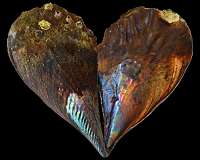
illustration only

The strongest synthetic materials are often those that intentionally mimic nature.

One natural substance scientists have looked to in creating synthetic materials is nacre, also known as mother-of-pearl. An exceptionally tough, stiff material produced by some mollusks and serving as their inner shell layer, it also comprises the outer layer of pearls, giving them their lustrous shine.

But while nacre's unique properties make it an ideal inspiration in the creation of synthetic materials, most methods used to produce artificial nacre are complex and energy intensive.

Now, a biologist at the University of Rochester has invented an inexpensive and environmentally friendly method for making artificial nacre using an innovative component: bacteria. The artificial nacre created by Anne S. Meyer, an associate professor of biology at Rochester, and her colleagues is made of biologically produced materials and has the toughness of natural nacre, while also being stiff and, surprisingly, bendable.

The method used to create the novel material could lead to new applications in medicine, engineering--and even constructing buildings on the moon.

Impressive Mechanical Properties
The impressive mechanical properties of natural nacre arise from its hierarchical, layered structure, which allows energy to disperse evenly across the material. In a paper published in the journal Small, Meyer and her colleagues outline their method of using two strains of bacteria to replicate these layers. When they examined the samples under an electron microscope, the structure created by the bacteria was layered similarly to nacre produced naturally by mollusks.

Although nacre-inspired materials have been created synthetically before, the methods used to make them typically involve expensive equipment, extreme temperatures, high-pressure conditions, and toxic chemicals, Meyer says. "Many people creating artificial nacre use polymer layers that are only soluble in nonaqueous solutions, an organic solvent, and then they have this giant bucket of waste at the end of the procedure that has to be disposed of."

To produce nacre in Meyer's lab, however, all researchers have to do is grow bacteria and let it sit in a warm place.

From Bacteria To Nacre
In order to make the artificial nacre, Meyer and her team create alternating thin layers of crystalized calcium carbonate--like cement--and sticky polymer. They first take a glass or plastic slide and place it in a beaker containing the bacteria Sporosarcina pasteurii, a calcium source, and urea (in the human body, urea is the waste product excreted by the kidneys during urination). This combination triggers the crystallization of calcium carbonate. To make the polymer layer, they place the slide into a solution of the bacteria Bacillus licheniformis, then let the beaker sit in an incubator.

Right now it takes about a day to build up a layer, approximately five micrometers thick, of calcium carbonate and polymer. Meyer and her team are currently looking at coating other materials like metal with the nacre, and "we're trying new techniques to make thicker, nacre-like materials faster and that could be the entire material itself," Meyer says.

Building Houses On The Moon
One of the most beneficial characteristics of the nacre produced in Meyer's lab is that it is biocompatible--made of materials the human body produces or that humans can eat naturally anyway. This makes the nacre ideal for medical applications like artificial bones and implants, Meyer says. "If you break your arm, for example, you might put in a metal pin that has to be removed with a second surgery after your bone heals. A pin made out of our material would be stiff and tough, but you wouldn't have to remove it."

And, while the material is tougher and stiffer than most plastics, it is very lightweight, a quality that is especially valuable for transportation vehicles like airplanes, boats, or rockets, where every extra pound means extra fuel. Because the production of bacterial nacre doesn't require any complex instruments, and the nacre coating protects against chemical degradation and weathering, it holds promise for civil engineering applications like crack prevention, protective coatings for erosion control, or for conservation of cultural artifacts, and could be useful in the food industry, as a sustainable packaging material.

The nacre might also be an ideal material to build houses on the moon and other planets: the only necessary "ingredients" would be an astronaut and a small tube of bacteria, Meyer says. "The moon has a large amount of calcium in the moon dust, so the calcium's already there. The astronaut brings the bacteria, and the astronaut makes the urea, which is the only other thing you need to start making calcium carbonate layers."

Even beyond its qualities as an ideal structural material, nacre itself--as any pearl jewelry owner knows--is "very beautiful," Meyer says, owing to its stacked layers. Each stacked layer is approximately the same wavelength as visible light. When light hits the nacre, "the wavelengths of light interact with these layers of the same height so it bounces back off in the same wavelength as visible light." While the bacterial nacre does not interact with visible light because the layers are thicker than natural nacre, it could interact with infrared wavelengths and bounce infrared off itself, Meyer says, which "may offer unique optical properties."


Related Links
University of Rochester
Bio Fuel Technology and Application News


Thanks for being here;
We need your help. The Space Media Network continues to grow but revenues have never been harder to maintain.

With the rise of Ad Blockers, and Facebook - our traditional revenue sources via quality network advertising continues to decline. And unlike so many other news sites, we don't have a paywall - with those annoying usernames and passwords.

Our news coverage takes time and effort to publish 365 days a year.

If you find our news sites informative and useful then please consider becoming a regular supporter or for now make a one off contribution.
SpaceMediaNetwork Contributor
$5 Billed Once


credit card or paypal
SpaceMediaNetwork Monthly Supporter
$5 Billed Monthly


paypal only


BIO FUEL
Study: Reducing energy required to convert CO2 waste into valuable resources
Champaign IL (SPX) Apr 23, 2019
Surplus industrial carbon dioxide creates an opportunity to convert waste into a valuable commodity. Excess CO2 can be a feedstock for chemicals typically derived from fossil fuels, but the process is energy-intensive and expensive. University of Illinois chemical engineers have assessed the technical and economic feasibility of a new electrolysis technology that uses a cheap biofuel byproduct to reduce the energy consumption of the waste-to-value process by 53 percent. Conversion of CO2 to chemic ... read more

Comment using your Disqus, Facebook, Google or Twitter login.


Share this article via these popular social media networks
del.icio.usdel.icio.us DiggDigg RedditReddit GoogleGoogle

BIO FUEL
Navy executes successful test of AEGIS Virtual Twin software in missile test

NATO to use THAAD in Romania this summer

Erdogan says Russian S-400s delivery could be earlier

State Dept. approves $1.1B sale of SM-3 anti-ballistic missiles to Japan

BIO FUEL
Turkey says understands NATO concerns over Russian missile deal

Lockheed awarded $362.7M for Army's multiple launch rocket systems

Boeing receives contract modification for Standoff Land Attack Missiles

Raytheon awarded $19M contract for work on SM-2, SM-6 missiles

BIO FUEL
NASC TigerShark-XP UAV Receives FAA Experimental Certification

Cubic to support Boeing's MQ-25 unmanned tanker for the US Navy

Percepto launches its all-in-one aerial solution for autonomous operations

Google-linked firm wins US approval for drone deliveries

BIO FUEL
Boeing awarded $605M for Air Force's 11th WGS comms satellite

SLAC develops novel compact antenna for communicating where radios fail

US Army selects Hughes for cooperative effort to upgrades NextGen Friendly Forces System

United Launch Alliance launches WGS-10 satellite for USAF

BIO FUEL
Marines to field enhanced handheld targeting system later this year

Marines to replace LAV with new armored vehicle in next decade

GenDyn awarded $125M for MK80, BLU-109 bomb components

Boeing awarded $65M in foreign military sales for small diameter bombs

BIO FUEL
US military spending up for first time in 7 years: Sipri

Acting Defense Secretary Patrick Shanahan cleared in ethics probe

Inquiry opens into leaked classified 'French weaponry in Yemen' note: sourcesw/ll

Israeli defence sales topped $7.5 bn in 2018: ministry

BIO FUEL
China says navy warned off French warship in Taiwan Strait

Japan's Emperor Akihito ends reign marked by modernisation

Hungary will lead NATO's Baltic Air Policing next month

USS Ross tracked by Russian fleet after entering Black Sea

BIO FUEL
Fast and selective optical heating for functional nanomagnetic metamaterials

2D gold quantum dots are atomically tunable with nanotubes

Harnessing microorganisms for smart microsystems

AD alloyed nanoantennas for temperature-feedback identification of viruses and explosives


The content herein, unless otherwise known to be public domain, are Copyright 1995-2024 - Space Media Network. All websites are published in Australia and are solely subject to Australian law and governed by Fair Use principals for news reporting and research purposes. AFP, UPI and IANS news wire stories are copyright Agence France-Presse, United Press International and Indo-Asia News Service. ESA news reports are copyright European Space Agency. All NASA sourced material is public domain. Additional copyrights may apply in whole or part to other bona fide parties. All articles labeled "by Staff Writers" include reports supplied to Space Media Network by industry news wires, PR agencies, corporate press officers and the like. Such articles are individually curated and edited by Space Media Network staff on the basis of the report's information value to our industry and professional readership. Advertising does not imply endorsement, agreement or approval of any opinions, statements or information provided by Space Media Network on any Web page published or hosted by Space Media Network. General Data Protection Regulation (GDPR) Statement Our advertisers use various cookies and the like to deliver the best ad banner available at one time. All network advertising suppliers have GDPR policies (Legitimate Interest) that conform with EU regulations for data collection. By using our websites you consent to cookie based advertising. If you do not agree with this then you must stop using the websites from May 25, 2018. Privacy Statement. Additional information can be found here at About Us.