
 US, China hail warmer relationship Beijing (AFP) Sept 6, 2010 - Chinese and US officials congratulated each other Monday on a warming of ties between the two powers, after relations were strained earlier this year. Vice Premier Wang Qishan said he was looking forward to discussing China-US ties in trade, investment and finance in talks with US Deputy National Security Adviser Thomas Donilon and US National Economic Council Chairman Larry Summers. Summers said US President Barack Obama had emphasised "the importance he attaches to a very strong relationship between the United States and China, and to President Hu's upcoming visit to the United States". "I think we all benefit from candid conversation that enables us both to understand each other's thinking," Summers said, before the two sides began closed-door talks. Wang's comments came after Li Yuanchao, a top official with the ruling Communist Party, said China-US relations were back on track after being waylaid by difficulties earlier this year. "Although there were some disturbances in China-US relations... relations have gotten back on a sound track," Li told the visiting Americans. Neither side has offered detailed information on the purpose of the four-day visit or what was to be discussed. However officials from the two sides have met recently about the possibility of resuming six-nation negotiations on ridding North Korea of its nuclear programmes. Tensions spiked this year over issues including a US arms sale to Taiwan, a meeting in February between President Barack Obama and the exiled Tibetan spiritual leader the Dalai Lama, and trade disputes. However the temperature has cooled considerably in recent months following several high-level meetings of the two sides, including between Obama and President Hu Jintao. The two White House officials also met with Chinese Foreign Minister Yang Jiechi. |
"These are still groups on the margins. But it is significant that the top leadership now has to take into account diverse views," the Swedish institute's China programme director Linda Jakobson told AFP in Helsinki, where the report was launched.
New pressure groups like state-owned and even some large privately-owned enterprises, local governments, expert advisors, as well as public input via media and online communities are all being heard to some extent in the inner sanctum of the Communist Party, the report said.
Jakobson noted that Chinese policy creation is still shrouded in secrecy, so it is extremely difficult to gauge how much pressure these new groups are able to put on the traditional power bulwarks of the Communist Party, the State Council and the People's Liberation Army.
Nonetheless, this development points to the fact that China's ruling party is no longer a monolithic entity, but one being pulled in different directions, the report said.
These rising pressure groups are able to make an impact not only through traditional channels such as personal networks, but increasingly by writing newspaper columns, blogs, making public speeches and even through television debates.
Jakobson said these channels are no longer entirely closed off to the public, and that China is transforming into a country where a degree of pluralism and public debate is possible.
"The government and the Party do their utmost to control public opinion, but because of these omni-directional forces at play, they don't want citizens to be dissatisfied with foreign policy especially in times of crisis," she said.
"If netizens think that Chinese leaders are bowing to pressure from Western leaders, it's not a large step to netizens questioning whether they are capable of leading," she added.
SIPRI's report said that these new interest groups are especially eager to see China more strongly defend its interests on the global stage, which would involve becoming more active internationally.
However, the report outlines a scenario where these new forces are engaged in a political tug-of-war with traditional political structures that aim to avoid an overreliance on world markets.
For example, the report said that China's ministry of state security fears an influx of Western values "will make it more difficult for the Communist Party to dominate public discourse on questions concerning human rights, transparency and accountability."
Jakobson said that Western countries should approach this schism by seeking to allay fears that a more open China will result in a more vulnerable Chinese state.
"We have to persistently engage them to dispel these suspicions, but at the same time we can't just give them carte blanche to stipulate the conditions for engagement," said Jakobson.
SIPRI is an independent international institute dedicated to research into conflict, armaments, arms control and disarmament. SIPRI is named as one of the world's leading think tanks in Foreign Policy magazine's Think Tank Index.
 del.icio.us del.icio.us |
 Digg Digg |
 Reddit Reddit |
 YahooMyWeb YahooMyWeb |
 Google Google |
 Facebook Facebook |

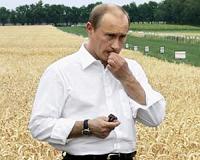 'Where is the reset?': sceptical Putin asks in interview
| The content herein, unless otherwise known to be public domain, are Copyright 1995-2010 - SpaceDaily. AFP and UPI Wire Stories are copyright Agence France-Presse and United Press International. ESA Portal Reports are copyright European Space Agency. All NASA sourced material is public domain. Additional copyrights may apply in whole or part to other bona fide parties. Advertising does not imply endorsement,agreement or approval of any opinions, statements or information provided by SpaceDaily on any Web page published or hosted by SpaceDaily. Privacy Statement |


