|
 |
 |
 |
 |
 |
 |
 |
 |
 |

| . |  |
. |
Russian Space Program Needs To Change
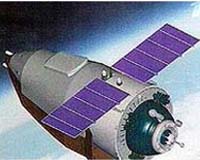
Moscow (RIA Novosti) Aug 12, 2007 If the past is any guide, we will learn about the latest plans for the Russian space program at the end of August. On the 21st, the MAKS-2007 international aerospace show will open in Zhukovsky, outside Moscow. Why such certainty that important announcements will be made? Two years ago, at the previous show, visitors admired a mock-up of Russia's Kliper reusable spacecraft developed by Energiya, the flagship corporation of the Russian aerospace industry. The Russian Space Agency (Roskosmos) announced that the craft would open up a new chapter in space exploration. A year later, in Farnborough, the Space Agency declared that the Kliper project was as good as complete and announced a marathon program to upgrade the Soyuz craft, which has been around for 50 years. In between the shows, some attempts were made to reconcile the conflicting plans concerning manned flights to the Moon and Mars, but the situation was not made any clearer. Now seems to be the time for a showdown, especially since the agency's head Anatoly Perminov will have an excellent opportunity to explain a lot of things as a professional. One is, what kind of space program does Russia have? Six months ago, no one questioned that it did indeed have one. There was the Federal Space Program for 2006-2015. Later the Space Agency began talking about prospects for the period until 2040. Now another question arises: if these are just sketches of plans that do not call for any great human effort or financing, that is one thing. If specific research and development are meant, not to mention experimental-design work, that is another. In that case, one will have to hark back to the remote 1930s and 1940s to shed light on the current strained developments. But that is not all. Very recently, in early August, Space Agency deputy head Vitaly Davydov said that according to the program, no Moon expeditions were planned until 2015. The Space Agency has given a sober assessment of its possibilities for the period concerned, limiting the lunar program to three research satellites. But Davydov developed his thought further, saying that the federal program would be updated. "In two years' time, in about 2010, we will extend it to 2020." This seems to me like a third program, in addition to the ones until 2015 and 2040 mentioned above, with all the financial and economic consequences that entails. I may be wrong, and I am willing to listen to anyone who has a different interpretation, but that's how I see it. According to Davydov, work to update the existing space program is already under way and provides specifically for plans "which include not only manned flights to the Moon, but also beyond." "Beyond" clearly points to Mars. But nothing is certain about the Moon. If the program covers the period until 2020, and we know that no lunar initiatives of note are planned before 2015, then the strategic offensive on our natural satellite must be prepared and effected in a space of five or so years. I might be willing to believe that could happen, but something is preventing me. According to Vitaly Lopota, the newly elected Energiya president, the corporation has no money for the Moon program. He thinks, however, that funding will become available if the agency approves an appropriate program. This is a faint hope. But if such a program should see the light of day, how can it be smoothly incorporated into the plans that are already funded? Today, no one can be sure what technology will be needed to tackle the Moon. A new space transport vehicle for Russia is already so urgent a matter that the issue has ceased to be a narrow engineering problem, rising before the Russian aerospace industry in all its magnitude. This situation borders on the absurd. According to Alexei Krasnov, head of manned flights at the agency, who spoke on the issue in early August, it appears that the Federal Space Agency is rethinking the Kliper because it does not suit the Moon flights program. This is some news. Incidentally, Nikolai Sevastyanov, the former head of Energiya, who was put out to grass on July 31, was blamed for the pro-lunar slant of the corporation's plans. The Kliper was never meant to be a lunar vehicle and was looked to as a replacement for the ageing Soyuz spacecraft in near-Earth orbits. Now it appears that everyone has forgotten the Kliper, instead suggesting the Soyuz as a lunar vehicle. The latter will almost certainly be the only link with the International Space Station (ISS) after the Americans finally ground their shuttles in 2010. Even if Russia's aerospace industry only manages to formulate a general strategy for developing future rocket technology, that would be a stroke of luck. For the time being, the "un-Americanized" international station can only count on equipment developed 50 years ago, and possibly on the upcoming MAKS-2007 show. This is its only other chance. The opinions expressed in this article are the author's and do not necessarily represent those of RIA Novosti.
Source: RIA Novosti Community Email This Article Comment On This Article Related Links Space Analysis and Space OpEds
 The United Nations Of Space
 Paris, France (SPX) Jun 15, 2007
Countries used to race for space, now they collaborate. Since 1958, COSPAR - The Committee on Space Research - has played its part as the scientific United Nations of space research. Astrobiology Magazine talks to its president, Roger Bonnet, about COSPAR's international role; its Panel on Planetary Protection, and the enforcement of their planetary protection rules for extra-terrestrial exploration. |
|
|

| The content herein, unless otherwise known to be public domain, are Copyright 1995-2006 - SpaceDaily.AFP and UPI Wire Stories are copyright Agence France-Presse and United Press International. ESA PortalReports are copyright European Space Agency. All NASA sourced material is public domain. Additionalcopyrights may apply in whole or part to other bona fide parties. Advertising does not imply endorsement,agreement or approval of any opinions, statements or information provided by SpaceDaily on any Web page published or hosted by SpaceDaily. Privacy Statement |