
 |
"It is absolutely beyond understanding what aims this extremely dangerous provocative step may serve, which poses a threat not only to the Black Sea region but to the security of Europe as a whole," the Georgian foreign ministry said in a statement.
Saying the deployment would "put into jeopardy the security of civil aviation," it called on the international community to "take decisive measures to make Russia abandon its policy of military build-up on Georgia's occupied territories and fully comply with its international commitments."
Russia announced Wednesday it had deployed the S-300 missile system in Abkhazia, saying it would provide anti-aircraft defence for Abkhazia and Georgia's other Moscow-backed rebel region, South Ossetia.
US State Department spokesman Philip Crowley played down the announcement, saying: "I believe it's our understanding that Russia has had S-300 missiles in Abkhazia for the past two years."
Georgia insists that Abkhazia and South Ossetia are an integral part of its territory, but Russia recognised the two regions as independent after its war with Georgia two years ago.
First manufactured by the Soviet Union in 1978, the S-300 is a surface-to-air missile system capable of tracking and destroying ballistic missiles, cruise missiles and aircraft at a range of up to 100-200 kilometres (60-125 miles).
The 2008 war saw Russian forces pour into Georgia after fighting broke out over South Ossetia, prompting the worst post-Cold War crisis between Russia and the West. An EU-brokered ceasefire has held, despite tensions.
 del.icio.us del.icio.us |
 Digg Digg |
 Reddit Reddit |
 YahooMyWeb YahooMyWeb |
 Google Google |
 Facebook Facebook |

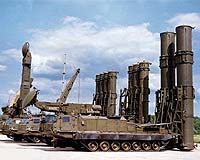 Russia deploys air defence missiles in Abkhazia: general
| The content herein, unless otherwise known to be public domain, are Copyright 1995-2010 - SpaceDaily. AFP and UPI Wire Stories are copyright Agence France-Presse and United Press International. ESA Portal Reports are copyright European Space Agency. All NASA sourced material is public domain. Additional copyrights may apply in whole or part to other bona fide parties. Advertising does not imply endorsement,agreement or approval of any opinions, statements or information provided by SpaceDaily on any Web page published or hosted by SpaceDaily. Privacy Statement |


