|
 |
 |
 |
 |
 |
 |
 |
 |
 |

| . |  |
. |
In-flight Demonstration Of Innovative Combined Antenna/Solar Array
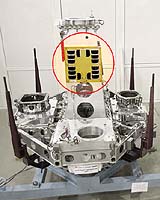
Paris (ESA) Nov 01, 2005 In-flight testing of the results of ESA-funded research into and development of combined solar arrays and antennas commenced on 27 October, when an experimental device was launched into low Earth orbit. The ability to implement these two spacecraft components as a single unit will offer substantial mass and cost savings for future missions. Most spacecraft use both solar arrays, to generate electrical power for their systems, and antennas, for communication with the ground and possibly as part of their mission. On large spacecraft, the various antennas compete with the solar generators for available space. On small satellites, the integration of solar arrays and antennas could lead to reductions in spacecraft size, mass and cost. ESA has funded research and development activities aimed at demonstrating combined solar arrays and antennas. The initial phase was a feasibility study and construction of a prototype, know as Solar Antenna (Solant). This was followed by the design and construction of breadboard antennas to satisfy the requirements of a real mission. Now, an in-flight demonstration of the Advanced Solar Antenna (Asolant) is being conducted. Two different antennas have been manufactured and integrated with Gallium Arsenide based solar panels. One antenna has been designed to receive signals from Global Positioning System (GPS) satellites, while the second transmits an S-band beacon signal to the ground. In this way, both the transmitting and receiving capabilities of Asolant will be demonstrated in a real, in-flight configuration. The demonstration platform is the payload adapter of the Kosmos rocket that launched SSETI Express. The Asolant experiment is attached to the payload adapter, which is mounted on the upper stage of the launch vehicle to support SSETI Express and its fellow passengers during launch. After separation of all the components of the launcher payload, the upper stage of the rocket will remain in orbit for some months. The day after launch, the first signal was received from Asolant. While the payload adapter remains in orbit, the in-flight experiment will continue, collecting information about the performance of the test components. In particular, data concerning the evolution of the solar panel performance and the quality of the GPS reception will be transmitted to the ground station, allowing continuous monitoring of the status of Asolant. Asolant may also have interesting spin-offs for terrestrial applications. For example, roof tiles might be used for simultaneous power generation and reception of satellite television, and isolated base stations for mobile telephone and alarm systems could become simpler and cheaper. Buoy-based solar antennas could improve atmospheric and oceanic data-gathering, providing better early-warning systems for hurricanes, tsunamis and other environmental phenomena. Partners involved with the project are HTS High Technology Systems AG, OHB-System AG, Ecole Polytechnique Federale de Lausanne (EPFL) and German Aerospace Centre (DLR). Related Links HTS High Technology Systems DLR SpaceDaily Search SpaceDaily Subscribe To SpaceDaily Express  An Odd List Of Body Parts
 Huntsville AL (SPX) Oct 28, 2005
Picture this: An astronaut, on the Moon, hunched down over a rock, hammer in hand, prospecting. Suddenly, over his shoulder, there's a flash of light on the sun. |
|
|

| The content herein, unless otherwise known to be public domain, are Copyright 1995-2006 - SpaceDaily.AFP and UPI Wire Stories are copyright Agence France-Presse and United Press International. ESA PortalReports are copyright European Space Agency. All NASA sourced material is public domain. Additionalcopyrights may apply in whole or part to other bona fide parties. Advertising does not imply endorsement,agreement or approval of any opinions, statements or information provided by SpaceDaily on any Web page published or hosted by SpaceDaily. Privacy Statement |