. Military Space News .
Space missions focus on salmonella

disclaimer: image is for illustration purposes only
by Staff Writers
Houston (UPI) Mar 12, 2009
National Aeronautics and Space Administration scientists say two recent U.S. space missions have produced discoveries concerning salmonella bacteria.

Julie Robinson, a program scientist at NASA's Johnson Space Center in Houston, said the salmonella findings hold promise for improving ways to fight food-borne infections on Earth.

"This research opens up new areas for investigations that may improve food treatment, develop new therapies and vaccines to combat food poisoning in humans here on Earth and protect astronauts on orbit from infectious disease," said Robinson.

The salmonella experiments were flown on shuttle missions to the International Space Station in September 2006 and March 2008.

"The 2006 experiment results allowed researchers to identify a molecular 'switch' that appears to control salmonella's response to spaceflight in unique ways not observed using traditional experimental approaches on Earth," NASA said, noting the bacteria cultured in space were more virulent than those on Earth.

A research team led by Cheryl Nickerson at Arizona State University subsequently found adjusting the ion content of the bacteria's environment can turn off the rise in virulence caused by spaceflight. The study's findings appeared recently in the Proceedings of the National Academy of Sciences and in the online journal PLoS One.

Share This Article With Planet Earth
del.icio.usdel.icio.us DiggDigg RedditReddit
YahooMyWebYahooMyWeb GoogleGoogle FacebookFacebook


Related Links
Space Medicine Technology and Systems


Memory Foam Mattress Review
Newsletters :: SpaceDaily :: SpaceWar :: TerraDaily :: Energy Daily
XML Feeds :: Space News :: Earth News :: War News :: Solar Energy News


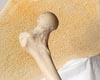
Station Astronauts Lose Alarming Amounts Of Hipbone Strength
Irvine CA (SPX) Jan 27, 2009
Astronauts spending months in space lose significant bone strength, making them increasingly at risk for fractures later in life. UC Irvine and UC San Francisco led a study evaluating 13 astronauts who spent four to six months on the International Space Station and found that, on average, astronauts' hipbone strength decreased 14 percent.


  • Indian envoy sees close ties with Obama
  • US, China try to defuse tension, focus on economy
  • US destroyers to escort ships in South China Sea: official
  • US, China try to defuse tension, focus on economy

  • Iran 'one or two years' from nuclear weapon: Russian expert
  • US lawmakers: Pakistan must give access to nuclear scientist
  • NKorea to launch satellite in early April: IMO
  • US, China 'unified' in opposing NKorean missile launch: Clinton

  • NKorea missile threat may be negotiating tactic: Lee
  • US to urge Russia not to sell missiles to Iran: Clinton
  • NKorean satellite launch would trigger UN sanctions: Aso
  • NKorea assembling rocket ahead of planned launch: report

  • Israel's Iron Dome Years Away From Offering ABM Defense
  • Prithvi ABM hits target missile
  • Anti-Qassam Missile Defense Part One
  • Israel's Iron Dome Years Away From Offering ABM Defense Part 2

  • Cathay Pacific lost 1.1 billion dollars in 2008
  • National hypersonic science centers named
  • First China-assembled Airbus set for June delivery: report
  • China's large passenger jet ready in eight years: report

  • Pakistan complains of 'alienation' from US drone strikes
  • USAF MQ-1 Predators Achieve 500,000 Flight Hours
  • Boeing Insitu ScanEagle UAS Completes Sea Trials With Singapore Navy
  • Pakistan wants to discuss US drone attacks

  • After Iraq, more US caution on preemptive attacks: Gates
  • Iraq/Afghan War News: Iraq to get Abrams
  • Dogs of War: Blue on white
  • Sadrist MP demands immediate US troop pullout

  • Russian air force withdraws 90 faulty MiGs: report
  • BAE Receives First Direct Contract For Tensylon Armor Panels
  • CACI Awarded Contract To Support US Army FLIR Systems
  • Britain grounding Nimrods for modifications after Afghan crash

  • The content herein, unless otherwise known to be public domain, are Copyright 1995-2007 - SpaceDaily.AFP and UPI Wire Stories are copyright Agence France-Presse and United Press International. ESA Portal Reports are copyright European Space Agency. All NASA sourced material is public domain. Additional copyrights may apply in whole or part to other bona fide parties. Advertising does not imply endorsement,agreement or approval of any opinions, statements or information provided by SpaceDaily on any Web page published or hosted by SpaceDaily. Privacy Statement