|
 |
 |
 |
 |
 |
 |
 |
 |
 |

| . |  |
. |
Star Light, Star Bright: FSU Facility Duplicating Conditions Of Supernovas
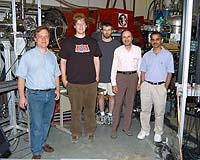
Tallahassee FL (SPX) Aug 16, 2007 How is matter created? What happens when stars die? Is the universe shrinking, or is it expanding? For decades, scientists have been looking for answers to such "big picture" questions. For the past few months, members of the department of physics at Florida State University have begun using a groundbreaking new research facility to conduct experiments that may help provide answers to just such questions. RESOLUT -- short for "REsonator SOLenoid with Upscale Transmission" -- is the name of the facility, which is located within the John D. Fox Superconducting Accelerator Laboratory on the FSU campus. Over the past few months, FSU researchers have begun using RESOLUT to create very rare, extremely short-lived radioactive particles similar to those that form inside exploding stars -- and then using the analytical data produced in the experiments as the basis for hypotheses about the behavior of matter and the physical properties governing the universe. "We're doing experiments that replicate, in a very controlled manner, the explosions that take place in stars," said Ingo Wiedenhover, an associate professor of physics at FSU who heads up the RESOLUT team. "This helps us understand the nuclear processes that occur in stars, the origin of elements, and how stars explode." Getting to this point has been an arduous process that began in 2002. "After five years of proposals, fundraising, designing, building and carefully testing RESOLUT, we are very excited that it has now come online for experiments," said Samuel L. Tabor, a professor of physics at FSU who directs the John D. Fox Superconducting Accelerator Laboratory. "To my knowledge, only one other university in the entire United States has a facility similar to RESOLUT, so our students have a pretty unique opportunity to receive hands-on experience that they can get almost nowhere else." Weighing some 16 tons and taking up more than 450 square feet of space along a wall inside the accelerator lab, RESOLUT enables researchers to fire a beam of atomic particles through a steel tube at speeds approaching 60 million miles per hour -- roughly one-tenth the speed of light -- and then to observe the nuclear reactions that occur. "When the beam strikes a target, the collision produces very exotic nuclei that contain properties similar to those occurring in stars and star explosions," Wiedenhover said. "But perhaps RESOLUT's greatest value as a scientific instrument is its function as a mass spectrometer -- a device that allows us to identify and study the short-lived particles created during these miniature explosions." Wiedenhover currently is overseeing several experiments using RESOLUT that create, for a fraction of a second, a specific type of radioactive nuclei that are found only in a type of exploding star known as a Type Ia supernova. "Type Ia supernovas result when a certain type of star known as a white dwarf reaches a critical mass and burns through its nuclear fuel so quickly that it suddenly explodes," Wiedenhover said. "What makes these explosions so useful for astrophysicists is that they always release the same amount of energy, so their peak brightness is virtually the same in all instances. This uniform level of brightness makes Type Ia supernovas useful as a 'standard candle' -- a gauge for measuring distances across the universe." Such standard candles also have helped scientists to determine in recent years that the universe is expanding, not shrinking -- and that the expansion is taking place at an ever-increasing rate. "Observations of Type Ia supernovas have greatly increased science's understanding of the workings of the universe," Tabor said. "Now, with RESOLUT, we hope to learn even more about these gigantic nuclear explosions -- all from the safety of a lab in a basement on the FSU campus." Community Email This Article Comment On This Article Related Links Florida State University Stellar Chemistry, The Universe And All Within It
 The Gobbling Dwarf That Exploded
 Garching, Germany (SPX) Jul 17, 2007
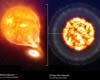
VLT Provides Evidence for Type Ia Supernovae Scenario A unique set of observations, obtained with ESO's VLT, has allowed astronomers to find direct evidence for the material that surrounded a star before it exploded as a Type Ia supernova. This strongly supports the scenario in which the explosion occurred in a system where a white dwarf is fed by a red giant. Because Type Ia supernovae are extremely luminous and quite similar to one another, these exploding events have been used extensively as cosmological reference beacons to trace the expansion of the Universe. |
|
|

| The content herein, unless otherwise known to be public domain, are Copyright 1995-2006 - SpaceDaily.AFP and UPI Wire Stories are copyright Agence France-Presse and United Press International. ESA PortalReports are copyright European Space Agency. All NASA sourced material is public domain. Additionalcopyrights may apply in whole or part to other bona fide parties. Advertising does not imply endorsement,agreement or approval of any opinions, statements or information provided by SpaceDaily on any Web page published or hosted by SpaceDaily. Privacy Statement |