|
 |
 |
 |
 |
 |
 |
 |
 |
 |

| . |  |
. |
Subcommittee Continues Look At Status of NASA Earth Science Programs
Washington, DC (SPX) Jun 29, 2007 The House Committee on Science and Technology's Subcommittee on Space and Aeronautics continues to examine the National Aeronautics and Space Administration's (NASA) Fiscal Year 2008 budget request and plans for the Earth science and applications programs. The latest hearing built upon the Science and Technology Committee's February 13th hearing which examined the findings and recommendations of the National Academies' Earth Science and Applications "Decadal Survey." The Decadal Survey raised concerns about the state of the nation's Earth observations programs and recommended a prioritized set of Earth science missions that NASA and NOAA should undertake over the next decade. "I called today's hearing for the purpose of examining how well NASA's plans and programs compare to the priorities of the Decadal Survey, and the extent to which NASA intends to support those priorities in the FY 08 budget and beyond," said Subcommittee Chairman Mark Udall (D-CO). "As numerous witnesses before this Committee have testified, the situation facing NASA's Earth Science program is not good...to quote the Decadal Survey, the nation's system of environmental satellites is 'at risk of collapse.'" That report went on to state that "In the short period since the publication of the interim report, budgetary constraints and programmatic difficulties at NASA have greatly exacerbated this concern. At a time of unprecedented need, the nation's Earth observation satellite programs, once the envy of the world, are in disarray." "Those are troubling words, because NASA has a major role to play in the nation's - and indeed the world's - climate research efforts," added Udall. "If NASA doesn't step up to that role, the negative consequences of that failure of leadership will be long-lasting." The President's Fiscal Year 2008 budget request includes $1.497 billion for NASA's Earth science and applications programs, an increase of 2 percent over the Fiscal Year 2007 budget request. In the FY 2008 request, increases over the President's FY 2007 budget estimate were required on several missions to avoid additional schedule delays or to deal with cost growth. Those missions include the Global Precipitation Measurement (GPM) mission, Glory, Landsat Data Continuity Mission (LDCM), NPOESS Preparatory Mission (NPP), and Aquarius mission. In addition, NASA canceled the Hydros mission, which was designed to measure soil moisture, due to the agency's lack of funding to support it. Subcommittee Members looked to NASA today to explain how the agency intends to respond to the Decadal Survey's recommendations. "In that regard, I am also concerned about the fate of the climate instruments removed from NPOESS, and the need to ensure that we don't needlessly disrupt the instrument development activities while the Administration is determining what will be done about them," continued Udall. The Subcommittee will continue to closely follow the state of Earth science research underway at NASA. Witnesses at today's hearing included: Dr. Michael H. Freilich, Director of the Earth Science Division of the Science Mission Directorate at NASA, Dr. Richard A. Anthes, President of the University Corporation for Atmospheric Research, Dr. Eric J. Barron, Dean of the Jackson School of Geosciences at The University of Texas at Austin, and Dr. Timothy W. Foresman, President of the International Center for Remote Sensing Education. Community Email This Article Comment On This Article Related Links House Science and Technology Committee Earth Observation News - Suppiliers, Technology and Application
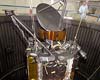
 QuikSCAT Marks Eight Years On-Orbit Watching Planet Earth
 Boulder CO (SPX) Jun 20, 2007
The Quick Scatterometer (QuikSCAT) satellite built by Ball Aerospace and Technologies Corp. completed eight years of outstanding on-orbit operations today, performing six years beyond its minimum two-year mission requirement. QuikSCAT continues to return critical wind data to forecast hurricanes and El Nino effects and pinpoint typhoons and other marine storms, as well as help scientists measure the mass of the Antarctic and Greenland ice sheets. |
|
|

| The content herein, unless otherwise known to be public domain, are Copyright 1995-2006 - SpaceDaily.AFP and UPI Wire Stories are copyright Agence France-Presse and United Press International. ESA PortalReports are copyright European Space Agency. All NASA sourced material is public domain. Additionalcopyrights may apply in whole or part to other bona fide parties. Advertising does not imply endorsement,agreement or approval of any opinions, statements or information provided by SpaceDaily on any Web page published or hosted by SpaceDaily. Privacy Statement |