
 |
 |
 |
 |
 |
 |
 |
 |
 |
 |

| . |  |
. |
Tests Check Out Robotic Rescue Life-Saving Vision
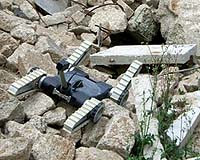
Gaithersburg, MD (SPX) Jun 17, 2008 To save lives, search and rescue robots crawling through the rubble of a collapsed building or surveying a chemical spill area must be capable of beaming back clear, easily interpretable images of what they 'see" to operators and emergency planners, working away from the immediate disaster site. A new ASTM International standard, developed under a National Institute of Standards and Technology (NIST) coordinated program with first responders and manufacturers, offers a systematic way to evaluate the robot visual capability humans need to drive the device, search for victims and access general hazard conditions. Emergency personnel will be able to use the test data to select the best systems for their specific needs. Industry adoption of the standard is expected to accelerate innovation, development and deployment of the life-saving robots. In science fiction, images relayed from robots are readily interpretable by remote operators. Reality can be different. Real-time color video images from urban search-and-rescue robots reflect the type of sensors or camera lens used. A zoom lens, for instance, can be like looking through a soda straw, yet it could be useful in zeroing in on certain important objects. Similarly, images from a lens offering a wide field of view, such as 120 to 150 degrees, offer little depth perception and are of little use for navigating in tight quarters but can, in the case of aerial robots and ground vehicles, provide useful survey data. Both far-vision acuity and near vision acuity, in such instances, can be important for surveys of HAZMAT disaster sites, with the far-vision cameras providing the overall picture and the near-vision acuity playing a critical role in reading chemical labels. (Near-vision acuity also is critical for small robots that must operate in confined spaces.) Finally, the amount of available light can affect monitor images. The standard's test methods measure the field of view of the camera, the system's visual acuity at far distances with both ambient lighting and lighting onboard the robot, visual acuity at near distances, again in both light and dark environments, and visual acuity in both light and dark environments with zoom lens capability, if provided. Results are useful for writing procurement specifications and for acceptance testing of robots for urban search and rescue applications. Further information on NIST's urban search and rescue robot performance standards project, which is sponsored by the Additional information on the new standard ASTM E2566-08, 'Standard Tests Methods for Determining Visual Acuity and Field of View on-board Video Systems for Teleoperation of Robots for Urban Search and Rescue Applications,". Community Email This Article Comment On This Article Share This Article With Planet Earth
Related Links US Department of Homeland Security Science and Technology Directorate National Institute of Standards and Technology All about the robots on Earth and beyond!
 Energy ministers get 'buddy' humanoids
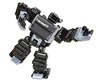 Aomori, Japan (AFP) June 8, 2008
Cabinet ministers from the world's biggest economies who gathered in Japan for grim talks on energy security have one tiny thing to celebrate -- the world's smallest humanoid robot. |
|
|

| The content herein, unless otherwise known to be public domain, are Copyright 1995-2007 - SpaceDaily.AFP and UPI Wire Stories are copyright Agence France-Presse and United Press International. ESA Portal Reports are copyright European Space Agency. All NASA sourced material is public domain. Additional copyrights may apply in whole or part to other bona fide parties. Advertising does not imply endorsement,agreement or approval of any opinions, statements or information provided by SpaceDaily on any Web page published or hosted by SpaceDaily. Privacy Statement |
 del.icio.us
 Digg
Digg Reddit
 YahooMyWeb
 Google
 Facebook