|
 |
 |
 |
 |
 |
 |
 |
 |
 |

| . |  |
. |
The Calm Before the Storm
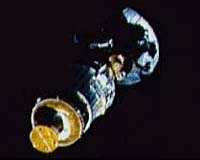
Pasadena (JPL) Oct 15, 2002 This week is delightfully uneventful for the Galileo spacecraft, if not for the flight team. On Monday, October 14, and again on Saturday, October 19, a conditioning exercise for the on-board tape recorder is performed. This activity is designed to see us safely through our final encounter despite the sticking problems that were first seen just prior to arrival at Jupiter seven years ago, and have recurred within the past year. On Tuesday, October 15, the spacecraft passes a point in space 150 Jupiter radii (10.7 million kilometers or 6.7 million miles) out from the giant planet, on its penultimate trek in towards a close encounter. On November 5, it will skim only 143,000 kilometers (89,000 miles) over the Jovian cloud tops, less than two-fifths of the distance from Earth to our own Moon, and closer by half than it has ever been from Jupiter. Friday, October 18, marks another milestone for Galileo. On this date 13 years ago, the space shuttle Atlantis lifted off from Kennedy Space Center with the Galileo spacecraft in the cargo bay, and our historic journey of discovery began. It seems like only yesterday, and yet, it also seems like there wasn't a time when Galileo wasn't flying. Thirteen years and thirty nine encounters later (with Venus, Earth, two asteroids, and the Galilean moons), we're still plugging along. Not bad for a spacecraft that was designed and built before the first IBM PC hit the market! On Sunday, October 20, the Extreme Ultraviolet Spectrometer is powered down for the final time in the mission. It has been collecting data on the interplanetary medium nearly continuously since late January, shortly after our last flyby of the volcanic satellite Io. The instrument does not operate well in the intense radiation environment close to Jupiter and is normally turned off during encounters. It also shares data processing resources on board the spacecraft with the Heavy Ion Counter, which is one of the suite of Fields and Particles instruments that are used to study the inner magnetosphere. Ongoing activities for the spacecraft include continued data collection by the Dust Detector and the Magnetometer instruments. The pace of activities here on Earth is fast and furious, though, as the flight team puts the finishing touches on the Amalthea encounter activities plan and develops contingency plans and emergency responses for as many problems as we can reasonably anticipate. Related Links Galileo's Jupiter at JPL SpaceDaily Search SpaceDaily Subscribe To SpaceDaily Express  Galileo Team Continue To Prepare For Final Jupiter Flyby
 Pasadena - Aug 20, 2002
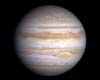
As the Galileo spacecraft continues its long trek back in towards Jupiter for its final planned science pass in November, the pace of activity picks up. In addition to the routine maintenance activities that look after spacecraft health and safety, special tests are beginning in preparation for the Amalthea flyby. |
|
|

| The content herein, unless otherwise known to be public domain, are Copyright 1995-2006 - SpaceDaily.AFP and UPI Wire Stories are copyright Agence France-Presse and United Press International. ESA PortalReports are copyright European Space Agency. All NASA sourced material is public domain. Additionalcopyrights may apply in whole or part to other bona fide parties. Advertising does not imply endorsement,agreement or approval of any opinions, statements or information provided by SpaceDaily on any Web page published or hosted by SpaceDaily. Privacy Statement |