
 |
 |
 |
 |
 |
 |
 |
 |
 |
 |

| . |  |
. |
The Foundations Of Life On Earth
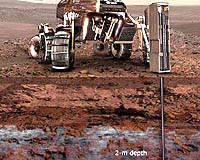
for Astrobiology Magazine Moffett Field CA (SPX) May 25, 2008 Scientists working on the MARTE (Mars Astrobiology Research and Technology Experiment) project have been drilling into the ground around Rio Tinto in Spain. They were studying underground environments and discovered areas that were inhospitable to life. Inhospitable, that is, until they were colonized by tough microbes. These organisms improved conditions so much that other creatures could move in. This has important implications when looking for life on other planets.
Living in Harmony So just by colonizing an area under the ground, the microbes made it habitable for other forms of life. They're like construction workers, building comfortable homes for others. Of course, the microbes weren't trying to make conditions better -- it's just a happy side-effect of their natural processes. The researchers also found that the acidic conditions they were expecting had been neutralized by metals, making the water safe for life. The microbes aren't involved in this process, although they do benefit from it. Such a two-tiered system could make areas on other planets relatively cosy for simple life. It can even help us find evidence for past or present life on Mars: we could look for slight temperature increases near the surface, or the chemicals that reduce water acidity. Such tell-tale signs would indicate that the same mechanisms working in Rio Tinto could be happening on Mars.
Martian Rock Pools As they grew and reacted with the rocks around them, the microbes would have generated heat, making their environment warmer. It would have still been bitterly cold, but salts would have kept the water liquid, even if the temperature dipped below the freezing point. This shallow water could have protected the microbes and any other life from the sun's normally lethal ultraviolet radiation. Metals in the rocks would have made sure that the water wasn't too acidic. Over time other organisms could have colonized the area after the first microbes had made conditions much nicer for life. The result would have been simple Martian rock pools teeming with strange microbial life. Looking into one such pool with a microscope would be a dream come true for astrobiologists. "It may be possible that the inner habitats of planets were not only the first refuge of life, but may also have become the last for planets such as Mars," the researchers report. Once our technology for studying planets around other stars improves, we could search for signs of life like this around distant worlds. They may not be as glamorous as aliens we could talk to, but these hard-working microbes may well provide the foundations for areas filled with exotic life. The research is detailed in the Spring 2008 issue of the journal Astrobiology. Community Email This Article Comment On This Article Share This Article With Planet Earth
Related Links Phoenix at NASA Phoenix at APL Life Beyond Earth Lands Beyond Beyond - extra solar planets - news and science
 The truth is out there: Britons 'spotted' UFOs, records say
 London (AFP) May 14, 2008
The British government recorded reports of alien craft flying over Liverpool and a UFO hovering over Waterloo Bridge in London, it was revealed in declassified files released on Wednesday. |
|
|

| The content herein, unless otherwise known to be public domain, are Copyright 1995-2007 - SpaceDaily.AFP and UPI Wire Stories are copyright Agence France-Presse and United Press International. ESA Portal Reports are copyright European Space Agency. All NASA sourced material is public domain. Additional copyrights may apply in whole or part to other bona fide parties. Advertising does not imply endorsement,agreement or approval of any opinions, statements or information provided by SpaceDaily on any Web page published or hosted by SpaceDaily. Privacy Statement |
 del.icio.us
 Digg
Digg Reddit
 YahooMyWeb
 Google
 Facebook