
 |
 |
 |
 |
 |
 |
 |
 |
 |
 |

| . |  |
. |

Sydney, Australia (SPX) Oct 22, 2010 The repercussions of NASA Administrator Charles Bolden's controversial tour of China continue to circulate, both in the media and in less public circles. Regardless of how we judge this, the fact that so much attention has been focused on the trip is instructive in its own right. It's a symptom of the complexity of international relations, and the current uncertainties over the future of America's space program. Let's start by acknowledging, yet again, that US-China relations are somewhat frosty. For a full discussion of this, readers can simply peruse the general media. This article is not the place to explore or judge these issues. But it is clear that these hostile relations and mutual suspicions are already influencing US-China relations in space. No deals have even been proposed, but the howling can be heard around the globe. There's a broader context that's missing from much of these discussions. Right now, it's far to say that every major space program in the world is in a state of flux. Nobody knows what they should be doing, or how much money they will have, or where anyone else will be in another 20 years. There is also growing trend towards international cooperation in space, which brings more complications. When no members of a group or partnership know the way forward, progress stagnates. Individual space agencies are unwilling to commit to large, complex or long-term ventures if they cannot guarantee that their partners will carry their own weight. The global financial crisis, and the austerity measures it has spawned, are also spooky to space planners. America is facing a turbulent political environment, along with confusion about what NASA should be doing right now, let alone in another decade. China, too, is preparing for a transition of leadership. Nobody knows what direction China will take in Earthly affairs under its next President, let alone what he will do with China's space program. Japan is struggling to justify the high cost of its own ambitious space program, and Europe can't seem to decide if it really wants to develop a crewed spacecraft. India is forging ahead with an ambitious program, but we don't know for sure where it will go in the long term. It's been suggested by some pundits that America had better make a deal with the Chinese soon, before somebody else does. This is a dubious argument. Yes, China will probably make deals with other nations in the future. It already has. European cooperation is strong, and it's likely to increase. China also successfully courts other countries. America can also work with China in varying degrees, and also work with other nations. This cooperation can be done independently of any collaborative projects China makes with other nations, or in league with them. The matrix of international cooperation is not so simplistic or divisive that America will be isolated from the international space community without strong links to China. America will always have broad international links, and would do well to at least engage in some low-level co-operation with China. Sharing data in fields such as astrophysics and planetary exploration would enhance space science in both countries. It would also sidestep some of the concerns over the transfer of sensitive technology. Beyond this, there could be room for more interaction, but America needs to decide on its own goals before it can negotiate with potential partners. Right now, that seems to be difficult. The fight for the future of America's space program is an ongoing problem. This author doesn't want to raise a banner in support of any particular faction or option. The main point that needs to be raised is that America does not seem to know what it wants to do in space, or how. There's never been so much uncertainty over the future as there is today. This debate won't be resolved any time soon, and it will probably still be a source of discord when the next Presidential election takes place. Nobody knows what will be done after 2012. Until there's a solid consensus on these very critical matters, America should avoid proposing any sort of substantial cooperation with China. The Chinese themselves would do well to be patient, and also try to resolve the uncertainties that the outside world perceives in their own space program. Yes, China has specified some of its near-term goals in robot and human spaceflight. But the program is so off-limits to outsiders that it raises suspicions. NASA's problems are serious, but they are also openly discussed and debated. Is China prepared to place its own space activities under a similar level of scrutiny? Forging a solid link between the fairly open and public nature of NASA with a program that borders on the clandestine would be tricky. The political and social climate within America would not accept a curtain of secrecy being pulled across their space missions to please any Chinese whims. The controversy over prospective US-Chinese cooperation may seem a little heated, but it is helping to focus broader attention on some wider problems. America needs to find its course for the future, and the rest of the world must also look for directions. Dr Morris Jones is an Australian space analyst and author. Email morrisjonesNOSPAMhotmail.com. Replace NOSPAM with @ to send email.
Share This Article With Planet Earth
Related Links - The Chinese Space Program - News, Policy and Technology China News from SinoDaily.com

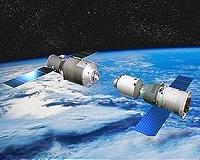 International Crews for Shenzhou
Sydney, Australia (SPX) Oct 18, 2010 The recent visit of NASA Administrator Charles Bolden to China has generated a high level of attention and controversy. Relations between the USA and China are not exactly cordial at the moment, for a variety of reasons. The problems are so acute that high-placed voices in the USA have questioned if Bolden should even visit China at all, let alone try to forge any links. Let's put aside a ... read more |
|
|
| The content herein, unless otherwise known to be public domain, are Copyright 1995-2010 - SpaceDaily. AFP and UPI Wire Stories are copyright Agence France-Presse and United Press International. ESA Portal Reports are copyright European Space Agency. All NASA sourced material is public domain. Additional copyrights may apply in whole or part to other bona fide parties. Advertising does not imply endorsement,agreement or approval of any opinions, statements or information provided by SpaceDaily on any Web page published or hosted by SpaceDaily. Privacy Statement |


 del.icio.us
 Digg
Digg Reddit
 YahooMyWeb
 Google
 Facebook


