|
 |
 |
 |
 |
 |
 |
 |
 |
 |

| . |  |
. |
Trajectory Maneuver Brings Spacecraft Closer To Home
Pasadena CA (JPL) Aug 12, 2004 Thirty days before its historic return to Earth with NASA's first samples from space since the Apollo missions, the Genesis spacecraft successfully completed its twentieth trajectory maneuver. At 12:00 Universal Time (5:00 a.m. Pacific Daylight Time), Mon., August 9, Genesis fired its 90 gram (.2 pound) thrusters for a grand total of 50 minutes, changing the solar sampler's speed by 1.4 meters per second (about 3.1 miles per hour). The maneuver required half a kilogram (1.1 pounds) of hydrazine monopropellant to complete. "It was a textbook maneuver," said Ed Hirst, Genesis's mission manager at NASA's Jet Propulsion Laboratory, Pasadena, Calif. "After sifting through all the post-burn data, I expect we will find ourselves right on the money." The Genesis mission was launched in August of 2001 on a journey to capture samples from the storehouse of 99 percent of all the material in our solar system -- the Sun. The samples of solar wind particles, collected on ultra-pure wafers of gold, sapphire, silicon and diamond, will be returned for analysis by Earth-bound scientists. The samples Genesis provides will supply scientists with vital information on the composition of the Sun, and will shed light on the origins of our solar system. Helicopter flight crews, navigators and mission engineers continue to prepare for the return of the Genesis spacecraft on September 8. On that date, Genesis will dispatch a sample return capsule that will re-enter Earth's atmosphere for a planned mid-air capture at the U.S. Air Force Utah Test and Training Range. To preserve the delicate particles of the Sun in their prisons of silicon, gold, sapphire and diamond, specially trained helicopter pilots will snag the return capsule from mid-air using the space-age equivalent of a fisherman's rod and reel. The flight crews for the two helicopters assigned for Genesis capture and return are comprised of former military aviators and Hollywood stunt pilots. JPL manages the Genesis mission for NASA's Space Mission Directorate, Washington, DC. Lockheed Martin Space Systems, Denver, developed and operates the spacecraft. JPL is a division of the California Institute of Technology, the home institute of Genesis's principal investigator Dr. Don Burnett. Related Links Genesis SpaceDaily Search SpaceDaily Subscribe To SpaceDaily Express  Detecting The Spin Of A Single Electron
 Los Alamos NM (SPX) Aug 11, 2004
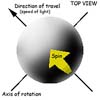
University of California scientists working at Los Alamos National Laboratory and at the University of California, Los Angeles have demonstrated the ability to detect the spin of a single electron in a standard silicon transistor. |
|
|

| The content herein, unless otherwise known to be public domain, are Copyright 1995-2006 - SpaceDaily.AFP and UPI Wire Stories are copyright Agence France-Presse and United Press International. ESA PortalReports are copyright European Space Agency. All NASA sourced material is public domain. Additionalcopyrights may apply in whole or part to other bona fide parties. Advertising does not imply endorsement,agreement or approval of any opinions, statements or information provided by SpaceDaily on any Web page published or hosted by SpaceDaily. Privacy Statement |