|
 |
 |
 |
 |
 |
 |
 |
 |
 |

| . |  |
. |
US Says Human Chip Implants Don't Need Regulation For Some Uses
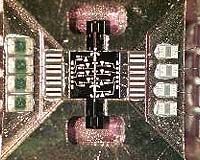
Washington (AFP) Oct 22, 2002 A company that makes a microchip that can be implanted under the skin said Tuesday that US authorities ruled the device does not have to be regulated when used for non-medical purposes. Applied Digital Solutions said the ruling on the VeriChip device by the Food and Drug Administration opens the door to market the implant for security and financial applications. The chip could be used, for example, as an identifier for building entry, or to verify access to bank cash machines or to access cars or computers. "This could be used to control access to secure areas of airports, to nuclear power plants, you can ensure that you are who you say you are," said company spokesman Matthew Cossolotto. But Cossolotto acknowledged that the FDA ruling may require regulation if the VeriChip is used for one of its initial purposes, to store personal medical and health information that can be read by a special scanner. The FDA specified that VeriChip is considered a regulated medical device "when marketed to provide information to assist in the diagnosis or treatment of injury or illness," the company said. "This doesn't mean it can't be used," said Cossolotto. "It just means that it would be regulated. It's not completely clear, and we'll continue to work with FDA on this." The Florida-based company stopped distributing the VeriChip after a highly publicized launch in May to allow the FDA review. Cossolotto said the company, which also makes a "wearable" global positioning (GPS) device that can be used to help find lost or missing persons or pets, is continuing its research on an implantable device with GPS capabilities. He noted that the main obstacle to an implantable GPS device is the size -- currently the size of a matchbook. "We're trying to get it small enough," he said. "We have a lot of interest for an implantable GPS device, particularly in Latin America." Cossolotto said any such device might have to be reviewed again by US health authorities. Related Links SpaceDaily Search SpaceDaily Subscribe To SpaceDaily Express  NASA Navigation Work Yields Science, Civil, Commerce Benefits
  Washington - Oct 15, 2002
NASA researchers have demonstrated the ability to very precisely navigate airplanes in real time, anywhere in the world, independent of local navigational aids or infrastructure. The breakthrough will not only benefit scientists, but promises to extend precision navigation to infrastructure-poor areas of the world, potentially enhancing aviation safety in these areas. |
|
|

| The content herein, unless otherwise known to be public domain, are Copyright 1995-2006 - SpaceDaily.AFP and UPI Wire Stories are copyright Agence France-Presse and United Press International. ESA PortalReports are copyright European Space Agency. All NASA sourced material is public domain. Additionalcopyrights may apply in whole or part to other bona fide parties. Advertising does not imply endorsement,agreement or approval of any opinions, statements or information provided by SpaceDaily on any Web page published or hosted by SpaceDaily. Privacy Statement |