|
 |
 |
 |
 |
 |
 |
 |
 |
 |

| . |  |
. |
Wireless World: Sensors Detect Icy Bridges
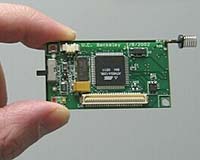
Chicago (UPI) Jan 13, 2006 A suspension bridge is perilously close to collapse, but secret federal agents learn about the pending disaster on their Palm Pilots and dash to the site and are able to stop the catastrophe just in time. The real hero here, though? Miniature wireless sensors. Sensors embedded on bridges are helping authorities tell when there is a problem with the infrastructure; wireless nodes on fault lines can help forecast the next earthquake; and other technology can help cell phones communicate without cell towers over a distance, experts tell United Press International's Wireless World. "We think this is the future," said Jason Hallstrom, a computer-science researcher at Clemson University. "Our goal is to make it easier and more economical for application developers to produce the systems of tomorrow." Researchers at Clemson, for example, are using wireless devices -- called motes -- that are small enough to fit into the palm of one's hand for this work. As roads and bridges age, scientists note, they reach what is called a structural stress point. That is, the breaking point. The tiny sensors can help predict when that will happen, and prevent accidents and deaths. The networks of these wireless sensors track light, sound, humidity, temperature, motion and other environmental factors, experts said. Some of the sensors are so responsive that they can detect the sound of a beating human heart through a brick wall. Scientists said that when these wireless sensors are incorporated into groups of 20, 100 or 1,000 they can communicate the data they have gathered to computers, where the trends could be analyzed. At Clemson, researchers led by Hallstrom have developed a wireless sensor network (WSN) as a test-bed for other engineers and scientists who want to de-bug their own technologies. The university researchers are also developing software tools and other technologies to help with the development of large-scale WSNs. Look for more developments in this technology field -- soon. "With an estimated one trillion sensors -- of all types -- in existence already, we are close to the point where failing to use wireless sensors to protect our populations is tantamount to negligence," said Bruce Kasanoff, president of Now Possible and an expert on wireless sensors. Kasanoff predicts several types of wireless sensors that will proliferate rapidly in the coming years: -- Sensors on road surfaces that will glow when ice is present -- and replace the signs that say, "Warning: Bridge freezes before road surface"; -- Sensors and cameras for smaller bridges that will detect when cars or trucks exceed legal weight limits, and issue a summons to traffic court, automatically; -- Sensors on beaches and waterfronts that can detect signs of pollution or "deliberate" acts of sabotage. Researchers at universities like UCLA, Caltech, UC San Diego and others are pioneering work in this area, according to Central Michigan University faculty member Patrick Kinnicutt. Other cool technologies are in the works too in the private sector. The Incorporated Research Institutions for Seismology has chosen the Exton, Pa.-based firm of WPCS International Inc. to provide programmed, wireless modems that will be used throughout the country for seismographic data collection. Once these modems are installed, experts said, they will be able to transfer data to IRIS laboratories for processing and information sharing -- bolstering the analysis of earthquake physics and volcanic processes. The data will also be hosted in a shared database to be used by researchers to explore the earth's interior. "The result is increased geographic coverage for the collection of data used for seismic monitoring that will allow IRIS to reinforce the efforts to mitigate potential earthquake and volcanic hazards," said Glenn Littman, product manager at WCPS, adding that the wireless sensors can be installed in places where landline telephony is not accessible. Bluetooth wireless technology is expected to make a big contribution to wireless seismology and telemetry too, said Kinnicutt. Bluetooth, which is being commercialized in a variety of products, is expected to be in more than 272 million devices when the tabulations are done for 2005 -- a figure that nearly doubled the total of 2004, according to the London office of the research consultancy, Strategy Analytics. Bluetooth has been used in hands-free cell phones, but use in sensors and other devices is anticipated as its data-rate capacity improves. The anticipated "marriage" of Bluetooth and Ultra-WideBand (UWB) technologies could change the market, improving the chances of technology developers like Texas Instruments and Freescale in "emerging high data-rate applications, such as short-range, wireless, streaming video," for remote monitoring, said Chris Taylor, director of the wireless component practice at Strategy Analytics. Other wireless technology -- called spread spectrum -- which does not depend upon cell towers, aggregated in a specific geographic area, is also poised for growth. Network functions are built into each mobile phone, using spread-spectrum technology, relaying messages from phone to phone, even though they are too far apart for direct communication. "This is critical for post-disaster relief teams operating in areas that are devastated by hurricanes, other natural disasters, or terrorist activities," said Michael Pursley, a professor of computer engineering at Clemson. "First responders can communicate with one another even if cell towers or telephone lines are disabled."
Source: United Press International Related Links Clemson University SpaceDaily Search SpaceDaily Subscribe To SpaceDaily Express  iPod Dominance A Mirage
 Chicago (UPI) Jan 09, 2006
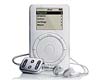
Though Apple Computer has reported remarkable success with its iPod - sales rose by 250 percent during the last fiscal year - there is some competition coming this week for the developer of the world's most famous, legitimate music downloading network, experts tell United Press International's Networking. |
|
|

| The content herein, unless otherwise known to be public domain, are Copyright 1995-2006 - SpaceDaily.AFP and UPI Wire Stories are copyright Agence France-Presse and United Press International. ESA PortalReports are copyright European Space Agency. All NASA sourced material is public domain. Additionalcopyrights may apply in whole or part to other bona fide parties. Advertising does not imply endorsement,agreement or approval of any opinions, statements or information provided by SpaceDaily on any Web page published or hosted by SpaceDaily. Privacy Statement |