
. Military Space News .
BIO FUEL
Yeast makes ethanol to prevent metabolic overload
by Staff Writers
Groningen, Netherlands (SPX) Jan 08, 2019

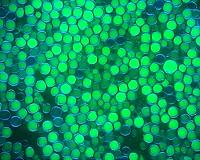
file illustration only

Why do some yeast cells produce ethanol? Scientists have wondered about this apparent waste of resources for decades. Now, University of Groningen scientists think they have a solution: yeast cells produce ethanol as a 'safety valve', to prevent overload when their metabolic operation reaches a critical level. The implications of this new theory, which was published in Nature Metabolism on 7 January, could be far-reaching, as it also explains why cancer cells waste energy by producing lactate, known as the Warburg effect.

Cells use nutrients like glucose to make new cells. But sometimes, some of these nutrients are wasted. For example, the yeast Saccharomyces cerevisiae, which is used to produce beer, breaks glucose down into ethanol rather than carbon dioxide. 'Metabolizing a six-carbon molecule to a two-carbon molecule, rather than to carbon dioxide, means part of the energy and matter stored in glucose is lost. It makes no sense', says Matthias Heinemann, Professor of Molecular Systems Biology at the University of Groningen.

Metabolism
Evolution should have put an end to such a waste of resources, so biologists have tried to find a reason for its existence. 'And similar wastefulness can be seen in other cells', says Heinemann. A widely known example is cancer cells. These fast-growing cells excrete lactate, which is a similar waste of energy. And many bacteria waste energy as well. 'This similarity between different organisms made us wonder whether there was a common denominator.'

Heinemann's field of research is metabolism, the chemical reaction network that generates the building blocks for new cells. He hypothesized that there is an upper rate limit at which cells can operate their metabolism. With his PhD students Bastian Niebel and Simeon Leupold, he modelled the Gibbs energy dissipation in cells. This is the energy released by all chemical reactions taking place in a cell.

Something universal
By adding thermodynamics to a model with around 1,000 chemical reactions and combining the model with experimental data, Heinemann was able to determine the Gibbs energy dissipation rate as a function of glucose uptake. At first, the Gibbs energy dissipation increases with increasing rates of glucose consumption, but then a plateau is reached - and at that point, ethanol production starts. 'This is the point where the cells switch from respiration to fermentation', explains Heinemann.

Heinemann and his team obtained similar results for the gut bacterium E. coli, with a plateau at a comparable level of Gibbs energy dissipation. Heinemann: 'Yeast and E. coli live in completely different environments, yet have about the same dissipation limit that is even at about the same value. This suggests that this limit is something universal.' The exact reason for this limit is still unknown, but the scientists have come up with a working hypothesis. 'Cellular metabolism has a maximum rate at which it can still operate.' When this is reached, the cells open a 'safety valve' and glucose is broken down to ethanol, acetate or lactate, leaving part of the energy unused.

Damage
So what is causing this limit? 'Part of the energy is dissipated as heat, but this is too little to bother the cells. Our idea is that when enzymes catalyze a chemical reaction, they get a tiny push during the reaction, which makes them move. If they work very fast, this could mean that there is too much movement inside the cells, which could damage certain cellular structures.' Studies on the movement of enzymes inside the cell at different metabolic rates could confirm this.

In the meantime, Heinemann believes that he has now solved the mystery of not just ethanol production in yeast, but also the Warburg effect in cancer cells. Almost a century ago, the late Nobel Laureate Otto Warburg observed that cancer cells have a high rate of glycolysis with lactate excretion. This waste of energy and matter is, Heinemann believes, the 'safety valve': 'There are some experiments going on with drugs that block lactate production as a way to treat cancer. The mechanism of these drugs could be to close the cells' safety valve.'

Entropy
Not all cells need a safety valve, though. 'Some yeast strains have a slow glucose uptake, so they will never be in danger of metabolic overload. And indeed, these yeast species don't produce ethanol', says Heinemann.

The discovery brings to mind a quote from Erwin Schrodinger's seminal work 'What is Life': 'The essential thing in metabolism is that the organism succeeds in freeing itself from all the entropy it cannot help producing while alive.' This statement should be extended, Heinemann says, with the following: 'However, there is an upper rate limit at which cells can free themselves from this entropy, and this limit governs how cells operate their metabolism.'

Research Report: An upper limit in Gibbs energy dissipation governs cellular metabolism


Related Links
University of Groningen
Bio Fuel Technology and Application News


Thanks for being here;
We need your help. The Space Media Network continues to grow but revenues have never been harder to maintain.

With the rise of Ad Blockers, and Facebook - our traditional revenue sources via quality network advertising continues to decline. And unlike so many other news sites, we don't have a paywall - with those annoying usernames and passwords.

Our news coverage takes time and effort to publish 365 days a year.

If you find our news sites informative and useful then please consider becoming a regular supporter or for now make a one off contribution.
SpaceMediaNetwork Contributor
$5 Billed Once


credit card or paypal
SpaceMediaNetwork Monthly Supporter
$5 Billed Monthly


paypal only


BIO FUEL
Tel Aviv researchers develop biodegradable plastic from seawater algae
Washington (UPI) Jan 01, 2019
Researchers at the Tel Aviv University are working on a new biodegradable plastic made from microorganisms that feed on seawater algae. "Our new process produces 'plastic' from marine microorganisms that completely recycle into organic waste," said Alexander Golberg, of Tel Aviv University's Porter School of Environmental and Earth Sciences. Factories already "produce this type of bioplastic in commercial quantities, but they use plants that require agricultural land and fresh water," he ... read more

Comment using your Disqus, Facebook, Google or Twitter login.


Share this article via these popular social media networks
del.icio.usdel.icio.us DiggDigg RedditReddit GoogleGoogle

BIO FUEL
Eyeing China, US to hold missile drill in Japan's Okinawa: report

Lockheed awarded $3.3B for PAC-3 missiles for Saudi Arabia, Kuwait

Missile Defense Agency awards Lockheed Martin contract to design, manufacture and construct defense radar station in Hawaii

US approves $3.5 billion Patriot missile sale to Turkey

BIO FUEL
Raytheon gets $434 million contract to modify AIM-9X Sidewinder missiles

General Dynamics contracted for missile control systems for U.S., U.K.

Turkey says US missile deal does not affect S-400 purchase from Russia

Long Range Anti-Ship Missile reaches early operational capability status on B-1B bombers

BIO FUEL
Insitu gets defense contract for Blackjack unmanned aircraft

General Atomics, Raytheon contracted for Reaper drone support

New foldable drone can navigate narrow holes

General Atomics receives $40 million for Gray Eagle drone services

BIO FUEL
DARPA awards 6 teams during final Spectrum Collaboration Challenge Qualifier

Military Santa tracker live despite US government shutdown

Satellite study proves global quantum communication will be possible

India launches military communications satellite

BIO FUEL
Discovery could lead to munitions that go further, much faster

Army taps BAE, GenDyn for armored fighting vehicle prototypes

White House asks top court to block transgender military service

Contract put forward for MK80 and BLUE-109 components

BIO FUEL
Canada mulls canceling Saudi arms deal over Yemen, Kashoggi murder

Spain announces 7.3-bn-euro defence spending plan

Slovakia seals its largest-ever arms deal

Russia now world's No. 2 in arms sales, report shows

BIO FUEL
The short, sharp shock of no-deal Brexit

Shanahan takes Pentagon helm as Trump blasts Mattis

Ex-Marine arrested in Moscow for 'spying' is innocent, family says

Xi, Trump vow cooperation on diplomatic anniversary: state media

BIO FUEL
Carrying and releasing nanoscale cargo with 'nanowrappers'

Illuminating nanoparticle growth with X-rays

Pitt chemical engineers develop new theory to build improved nanomaterials

MIT team invents method to shrink objects to the nanoscale


The content herein, unless otherwise known to be public domain, are Copyright 1995-2024 - Space Media Network. All websites are published in Australia and are solely subject to Australian law and governed by Fair Use principals for news reporting and research purposes. AFP, UPI and IANS news wire stories are copyright Agence France-Presse, United Press International and Indo-Asia News Service. ESA news reports are copyright European Space Agency. All NASA sourced material is public domain. Additional copyrights may apply in whole or part to other bona fide parties. All articles labeled "by Staff Writers" include reports supplied to Space Media Network by industry news wires, PR agencies, corporate press officers and the like. Such articles are individually curated and edited by Space Media Network staff on the basis of the report's information value to our industry and professional readership. Advertising does not imply endorsement, agreement or approval of any opinions, statements or information provided by Space Media Network on any Web page published or hosted by Space Media Network. General Data Protection Regulation (GDPR) Statement Our advertisers use various cookies and the like to deliver the best ad banner available at one time. All network advertising suppliers have GDPR policies (Legitimate Interest) that conform with EU regulations for data collection. By using our websites you consent to cookie based advertising. If you do not agree with this then you must stop using the websites from May 25, 2018. Privacy Statement. Additional information can be found here at About Us.