
. Military Space News .
WAR REPORT
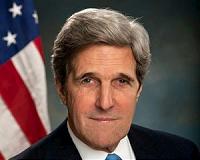
Kerry's Middle East peace framework
By Dave Clark
Washington (AFP) Dec 28, 2016


There was little new in US Secretary of State John Kerry's outline for measures to revive peace talks between Israel and the Palestinians presented Wednesday.

But Washington's top diplomat hopes that by laying out the ideas that he says are shared by the broader international community, he can leave a framework.

Nothing in his speech will bind incoming US President-elect Donald Trump, and Kerry's intervention has been angrily rejected by Israel.

Here are the "six principles" Kerry says must underlie a renewed search for peace based on an Israel-Palestine two-state solution.

- 'Recognized international borders' -

On November 22, 1967, after Israel's victory in the Six-Day War over its Arab neighbors, the UN Security Council passed its Resolution 242.

Israel's win left it in possession of the Golan Heights, Gaza, Sinai, the West Bank and East Jerusalem, in addition to its original territory.

Under UNSC 242, Israel should hand back its new land and in 1993 the Palestinian Liberation Organization agreed that 242 could serve as a basis for talks.

Israel has pulled out for Sinai and Gaza, annexed Golan and east Jerusalem and is occupying and settling the West Bank.

Kerry's speech insisted that UNSC 242 has long been "accepted by both sides" and must be followed, albeit with "mutually agreed equivalent swaps."

And he warned: "No changes by Israel to the 1967 lines will be recognized by the international community unless agreed to by both sides."

- 'Two states for two peoples' -

Israel did not welcome Kerry's speech, but many Israelis will welcome his second "core principle" for any deal.

While the final settlement will see the Palestinians installed in their own state, they must in turn recognize Israel "as a Jewish state."

Prime Minister Benjamin Netanyahu insists that the Palestinian hostility to the idea of Israel as a Jewish homeland is a key barrier to peace.

But Kerry noted that this has been enshrined in the plan since 1947, when the disputed area was partitioned under UN General Assembly resolution 181.

- 'Realistic solution for refugees' -

There are an estimated five million Palestinians claiming descent from those displaced from their homes during the creation of Israel.

Their long-standing demand for a "right of return" to homes in some cases now within pre-1967 Israel has long been a stumbling block.

Kerry's principles acknowledged that international assistance and some kind of compensation will be necessary and fair for these people.

But a "realistic solution" would not involve a mass return.

"The solution must be consistent with two states for two peoples, and cannot affect the fundamental character of Israel," he said.

- 'Jerusalem capital of two states' -

Israel claims the city of Jerusalem as its "undivided" capital, and Trump plans to move the US embassy there in support of this idea.

But the city holds sites holy to Muslims, Jews and Christians alike and the Arab world would erupt in anger if a sole Israeli claim prevailed.

Kerry admitted that the city's fate "is the most sensitive issue for both sides" and suggested it be the "internationally recognized capital of the two states."

"Most acknowledge that Jerusalem should not be divided again like it was in 1967," he said, calling for access to the shrines to be guaranteed.

"There is broad recognition that there will be no peace agreement without reconciling the basic aspirations of both sides to have capitals there."

- 'Satisfy Israel's security needs' -

Israeli forces and residents withdrew from the Gaza Strip in September 2005, but peace did not break out there.

Gaza has since fallen under the sway of Hamas, an armed Islamist movement, and is a source of periodic attacks on Israel and a target for harsh retaliation.

Kerry's fifth principle stated that the larger West Bank must not become a similar threat, and that Israel must retain a right to intervene.

Kerry said that a team led by US General John Allen had worked on "innovative approaches to creating unprecedented, multi-layered border security."

This would strengthen Palestinian security forces and provide ways for Israel to defend itself without impinging on the new state of Palestine.

- 'Normalized relations' -

Finally, under Kerry's vision, a final status settlement between Israel and a future Palestine would see an end to outstanding regional issues.

"For Israel, this must also bring broader peace with its Arab neighbors," he said, suggesting that peace would allow a "groundbreaking" security partnership.


Comment on this article using your Disqus, Facebook, Google or Twitter login.


Thanks for being here;
We need your help. The SpaceDaily news network continues to grow but revenues have never been harder to maintain.

With the rise of Ad Blockers, and Facebook - our traditional revenue sources via quality network advertising continues to decline. And unlike so many other news sites, we don't have a paywall - with those annoying usernames and passwords.

Our news coverage takes time and effort to publish 365 days a year.

If you find our news sites informative and useful then please consider becoming a regular supporter or for now make a one off contribution.
SpaceDaily Contributor
$5 Billed Once


credit card or paypal
SpaceDaily Monthly Supporter
$5 Billed Monthly


paypal only


.


Related Links
Space War News


Share this article via these popular social media networks
del.icio.usdel.icio.us DiggDigg RedditReddit GoogleGoogle

Previous Report
WAR REPORT
Kerry to offer US vision of Israel-Palestinian peace Wednesday
Washington (AFP) Dec 27, 2016
US Secretary of State John Kerry will offer a "comprehensive vision" of how to revive the Israel-Palestinian peace process in a major speech on Wednesday. President Barack Obama's administration, including Kerry, is to leave office in four weeks and last week gravely offended Israel by failing to veto a critical UN resolution. But US officials said they plan to keep pushing both Israel a ... read more


WAR REPORT
Lockheed Martin receives $1.4 billion for Patriot missile sales

U.S. Air Force approves Lockheed Martin's SBIRS ground system

Raytheon to provide Patriot missile capability for undisclosed country

Saudis intercept missile fired from Yemen

WAR REPORT
U.S. missile deal for Poland finalized

Successful flight test for Norwegian missile

U.S. Navy test fires Raytheon SM-6 missile at sea

Raytheon to perform additional SM-3 Block IIA missile work

WAR REPORT
QinetiQ acquires Meggitt Target Systems

Britain, France continue drone development project

Bird-like drone uses feathers for a more precise flight path

Malawi drone test centre to help with healthcare, disasters

WAR REPORT
U.S. Navy selects Raytheon for tactical radio production

Underwater radio, anyone?

Japan to Launch First Military Communications Satellite on January 24

Intelsat General to provide satellite services to RiteNet for US Army network

WAR REPORT
Raytheon offers InSITE for U.S. Army training program

Orbital ATK completes Zombie Pathfinder target test for U.S. Army

U.K. MOD awards competitive Challenger 2 life extension contracts

BAE Systems to provide active protection for Dutch CV90 vehicles

WAR REPORT
Trump calls on Boeing to offer quote for F-35 rival

Saudi projects drop in defence spending

NATO to procure U.S. munitions for members

Russia drops out of world's top 5 defense spenders

WAR REPORT
India bans foreign funds of 20,000 charities: official

China and Sao Tome restore diplomatic ties in snub to Taiwan

Japan cabinet approves biggest defence budget

After Hiroshima, Abe and Obama to pay respects at Pearl Harbor

WAR REPORT
Going green with nanotechnology

Nanocubes simplify printing and imaging in color and infrared

New aspect of atom mimicry for nanotechnology applications

ANU demonstrates 'ghost imaging' with atoms


The content herein, unless otherwise known to be public domain, are Copyright 1995-2024 - Space Media Network. All websites are published in Australia and are solely subject to Australian law and governed by Fair Use principals for news reporting and research purposes. AFP, UPI and IANS news wire stories are copyright Agence France-Presse, United Press International and Indo-Asia News Service. ESA news reports are copyright European Space Agency. All NASA sourced material is public domain. Additional copyrights may apply in whole or part to other bona fide parties. All articles labeled "by Staff Writers" include reports supplied to Space Media Network by industry news wires, PR agencies, corporate press officers and the like. Such articles are individually curated and edited by Space Media Network staff on the basis of the report's information value to our industry and professional readership. Advertising does not imply endorsement, agreement or approval of any opinions, statements or information provided by Space Media Network on any Web page published or hosted by Space Media Network. General Data Protection Regulation (GDPR) Statement Our advertisers use various cookies and the like to deliver the best ad banner available at one time. All network advertising suppliers have GDPR policies (Legitimate Interest) that conform with EU regulations for data collection. By using our websites you consent to cookie based advertising. If you do not agree with this then you must stop using the websites from May 25, 2018. Privacy Statement. Additional information can be found here at About Us.