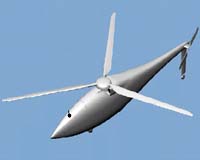
The autonomous unmanned aircraft, measuring 35 feet long with a 36-foot rotor diameter, eventually will fly more than 140 knots with a ceiling of 25,000 to 30,000 ft. (high hover capability up to 15,000 ft.) for up to 20 hours.
The autonomous unmanned aircraft, measuring 35 feet long with a 36-foot rotor diameter, eventually will fly more than 140 knots with a ceiling of 25,000 to 30,000 ft. (high hover capability up to 15,000 ft.) for up to 20 hours. |
"This is a major milestone for Boeing, the A160 program and unmanned rotorcraft," said Jim Martin, Boeing A160T program manager. "The ability to carry a 1,000-pound payload and fly for that duration puts the A160T in a category by itself."
Since its first flight in June, the A160T has logged several additional flights, including a five-hour flight on Aug. 29. Ultimately, Boeing plans to fly the aircraft for 18 consecutive hours with a 300-pound payload. The A160T, a turbine-powered version of the innovative piston-powered A160 helicopter, features unmatched range, endurance, payload and altitude for an unmanned rotorcraft. The flexible payload module can carry supplies or retrieve downed personnel.
The aircraft used during the tests is the second of 11 A160Ts Boeing Advanced Systems is building for the Defense Advanced Projects Research Agency.
The Hummingbird features a unique optimum speed rotor technology that significantly improves overall performance efficiency by adjusting the rotor's speed at different altitudes, gross weights and cruise speeds.
The autonomous unmanned aircraft, measuring 35 feet long with a 36-foot rotor diameter, eventually will fly more than 140 knots with a ceiling of 25,000 to 30,000 ft. (high hover capability up to 15,000 ft.) for up to 20 hours. Operational A160Ts will be capable of persistent intelligence, surveillance and reconnaissance; target acquisition; direct action; communication relay and precision re-supply missions.
Community
 Boeing-Insitu ScanEagle UAV Logs 5,000 Flight Hours In Support Of Australian Army Operations
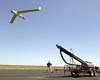 Brisbane Australia (SPX) Sep 26, 2007
| The content herein, unless otherwise known to be public domain, are Copyright 1995-2006 - SpaceDaily.AFP and UPI Wire Stories are copyright Agence France-Presse and United Press International. ESA PortalReports are copyright European Space Agency. All NASA sourced material is public domain. Additionalcopyrights may apply in whole or part to other bona fide parties. Advertising does not imply endorsement,agreement or approval of any opinions, statements or information provided by SpaceDaily on any Web page published or hosted by SpaceDaily. Privacy Statement |