
 |
 |
 |
 |
 |
 |
 |
 |
 |
 |

| . |  |
. |
Northrop Grumman Completes Demonstrations Of Broad Area Maritime Surveillance Program System Level Performance
Washington DC (SPX) Sep 20, 2007 Northrop Grumman has successfully completed a program of simulations, demonstrations and tests designed to provide the Broad Area Maritime Surveillance (BAMS) program with low programmatic and technical risk. Northrop Grumman's BAMS Head Start Program successfully completed four system-level integration and development initiatives, which included: integrated mission system testing; full system simulation as hosted on a prototype mission control system and aircraft simulator; airframe modifications and testing; and initiating air vehicle long lead procurements and capital investments. "These pre-contract activities are aligned with our proposed BAMS offer focused on creating the maximum programmatic and technical margins and thereby reducing risk for the U.S. Navy," said Carl Johnson, Northrop Grumman BAMS program vice president. Over the past four months, the mission system was tested on a Northrop Grumman test bed aircraft flying out of California and linked to a Maryland-based prototype ground segment. "We conducted more than 40 hours of flight testing on 19 flights to validate the benefits of our BAMS architecture and to develop our prototyped sub-systems," said Bill Beck, Head Start program manager. "We optimized maritime modes on the 360-degree Active Electrically Scanned Array sensor, which was controlled through the newly developed Advanced Mission Management System. In addition, we were successful in demonstrating our network and bandwidth management system that incorporated L-3's dual communication data link system." "Integrating a large quantity of the planned BAMS mission system elements provided key software metrics, which confirm our proposed software development and reuse estimates," continued Beck. "The testing validated the Mission Control System (MCS) architecture -- which is an Internet Protocol (IP)-based, service-oriented architecture -- using real communication and sensor data feeds from our West coast-based flight tests to the MCS/Tactical Support Center (TSC) prototype in Hollywood, Md. The complete Northrop Grumman BAMS system has also been modeled in a simulation, which, along with the end-to-end mission system testing, is hosted within the MCS prototype. The simulation was built using the proven aircraft models and displays developed to train RQ-4 pilots for the Navy, Air Force and Northrop Grumman. The simulation also included the effects of the IP-based design features for avionics, communication and ground segments. The system model also includes emulated interfaces with the Maritime Patrol and Reconnaissance Forces (MPRF) TSC environment. These interfaces allowed real-time studies of the BAMS system working in an MPRF environment, which refined manning and training predictions for MPRF staffs. The unmanned aircraft segment of the Navy BAMS system must operate at all altitudes and environments. Changes to the RQ-4B Global Hawk for the Navy included modifications to a leading edge section of the wing, which has undergone hail, bird strike and icing/de-icing tests, as well as radome modifications. The baseline BAMS design modifications met all test objectives. "These and other environmental tests are coupled with full scale structural tests for the complete airframe, which have shown that our design modifications are robust enhancements to a great platform," said Beck. "The baseline RQ-4B airframe is largely unchanged in the RQ-4N configuration, and by developing a database for new requirements through development and test efforts, we have been able to initiate long lead materials and capital equipment procurement to ensure two air vehicles for the BAMS system design and development phase can be included in the lot 7 RQ-4 production line, reducing the time to first flight." "Our Head Start efforts enable the entire Northrop Grumman team to be networked through the digital environment already in use, ready to begin SDD," concluded Johnson. The Northrop Grumman RQ-4N BAMS team includes Northrop Grumman as prime contractor and team leader, unmanned aerial vehicle supplier and developer of the Multi-Function Active Sensor active electronically scanned array radar and the Night Hunter II electro-optical infrared sensor; L-3 Communications providing communications integration; Raytheon supporting the Mission Control System segment; and Rolls-Royce providing the aircraft engine. BAMS will provide the U.S. Navy with a persistent global intelligence, surveillance and reconnaissance system to protect the fleet and a capability to detect, track, classify, and identify maritime, littoral and land targets. Community Email This Article Comment On This Article Related Links UAV News - Suppliers and Technology
 Navy MQ-8B Fire Scout Gets a Lift From Marine Corps KC-130T Hercules
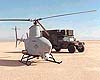 Moss Point MI (SPX) Sep 14, 2007
A cooperative effort between the U.S. Navy, U.S. Army, U.S. Marine Corps and Northrop Grumman Corporation (NYSE:NOC) resulted in the first ever transport of a Navy MQ-8B Fire Scout Vertical Take-off and Landing Tactical Unmanned Aerial Vehicle (VTUAV) in a Marine Corps KC-130T aircraft, flown by Marine Aerial Refueler Transport Squadron 234, Naval Air Station-Joint Reserve Base Fort Worth, Texas. |
|
|

| The content herein, unless otherwise known to be public domain, are Copyright 1995-2006 - SpaceDaily.AFP and UPI Wire Stories are copyright Agence France-Presse and United Press International. ESA PortalReports are copyright European Space Agency. All NASA sourced material is public domain. Additionalcopyrights may apply in whole or part to other bona fide parties. Advertising does not imply endorsement,agreement or approval of any opinions, statements or information provided by SpaceDaily on any Web page published or hosted by SpaceDaily. Privacy Statement |

