|
 |
 |
 |
 |
 |
 |
 |
 |
 |

| . |  |
. |
Comet Dust Reveals Unexpected Mixing Of Solar System
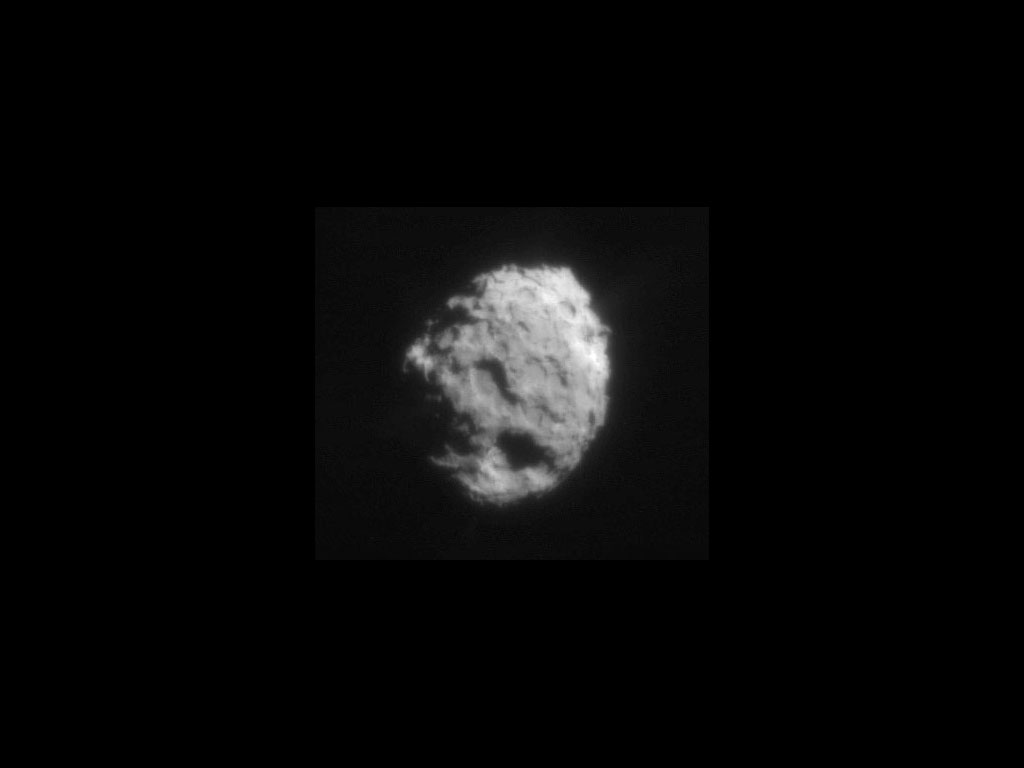
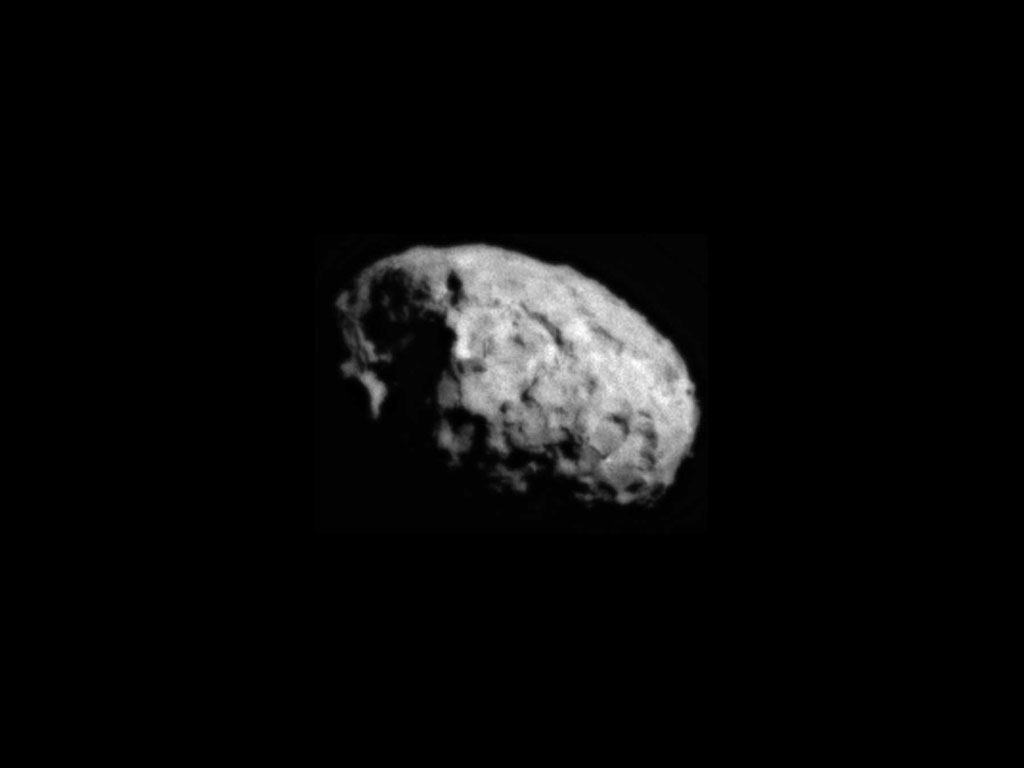
Madison WI (SPX) Sep 19, 2008 Chemical clues from a comet's halo are challenging common views about the history and evolution of the solar system and showing it may be more mixed-up than previously thought. A new analysis of dust from the comet Wild 2, collected in 2004 by NASA's Stardust mission, has revealed an oxygen isotope signature that suggests an unexpected mingling of rocky material between the center and edges of the solar system. Despite the comet's birth in the icy reaches of outer space beyond Pluto, tiny crystals collected from its halo appear to have been forged in the hotter interior, much closer to the sun. The result, reported in journal Science by researchers from Japan, NASA and the University of Wisconsin-Madison, counters the idea that the material that formed the solar system billions of years ago has remained trapped in orbits around the sun. Instead, the new study suggests that cosmic material from asteroid belts between Mars and Jupiter can migrate outward in the solar system and mix with the more primitive materials found at the fringes. "Observations from this sample are changing our previous thinking and expectations about how the solar system formed," says UW-Madison geologist Noriko Kita, an author of the paper. The Stardust mission captured Wild 2 dust in hopes of characterizing the raw materials from which our solar system coalesced. Since the comet formed more than 4 billion years ago from the same primitive source materials, its current orbit between Mars and Jupiter affords a rare opportunity to sample material from the farthest reaches of the solar system and dating back to the early days of the universe. These samples, which reached Earth in early 2006, are the first solid samples returned from space since Apollo. "They were originally hoping to find the raw material that pre-dated the solar system," explains Kita. "However, we found many crystalline objects that resemble flash-heated particles found in meteorites from asteroids." In the new study, scientists led by Tomoki Nakamura, a professor at Kyushu University in Japan, analyzed oxygen isotope compositions of three crystals from the comet's halo to better understand their origins. He and UW-Madison scientist Takayuki Ushikubo analyzed the tiny grains - the largest of which is about one-thousandth of an inch across - with a unique ion microprobe in the Wisconsin Secondary Ion Mass Spectrometer (Wisc-SIMS) laboratory, the most advanced instrument of its kind in the world. To their surprise, they found oxygen isotope ratios in the comet crystals that are similar to asteroids and even the sun itself. Since these samples more closely resemble meteorites than the primitive, low-temperature materials expected in the outer reaches of the solar system, their analysis suggests that heat-processed particles may have been transported outward in the young solar system. "This really complicates our simple view of the early solar system," says Michael Zolensky, a NASA cosmic mineralogist at the Johnson Space Center in Houston. "Even though the comet itself came from way out past Pluto, there's a much more complicated history of migration patterns within the solar system and the material originally may have formed much closer to Earth," says UW-Madison geology professor John Valley. "These findings are causing a revision of theories of the history of the solar system." The research was supported by the Japan Society for the Promotion of Science and the NASA Stardust Sample Analysis and Cosmochemistry Programs. The Wisc-SIMS facility is partly supported by the National Science Foundation. Community Email This Article Comment On This Article Share This Article With Planet Earth
Related Links University of Wisconsin-Madison Stellar Chemistry, The Universe And All Within It
 Galaxy Silhouettes
 Baltimore MD (SPX) Sep 17, 2008
NASA's Hubble Space Telescope has captured a rare alignment between two spiral galaxies. The outer rim of a small, foreground galaxy is silhouetted in front of a larger background galaxy. Skeletal tentacles of dust can be seen extending beyond the small galaxy's disk of starlight. |
|
|

| The content herein, unless otherwise known to be public domain, are Copyright 1995-2007 - SpaceDaily.AFP and UPI Wire Stories are copyright Agence France-Presse and United Press International. ESA Portal Reports are copyright European Space Agency. All NASA sourced material is public domain. Additional copyrights may apply in whole or part to other bona fide parties. Advertising does not imply endorsement,agreement or approval of any opinions, statements or information provided by SpaceDaily on any Web page published or hosted by SpaceDaily. Privacy Statement |
 del.icio.us
 Digg
Digg Reddit
 YahooMyWeb
 Google
 Facebook