
 |
 |
 |
 |
 |
 |
 |
 |
 |
 |

| . |  |
. |

Pasadena CA (JPL) Apr 15, 2011 Video imaging of newly discovered asteroid 2011 GP59 shows the object appearing to blink on and off about once every four minutes. Amateur astronomers, including Nick James of Chelmsford, Essex, England, have captured video of the interesting object. James generated this video of GP59 on the night of Monday, April 11. The video, captured with an 11-inch Schmidt-Cassegrain telescope, is a compilation of 137 individual frames, each requiring 30 seconds of exposure. At the time, the asteroid was approximately 3,356,000 kilometers (2,081,000 mile) distant. Since then, the space rock has become something of a darling of the amateur astronomy community, with many videos available. (Here is one recent posting) "Usually, when we see an asteroid strobe on and off like that, it means that the body is elongated and we are viewing it broadside along its long axis first, and then on its narrow end as it rotates ," said Don Yeomans, manager of NASA's Near-Earth Object Program Office at the Jet Propulsion Laboratory in Pasadena, Calif. "GP59 is approximately 50 meters [240 feet] long, and we think its period of rotation is about seven-and-a-half minutes. This makes the object's brightness change every four minutes or so." 2011 GP59 was discovered the night of April 8/9 by astronomers with the Observatorio Astronomico de Mallorca in Andalusia, Spain. It will make its closest approach to Earth on April 15 at 19:09 UTC (12:09 p.m. PDT) at a distance just beyond the moon's orbit - about 533,000 kilometers (331,000 miles). "Although newly discovered, the near-term orbital location of asteroid 2011 GP59 can be accurately plotted," said Yeomans. "There is no possibility of the small space rock entering Earth's atmosphere during this pass or for the foreseeable future." NASA detects, tracks and characterizes asteroids and comets passing close to Earth using both ground- and space-based telescopes. The Near-Earth Object Observations Program, commonly called "Spaceguard," discovers these objects, characterizes a subset of them, and plots their orbits to determine if any could be potentially hazardous to our planet.
Share This Article With Planet Earth
Related Links Asteroids and near-Earth objects Asteroid and Comet Mission News, Science and Technology

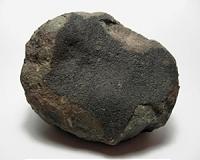 Cold Asteroids May Have A Soft Heart
Boston MA (SPX) Apr 15, 2011 A new analysis of one of the most well-known meteorites on Earth provides strong evidence that the prevailing view of many asteroids is wrong. Rather than randomly mixed blobs of rock and dust stuck together, it appears that the asteroid that was the source of the Allende meteorite was large enough to have had a molten core, even though its surface remained cold and solid. The new view also sugg ... read more |
|
|
| The content herein, unless otherwise known to be public domain, are Copyright 1995-2010 - SpaceDaily. AFP and UPI Wire Stories are copyright Agence France-Presse and United Press International. ESA Portal Reports are copyright European Space Agency. All NASA sourced material is public domain. Additional copyrights may apply in whole or part to other bona fide parties. Advertising does not imply endorsement,agreement or approval of any opinions, statements or information provided by SpaceDaily on any Web page published or hosted by SpaceDaily. Privacy Statement |


 del.icio.us
 Digg
Digg Reddit
 YahooMyWeb
 Google
 Facebook


