|
 |
 |
 |
 |
 |
 |
 |
 |
 |

| . |  |
. |
Fire Scout Scores Its Own Century On 100th Anniversary Of Manned Flight
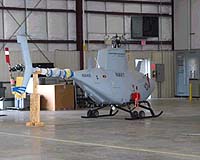
San Diego - Jan 07, 2004 On Dec. 17, the 100th anniversary of manned flight, the U.S. Navy's RQ-8A Fire Scout vertical takeoff and landing tactical unmanned aerial vehicle (VTUAV) system made its own history by completing its 100th consecutive successful flight. This milestone flight took place at Webster Outlying Field (OLF) near Naval Air Station Patuxent River, Md., where Fire Scout flew a flawless mission in preparation for continuing flight operations onboard the USS Denver (LPD-9). The flight caps 18 months of successful Fire Scout system development, testing and flight demonstrations during which the UAV system has accumulated approximately 75 flight hours. "The Wright brothers were disciplined engineers who applied all of their experience, knowledge, test results and tools to the task at hand," said Tom Soard, Northrop Grumman's Fire Scout program manager. "They left very little to chance, which contributed greatly to their success. The Northrop Grumman, NAVAIR/PMA-263 and Fire Scout industry team has done nothing less in the design, development and test of the Fire Scout System."
Significant events in Fire Scout's future include production of eight RQ-8B air vehicles; a performance enhancement program to develop and flight test a four-bladed main rotor system with improved airfoil blades; and a weapons program to provide Fire Scout with a precision strike capability. Initial engineering/flight test results on the new rotor system indicate that it will triple Fire Scout's payload capacity, double its on-station time at 110 nm (200 pound payload), double its payload volume and enhance system supportability. Fit checks and engineering for the weapons program have been completed for the installation of two 4-pack 2.75" rocket launchers that will carry Advanced Precision Kill Weapon System laser-guided rockets. Live firings will take place in early 2004 with unguided rockets followed by a guided version when it is available. Other weapons initiatives next year include weapons testing with Viper Strike, a laser-guided precision munition. The Fire Scout system is in development and low-rate initial production by Northrop Grumman. It will be a force multiplier for Navy forces at sea, and U.S. Army and Marine Corps forces ashore. The air vehicle can operate up to a service ceiling of 20,000 feet and out to 150 nautical miles of its ground control station while providing video imagery. The system can also support intelligence, surveillance, reconnaissance, targeting and precision strike missions. Related Links Northrop Grumman Integrated Systems SpaceDaily Search SpaceDaily Subscribe To SpaceDaily Express  Both Civil and Military Needs Driving European UAV Market
 San Jose - Jan 07, 2004
Recent military developments and the United States' inclination to use unmanned aerial vehicles (UAVs) is expanding the global market for these systems and accelerating the development of such specialised weapons in Europe, reveal latest findings by Frost & Sullivan. |
|
|

| The content herein, unless otherwise known to be public domain, are Copyright 1995-2006 - SpaceDaily.AFP and UPI Wire Stories are copyright Agence France-Presse and United Press International. ESA PortalReports are copyright European Space Agency. All NASA sourced material is public domain. Additionalcopyrights may apply in whole or part to other bona fide parties. Advertising does not imply endorsement,agreement or approval of any opinions, statements or information provided by SpaceDaily on any Web page published or hosted by SpaceDaily. Privacy Statement |