|
 |
 |
 |
 |
 |
 |
 |
 |
 |

| . |  |
. |
Pakistani Economy Enjoying Boom Times
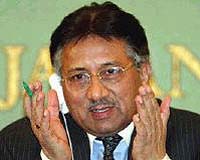
UPI Editor Emeritus Washington (UPI) Jun 06, 2006 War is not often seen as a source of economic growth, but Pakistan seems likely to emerge as one of the main beneficiaries of the Bush administration's War on Terror. As a front-line state and major base for the U.S.-led campaign in Afghanistan, Pakistan has enjoyed U.S. financial support that has paved the way for new private investment and is turning the country's period of military rule into an economic success story. The publication Monday of the Pakistan government's budget demonstrates this dramatic change in the country's financial fortunes, with surging growth and new investment plans that suggest the world's second most populous Islamic nation is poised to join China and India as one of Asia's new "tiger" economies. The Persian Gulf sheikhdom of Dubai is to invest an initial $10 billion in Pakistan's boom, mainly in property, port and transport development, a sum that may triple to $30 billion if current negotiations succeed. The World Bank, now run by former U.S. Deputy Defense Secretary Paul Wolfowitz who urged heavy U.S. financial support of Pakistan when the country was being wooed after the Sept. 11 attacks as a key partner in the war on terror, is now doubling its own investment loans to $6.5 billion. The government is also to increase its own development budget by 50 percent. Salman Shah, economic adviser to Pakistan's prime minister, announced in a press conference Sunday that the country's gross domestic product has grown at an annual rate of 6.6 percent in the latest fiscal year. "This year also the economy has shown a solid growth in spite of major setbacks during the year," Shah said, citing the massive earthquake that killed some 70,000 people last October and the dizzying climb in oil and commodity prices. Pakistan's growth rate has averaged an annual 7 percent over the past four years, helping lift almost 20 million of Pakistan's 150 million people out of poverty. The proportion of Pakistanis officially calculated as living below the population has fallen from over a third to less than a quarter in the past five years, Shah said. Pakistan's take-off began with the War on Terror, starting with the war to topple the Taliban regime in Afghanistan in 2001. That triggered a big U.S. aid program, starting with $91 million in the first year and rising steadily to $706 million in 2005. "The U.S. forgave all bilateral debts to Pakistan, helped reschedule debts involving multinational lenders, provided billions in economic and military assistance, and encouraged international banks to provide even larger amounts of aid. As a result, Pakistan's foreign debt declined from $47.8 billion to $30.3 billion (today's estimate). Foreign exchange reserves, boosted largely by the transfer of large sums of money from expatriate Pakistanis, rose to $12 billion," notes Dr Ahmad Faruqui, research director at the American Institute of International Studies U.S. and international funds were joined by private investment from the Arab world and the Gulf states as the military government of President Gen. Pervez Musharraf launched a program of economic reform and privatization. Pakistan Telecom was privatized last year, with the bulk of the shares being bought by companies based in the United Arab Emirates. Already closely linked to the oil-rich Gulf economies through some 3 million Pakistani guest workers, Pakistan is now benefiting from new infrastructure investment. Dubai Ports World is bidding for the management contract to run the new Chinese-built port of Gwadar, near Pakistan's frontier with Iran on the Indian Ocean, and other Gulf companies are investing in the new road and rail links from Gwadar to China and Central Asia. President Musharraf is now seeking to emulate India's success in the high-tech and IT sectors, telling the annual OPEN Silicon Valley conference Saturday that "a network of infrastructure is in place to serve as trade and energy corridor for the landlocked Central Asia, South Asia, the Gulf region and China." "We have put in place an elaborate IT infrastructure; connected cities and towns to the Internet; and three submarine cables are to further enrich the IT scenario," Musharraf said. "On top of it, we have talented English-speaking graduates, which are an asset for the country and international investors." "Pakistan today is in an altogether different league economically," Musharraf told the conference by video. "It has been put firmly on path of high economic growth with its GDP having more than doubled to $135 billion and all macro-economic indicators including exports, revenue collection, foreign investment, foreign exchange reserves staying positive." Pakistan's future prospects are far from guaranteed. Political instability, violent spillovers from the Taliban insurgency in Afghanistan, a new surge in the oil price or new tensions with India could all jeopardize the country's future growth. But once again, a pattern emerges of a major U.S. strategic initiative bringing financial aid and investment and transforming regional economies. It happened in the Cold War, when America's Marshall Plan revived the war-battered economies of Western Europe. It happened in Japan, when that country became the industrial base for the Korean War in the 1950s and then the U.S. strategic base in Asia. It happened again in the Vietnam War, when U.S. aid and investment helped Thailand, Malaysia and Singapore into their economic takeoff, and led to the formation of ASEAN, the Association of South-East Asian Nations that has become a regional powerhouse. And now the same seems to be happening in Pakistan. The one exception to this rule of U.S. strategic involvement leading to a surge in growth is Iraq, where the instability of the insurgency has been a disincentive for outside investors. But the part played by the Iraq war in suppressing Iraq's oil production has led to higher prices, and the massive inflows to the oil-rich Persian Gulf countries that are now pumping some of this money into Pakistan.
Source: United Press International Related Links -  NATO strides confidently into unruly southern Afghanistan
 Brussels (AFP) Jun 4, 2006
 Three years into its mission in Afghanistan, NATO is moving confidently into the unruly south but as violence escalates concern is mounting about when the government will be able to take control. |
|
|

| The content herein, unless otherwise known to be public domain, are Copyright 1995-2006 - SpaceDaily.AFP and UPI Wire Stories are copyright Agence France-Presse and United Press International. ESA PortalReports are copyright European Space Agency. All NASA sourced material is public domain. Additionalcopyrights may apply in whole or part to other bona fide parties. Advertising does not imply endorsement,agreement or approval of any opinions, statements or information provided by SpaceDaily on any Web page published or hosted by SpaceDaily. Privacy Statement |