
 |
 |
 |
 |
 |
 |
 |
 |
 |
 |

| . |  |
. |

Haleakala HI (SPX) Sep 28, 2010 The University of Hawaii's Pan-STARRS PS1 telescope on Haleakala has discovered an asteroid that will come within 4 million miles of Earth in mid-October. The object is about 150 feet in diameter and was discovered in images acquired on September 16, when it was about 20 million miles away. It is the first "potentially hazardous object" (PHO) to be discovered by the Pan-STARRS survey and has been given the designation "2010 ST3." "Although this particular object won't hit Earth in the immediate future, its discovery shows that Pan-STARRS is now the most sensitive system dedicated to discovering potentially dangerous asteroids," said Dr. Robert Jedicke, a University of Hawaii member of the PS1 Scientific Consortium (PS1SC), who is working on the asteroid data from the telescope. "This object was discovered when it was too far away to be detected by other asteroid surveys," Jedicke noted. Most of the largest PHOs have already been catalogued, but scientists suspect that there are many more under a mile across that have not yet been discovered. These could cause devastation on a regional scale if they ever hit our planet. Such impacts are estimated to occur once every few thousand years. Objects the size of 2010 ST3 usually break up in Earth's atmosphere, but the resulting blast wave on the surface can still devastate an area covering hundreds of square miles. "There is a very slight possibility that ST3 will hit Earth in 2098, so it is definitely worth watching," Jedicke said. Dr. Timothy Spahr, director of the Minor Planet Center (MPC), said, "I congratulate the Pan-STARRS project on this discovery. It is proof that the PS1 telescope, with its Gigapixel Camera and its sophisticated computerized system for detecting moving objects, is capable of finding potentially dangerous objects that no one else has found." The MPC, located in Cambridge, Mass., was established by the International Astronomical Union in 1947 to collect and disseminate positional measurements for asteroids and comets, to confirm their discoveries, and to give them preliminary designations. Pan-STARRS expects to discover tens of thousands of new asteroids every year with sufficient precision to accurately calculate their orbits around the Sun. Any sizable object that looks like it may come close to Earth within the next 50 years or so will be labeled "potentially hazardous" and carefully monitored. NASA experts believe that, given several years warning, it should be possible to organize a space mission to deflect any asteroid that is discovered to be on a collision course with Earth. Pan-STARRS has broader goals as well. PS1 and its bigger brother, PS4, which will be operational later in this decade, are expected to discover a million or more asteroids in total, as well as more distant targets such as variable stars, supernovas, and mysterious bursts from galaxies across more than half the universe.
Share This Article With Planet Earth
Related Links University of Hawaii PS1 Science Consortium Asteroid and Comet Mission News, Science and Technology

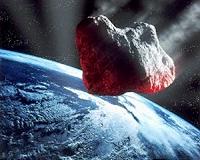 Avoiding An Asteroid Collision
Tel Aviv, Israel (SPX) Sep 14, 2010 Though it was once believed that all asteroids are giant pieces of solid rock, later hypotheses have it that some are actually a collection of small gravel-sized rocks, held together by gravity. If one of these "rubble piles" spins fast enough, it's speculated that pieces could separate from it through centrifugal force and form a second collection - in effect, a second asteroid. Now resea ... read more |
|
|
| The content herein, unless otherwise known to be public domain, are Copyright 1995-2010 - SpaceDaily. AFP and UPI Wire Stories are copyright Agence France-Presse and United Press International. ESA Portal Reports are copyright European Space Agency. All NASA sourced material is public domain. Additional copyrights may apply in whole or part to other bona fide parties. Advertising does not imply endorsement,agreement or approval of any opinions, statements or information provided by SpaceDaily on any Web page published or hosted by SpaceDaily. Privacy Statement |


 del.icio.us
 Digg
Digg Reddit
 YahooMyWeb
 Google
 Facebook


