
 |
 |
 |
 |
 |
 |
 |
 |
 |
 |

| . |  |
. |
Raytheon Standard Missile-2 Intercept Shows Near-Term, Sea-Based Terminal Capability
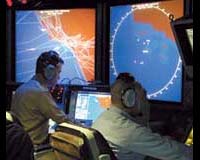
Kauai, HI (SPX) Jun 06, 2008 Two Raytheon built Standard Missile-2 Block IV missiles successfully intercepted and destroyed a short-range ballistic missile target above the Pacific Ocean June 5. The successful engagement demonstrated a near- term, sea-based capability for stopping threat ballistic missiles in their terminal or final phase of flight. The short-range ballistic missile target was launched from the Mobile Launch Platform operating off the coast of Kauai on the Pacific Missile Range Facility while the crew of the guided missile cruiser USS Lake Erie (CG-70) fired the modified SM-2 Block IV surface-to-air missiles. "This intercept is a major step toward deploying a viable sea-based capability to stop threat ballistic missiles in the final moments before they strike," said Frank Wyatt, Raytheon Missile Systems vice president of Naval Weapon Systems. "SM-2 Block IV can destroy incoming missiles through either direct impact or by exploding close to the target." This was the second test of a modified SM-2 Block IV and the first to use an operational version of the Aegis Ballistic Missile Defense combat system that includes the terminal BMD mission capability.
Community Email This Article Comment On This Article Share This Article With Planet Earth
Related Links Raytheon Learn about missile defense at SpaceWar.com Learn about nuclear weapons doctrine and defense at SpaceWar.com All about missiles at SpaceWar.com Learn about the Superpowers of the 21st Century at SpaceWar.com
 BMD Focus: Poland blocks base -- Part 1
 Washington (UPI) Jun 2, 2008
 It is starting to look as though Polish Prime Minister Donald Tusk may be able to run out the clock to avoid letting the United States build an ABM base to protect U.S. East Coast cities against an Iranian nuclear-armed ICBM attack. Next: Revealing Tusk's game plan |
|
|

| The content herein, unless otherwise known to be public domain, are Copyright 1995-2007 - SpaceDaily.AFP and UPI Wire Stories are copyright Agence France-Presse and United Press International. ESA Portal Reports are copyright European Space Agency. All NASA sourced material is public domain. Additional copyrights may apply in whole or part to other bona fide parties. Advertising does not imply endorsement,agreement or approval of any opinions, statements or information provided by SpaceDaily on any Web page published or hosted by SpaceDaily. Privacy Statement |
 del.icio.us
 Digg
Digg Reddit
 YahooMyWeb
 Google
 Facebook