|
 |
 |
 |
 |
 |
 |
 |
 |
 |

| . |  |
. |
Scientists Develop Promising New Procedure To Differentiate Human Embryonic Stem Cells
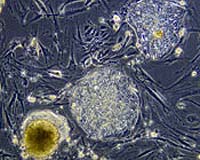
Houston TC (SPX) Feb 28, 2007 Molecular scientists at the Brown Foundation Institute of Molecular Medicine for the Prevention of Human Diseases (IMM) - which is part of the University of Texas Health Science Center at Houston - have developed a new procedure for the differentiation of human embryonic stem cells, with which they have created the first transplantable source of lung epithelial cells. The process, created in the laboratory of Rick A. Wetsel, Ph.D., a professor of molecular medicine at the IMM, is described in this week's edition of the Proceedings of the National Academy of Sciences (PNAS). Research scientist Dachun Wang, M.D., is lead author of the article, "A pure population of lung alveolar epithelial type II cells derived from human embryonic stem cells." "We have developed a reliable molecular procedure which facilitates, via genetic selection, the differentiation of human embryonic stem cells into an essentially pure population of lung epithelial cells," said Wetsel, noting the procedure also can be used to create other types of highly-specialized cells. Scientists at the IMM used the in vitro method to create lung epithelial cells known as alveolar epithelial type II. The cells were derived from a human embryonic stem cell line approved by the National Institutes of Health (NIH). The method involves the use of protein markers under the control of cell-specific promoters to convert undifferentiated human embryonic stem cells into highly-specialized cells. The human embryonic stem cells were cultured on specially coated dishes and transfected with a lung epithelial gene regulator of a drug selection gene. "It is a general technology for developing select cells from human embryonic stem cells," said C. Thomas Caskey, M.D., the IMM's chief operating officer, director and CEO-elect. "The technology has allowed us to develop a platform that could potentially be useful in the development of spinal cord cells, heart cells, nerve cells and others." James T. Willerson, M.D., president of the UT Health Science Center at Houston, said " I believe this is an important development by the Wetsel laboratory at the IMM. I look forward to seeing its transitional impact." Alveolar epithelial type II cells are called "the stem cells of the lungs" because of their versatility and many important functions. They produce proteins including surfactant that inflates lungs. They also make other cells lining the inner lung. "They regulate lung fluids and oxygen levels," Wetsel said. The cells are part of the tiny air sacs lining the lower airways known as alveoli. Tissue thin, they transfer oxygen into the blood and remove carbon dioxide. If the walls of the hundreds of millions of alveolus in a pair of lungs could be spread out and placed side by side, they would cover the floor of a classroom. According to Wetsel, transplantable alveolar epithelial type II cells can be explored as treatments for pulmonary genetic diseases, acquired lung disease, as well as lung trauma caused by car accidents, gunshot wounds and sports injuries. "These are the cells that can potentially be used for regenerative lung repair," he said. Hereditary lung disorders most likely to benefit from transplantation of alveolar epithelial type II cells include respiratory distress syndrome of the newborn, alpha-1 related emphysema and cystic fibrosis, Wetsel believes. "All three of these diseases are caused by single gene defects and therefore have been logical candidates for gene therapy," Wetsel said. Respiratory distress syndrome of the newborn, a condition affecting premature infants less than 37 weeks of age, may be caused by a genetic mutation triggering a surfactant shortage. Likewise, alpha-1 related emphysema, a condition affecting 100,000 Americans, results from an inherited deficiency of alpha-1 antitrypsin. Further, cystic fibrosis is the second most common childhood onset inherited disorder in the United States. Transplantable alveolar epithelial type II cells may also one day be helpful in the treatment of other lung diseases including chronic obstructive pulmonary disease (COPD), the fourth leading cause of death in the United States, claiming the lives of 122,283 Americans in 2003, and asthma, Wetsel said. Still years away from their use in regenerative medicine, Wetsel said the next step involves research trials with mice. Other IMM investigators participating in the study included David L. Haviland, Ph.D., assistant professor in the Center for Immunology and Autoimmune Diseases, and Eva Zsigmond, Ph.D., assistant professor and associate director of the IMM's Laboratory for Developmental Biology. Funding for the study of the NIH-approved human embryonic stem cell line was provided by Houston philanthropists Clive and Nancy Runnells. Email This Article
Related Links  Cambridge MA (SPX) Feb 28, 2007
MIT researchers have developed a technique to encourage the survival and growth of adult stem cells, a step that could help realize the therapeutic potential of such cells. Adult stem cells, found in many tissues in the body, are precursor cells for specific cell types. For example, stem cells found in the bone marrow develop into blood cells, bone cells and other connective tissues, and neural stem cells develop into brain tissue. |
|
|

| The content herein, unless otherwise known to be public domain, are Copyright 1995-2006 - SpaceDaily.AFP and UPI Wire Stories are copyright Agence France-Presse and United Press International. ESA PortalReports are copyright European Space Agency. All NASA sourced material is public domain. Additionalcopyrights may apply in whole or part to other bona fide parties. Advertising does not imply endorsement,agreement or approval of any opinions, statements or information provided by SpaceDaily on any Web page published or hosted by SpaceDaily. Privacy Statement |