|
 |
 |
 |
 |
 |
 |
 |
 |
 |

| . |  |
. |
Sino-EU Aerospace Co-Op To Break Monopoly
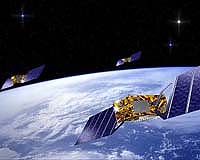
Beijing (XNA) Nov 10, 2004 China and the EU have reiterated their commitment on cooperating to develop the Galileo system, determined, they say, not to let the United States have a monopoly on the technology and service. Nobody can dominate space. The Galileo Program will be completed by around 2008. Sino-EU cooperation on aerospace technology, for the benefit of all societies, is irreversible. This is the consensus reached between insiders from China and the EU. It is widely agreed that breaking the monopoly on aerospace technology is the fundamental aim of the China-EU aerospace alliance. Insiders believe the Galileo system can be compatible with the global positioning system (GPS) developed by US. With an error less than a meter, Galileo can be used to secure safe flight take-offs or landings, or for running trains. Cooperation between China and the EU in aerospace also drew the world's attention to the International Air Show, that just concluded in Zhuhai, Guangdong Province, on November 7. "The Galileo satellite navigation system enjoys promising prospects in China's transportation and telecommunication sectors. China joins the system for civil purposes only," Fang Xiangming, Vice General Manager of China's Aerospace Science and Industry Corporation declared during the air show. He added that, as a new generation of satellite-based navigation systems, the Galileo constellation will offer a more reliable, more accurate and safer roadmap for users. Philippe Camus, CEO of European Aeronautic Defense and Space, said at Zhuhai air show, that Galileo's successful development would break the US monopoly, confirming too that its purpose was for civil use. Mr. Camus described his company's cooperation strategy with China as perfect, as evidenced by his company's successful commercial experience in China. He said he had come to regard China's aeronautic and aerospace industry as a "permanent partner". Mr. Camus, also Chairman of the French Aerospace Industry Association, assured China that all 25 EU members were involved in the Galileo Program, a result collectively determined by the EU. Mr. Camus vowed to push ahead with the Galileo Program, viewing China as a natural partner of the program. A Chinese spokesperson for the Ministry of Foreign Affairs recently made it very clear that Sino-EU cooperation on Galileo is absolutely for civil purposes only. Mr. Prodi, Chairman of the European Commission (EC), stressed at the launch of Galileo, that the program had a direct bearing on Europe's future, and should be regarded as a fight between monopolization and antimonopolization, as well as a diplomatic battle that involved political, economic, military and national interests. Boeing's market share is now affected by Galileo tearing down the global predominance of GPS. For customers, competition brings benefits. Boeing said that space belongs to the public, but the company is a major industrial partner of GPS. Insiders now see the Galileo Program as a symbol of global cooperation in aerospace development, pushed forward by China. A partnership has already recently been built between China, Brazil and Russia in aerospace technology for peaceful and civil purpose. The Fifth Conference of the Space Cooperation Sub-committee, under the committee of the regular meetings between Chinese and Russian premiers, was held in August this year, to discuss areas of coordination, progress with cooperation for the next two years, and the establishment of offices. "The world is in a time, full of competition. And it calls for communication and cooperation, for a win-win result," said Zhang Yunchuan, director of Commission of Science, Technology and Industry for National Defense during the Zhuhai air show. "China will adhere to its basic policy of opening-up, and to reform. It will encourage and support enterprises and institutions to play an active role in international cooperation and communication, on flights and aerospace, within the framework of the country's foreign policy and international protocols", Zhang noted. Source: Xinhua News Agency Related Links SpaceDaily Search SpaceDaily Subscribe To SpaceDaily Express  Navman Redefines The GPS Drive-Away Experience
 Foothill Ranch CA (SPX) Nov 10, 2004
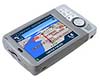
Navman announced Tuesday a new line of Drive- Away Memory Cards to complement devices running its latest SmartST Version 3 software. Available with Eastern, Central or Western U.S. map data pre-loaded, the plug-in memory cards are quick, convenient and easy to use. |
|
|

| The content herein, unless otherwise known to be public domain, are Copyright 1995-2006 - SpaceDaily.AFP and UPI Wire Stories are copyright Agence France-Presse and United Press International. ESA PortalReports are copyright European Space Agency. All NASA sourced material is public domain. Additionalcopyrights may apply in whole or part to other bona fide parties. Advertising does not imply endorsement,agreement or approval of any opinions, statements or information provided by SpaceDaily on any Web page published or hosted by SpaceDaily. Privacy Statement |