
 |
 |
 |
 |
 |
 |
 |
 |
 |
 |

| . |  |
. |
Super Atoms Turn The Periodic Table Upside Down
Delft, Netherlands (SPX) Jul 07, 2008 Researchers at Delft University of Technology (TU Delft) in The Netherlands have developed a technique for generating atom clusters made from silver and other metals. Surprisingly enough, these so-called super atoms (clusters of 13 silver atoms, for example) behave in the same way as individual atoms and have opened up a whole new branch of chemistry. If a silver thread is heated to around 900 degrees Celsius, it will generate vapour made up of silver atoms. The floating atoms stick to each other in groups. Small lumps of silver comprising for example 9, 13 and 55 atoms appear to be energetically stable and are therefore present in the silver mist more frequently that one might assume. Prof. Andreas Schmidt-Ott and Dr. Christian Peineke of TU Delft managed to collect these super atoms and make them suitable for more detailed chemical experiments. The underlying mechanism governing this stability in super atoms was described in Science by scientists from Virginia Commonwealth University in 2005. They had discovered metal super atoms, but from aluminium. Their aluminium clusters of 13, 23 and 37 atoms reacted in the same way as individual atoms because they comprised electrons that revolved around the atom cluster as a whole. These so-called outer layers were strikingly similar to the outer layers of elements from the periodic table. The super atoms gave the periodic table a third dimension as it were, according to Schmidt-Ott: 'The chemical properties of the super atoms that have been identified up until now are very similar to those of elements in the periodic table, because their outer layers are much the same. However, we may yet discover super atoms with a different outer layer, giving us another set of completely new properties.' Schmidt-Ott hopes to find atom clusters with new unique magnetic, optical or electrical properties, which would also be stable enough to create crystals or other solid forms. Potential applications include catalysts in fuel and extra-conductive crystals. So although super atoms are nothing new, thanks to TU Delft the particles can now be collected in a very pure form and selected according to size, thereby making them suitable for chemical experiments. Community Email This Article Comment On This Article Share This Article With Planet Earth
Related Links Delft University of Technology Understanding Time and Space
 Some Fundamental Interactions Of Matter Turn Out To Be Fundamentally Different Than Thought
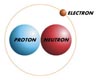 Stanford CA (SPX) Jul 07, 2008
Collisions have consequences. Everyone knows that. Whether it's between trains, planes, automobiles or atoms, there are always repercussions. But while macroscale collisions may have the most obvious effects-mangled steel, bruised flesh-sometimes it is the tiniest collisions that have the most resounding repercussions. |
|
|

| The content herein, unless otherwise known to be public domain, are Copyright 1995-2007 - SpaceDaily.AFP and UPI Wire Stories are copyright Agence France-Presse and United Press International. ESA Portal Reports are copyright European Space Agency. All NASA sourced material is public domain. Additional copyrights may apply in whole or part to other bona fide parties. Advertising does not imply endorsement,agreement or approval of any opinions, statements or information provided by SpaceDaily on any Web page published or hosted by SpaceDaily. Privacy Statement |
 del.icio.us
 Digg
Digg Reddit
 YahooMyWeb
 Google
 Facebook