|
 |
 |
 |
 |
 |
 |
 |
 |
 |

| . |  |
. |
Robots Incorporated
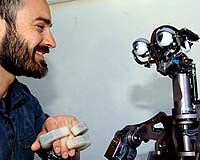
New York, NY (SPX) Jul 20, 2007 Software pundits and tech analysts can be forgiven for overlooking Microsoft's new robotics group. Compared with the company's billion-dollar businesses--Windows, MSN, Xbox, and more--robotics is nonexistent. Microsoft is giving its robotics software away for free for noncommercial use, and the company is charging only a small license fee to commercial users. Indeed, Microsoft is hardly betting the farm on the group, devoting only 11 of its 76,000 employees to creating Robotics Studio 1.0. Yet this team of elite software engineers, housed in a small set of open offices known as the "Broom Closet," handpicked by a 26-year company veteran who has the ear of Bill Gates, and tucked into a corner of the company's research budget, has put together a set of tools that may bring robot manufacturers under one roof, the way Windows did for most PC makers. Future versions may someday find their way into more machines than Windows did--and be just as lucrative. Microsoft's software, in other words, will do what MS-DOS and then Windows did: nurture a robotics ecosystem in which new devices spawn new programs for more and more end users who in turn inspire yet more innovation--and repeat the same virtuous cycle that brought explosive growth to the PC cottage industry 25 years ago. Whether that cycle will develop remains to be seen, but there are signs it may have begun. And just in time. Today's $11 billion robot sector--mostly industrial robots--will double in size by 2010, according to estimates by the Japan Robot Association, and it should exceed $66 billion by 2025. This article in the August issue of IEEE Spectrum profiles the software and the eclectic group of 11 programmers, cherry-picked from around the country and around the globe (no three of them come from the same country) who are building what may be the next big thing to come out of Redmond. Community Email This Article Comment On This Article Related Links IEEE Spectrum Magazine All about the robots on Earth and beyond!
 Purdue Center Uses Laser And Machining To Create Precision Parts
 West Lafayette, IN (SPX) Jul 20, 2007
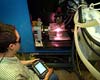
Researchers at Purdue University are perfecting a technique for manufacturing parts that have complex shapes and precision internal features by depositing layers of powdered materials, melting the powder with a laser and then immediately machining each layer. The new method can be used for creating parts made of advanced materials such as ceramics, which are difficult to manufacture and cannot be machined without first using a laser to soften the material, said Yung Shin, a professor of mechanical engineering and director of Purdue's Center for Laser-Based Manufacturing. |
|
|

| The content herein, unless otherwise known to be public domain, are Copyright 1995-2006 - SpaceDaily.AFP and UPI Wire Stories are copyright Agence France-Presse and United Press International. ESA PortalReports are copyright European Space Agency. All NASA sourced material is public domain. Additionalcopyrights may apply in whole or part to other bona fide parties. Advertising does not imply endorsement,agreement or approval of any opinions, statements or information provided by SpaceDaily on any Web page published or hosted by SpaceDaily. Privacy Statement |