|
 |
 |
 |
 |
 |
 |
 |
 |
 |

| . |  |
. |
Treat HIV Babies Early
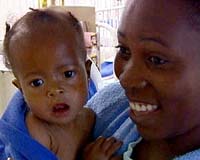
UPI Correspondent Sydney (UPI) July 25, 2007 Doctors said Wednesday that babies infected at birth with the virus that causes AIDS should be treated with antiretrovirals as soon as the infection is determined -- even within the first three weeks of life. Researchers stopped prematurely a study that attempted to determine if deferring treatment until signs of disease caused by HIV occurred might be better for the infants by preserving treatment options until they were older. But 20 of the 125 children in the deferred arm died compared with 10 of 252 children in the immediate treatment group after 32 weeks of the study, forcing the trial oversight committee to terminate the project. "Starting antiretroviral therapy early in children who are born with HIV infection reduces mortality by 75 percent," said Amy Violari, director of clinical pediatric trials in Soweto, South Africa, in a late-breaker oral presentation at the 4th International AIDS Society Conference on HIV Pathogenesis, Treatment and Prevention in Sydney. "These results support the need for enhanced prophylactic mother-to-child-transmission programs, early infant diagnosis and effective transition to care." In the study that could change worldwide treatment guidelines, doctors said that by starting treatment early, 96 percent of infants survived the first year of life, but for children for whom treatment was deferred until they showed signs of illness, the one-year survival was 84 percent. In the Children with HIV Early Antiretroviral Therapy trial, doctors recruited 377 children for a three-arm trial. One group of 125 children would not receive treatment until they suffered signs of disease. In the other two study arms, 252 children in the CHER trial were begun on antiretroviral therapy immediately. Most of the children were treated with nevirapine monotherapy. One group was scheduled to have treatment interrupted after the first birthday; the second group would be treated until the second birthday, and then drugs would be withdrawn until they become symptomatic. The children will be followed for a minimum of 3.5 years. "Children with HIV infection frequently show rapid disease progression within the first year of life due to their developing immune systems and susceptibility to other serious infections," said Elias Zerhouni, director of the U.S. National Institutes of Health. The NIH, though the National Institute of Allergy and Infectious Diseases, sponsored the trial. In the United States, guidelines suggest treating infants at the time that they are diagnosed with HIV infection. Even though the trial doctors suggest treating children as soon as possible, the realities of medical treatment in resource-limited areas -- the rural and impoverished areas of the world where HIV/AIDS is prevalent -- may preclude implementation of that advice. "This is very important data," said Annette Sohn, an assistant professor of pediatric infectious diseases at the University of California-San Francisco who is working on pediatric HIV research in Ho Chi Minh City, Vietnam. "It shows that by withholding treatment from these infants it may be too late to reduce mortality," she told United Press International. However, Sohn said that in resource-limited settings, identification of children with HIV often cannot be accomplished until the child actually shows signs of disease due to lack of health infrastructure. "We are dealing with multiple layers of limitation," she said. "The most important limitations are the lack of healthcare personnel; the inability of women in these areas to receive ante-natal care, and the lack of laboratory capacity to perform some of these tests." Sohn also noted that because treatment options are also limited in these areas, the early treatment that gets children to the first or second birthdays may result in creating a resistant virus that will give these children no treatment options as they age. She said the CHER trial goal to interrupt treatment after a year or two when the child's immune system may be heartier is an attempt to preserve those drugs until later in life. HIV infection, which leads to AIDS without treatment, is presently incurable, although access to a wide variety of drugs in wealthier nations makes long-term effective treatment possible. Sohn told UPI the study may change guidelines on treating infants, but each area of the world will develop its own guidelines based on available resources.
Source: United Press International Community Email This Article Comment On This Article Related Links Epidemics on Earth - Bird Flu, HIV/AIDS, Ebola
 Reviving The HIV Vaccine Hunt
 Washington (UPI) Jul 24, 2007
A renewed emphasis on the critical but elusive HIV/AIDS vaccine is needed, along with more funding, to mitigate the disease's rampant spread in developing countries, health experts said Monday. "Any serious discussion about AIDS must include the Holy Grail -- the potential for a vaccine," U.S. Rep. Tom Lantos, D-Calif., said at a panel discussion in Washington hosted by the online journal Health Affairs, a peer-reviewed, health policy journal published by the non-profit organization Project HOPE. |
|
|

| The content herein, unless otherwise known to be public domain, are Copyright 1995-2006 - SpaceDaily.AFP and UPI Wire Stories are copyright Agence France-Presse and United Press International. ESA PortalReports are copyright European Space Agency. All NASA sourced material is public domain. Additionalcopyrights may apply in whole or part to other bona fide parties. Advertising does not imply endorsement,agreement or approval of any opinions, statements or information provided by SpaceDaily on any Web page published or hosted by SpaceDaily. Privacy Statement |