
Military Space News
IRON AND ICE
Asteroid metals harden under extreme particle blasts
illustration only

Asteroid metals harden under extreme particle blasts

by Sophie Jenkins
London, UK (SPX) Jan 09, 2026
Physicists at the University of Oxford have contributed to a study showing that iron-rich asteroids can withstand much higher energy inputs than expected without breaking apart, a result that affects assessments of planetary defence strategies against hazardous objects. The work, published in Nature Communications, indicates that under rapid, intense heating these bodies can even become tougher as internal stresses develop.

Recent missions such as NASA's Double Asteroid Redirection Test (DART), which changed the orbit of the asteroid Dimorphos in 2022, demonstrate that redirecting an asteroid is technically possible. To make such interventions reliable, however, researchers need to know how asteroid materials behave under the fast, extreme loading conditions produced by impacts or radiation, rather than the slow, destructive tests commonly used in laboratories.

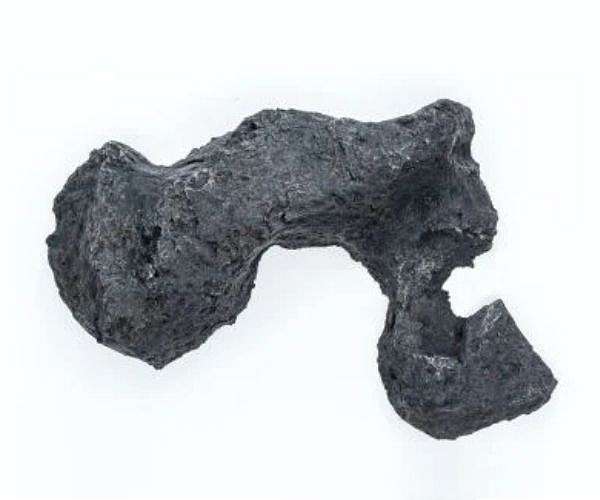
In the new experiments, an international team including Oxford physicists used CERN's High Radiation to Materials (HiRadMat) facility to irradiate a sample of the Campo del Cielo iron meteorite, treated as a stand-in for a metal-rich asteroid, with 440 GeV proton beams. Using laser Doppler vibrometry, which employs lasers to measure tiny vibrations at the surface, they recorded the evolution of stress, strain, and deformation in real time as the energy pulse moved through the sample. Because the procedure was non-destructive, the same meteorite piece could be monitored continuously as it responded to repeated extreme loading.

The results show that the meteorite absorbed substantially more energy than conventional models predict without fragmenting and that its mechanical response changed as stress accumulated. The material acted like a complex composite whose heterogeneous internal structure redistributed and sometimes amplified stresses in ways that simple descriptions do not capture. A key observation was strain-rate dependent damping: the faster the meteorite was stressed, the more effectively it dissipated energy.

These findings address a longstanding gap between strengths measured for meteorites in standard laboratory tests and the lower strengths inferred from how meteors disintegrate in Earth's atmosphere. The new data suggest that internal stress redistribution across the irregular microstructure of meteorites can explain much of this discrepancy, improving understanding of how real asteroid fragments behave under sudden energy inputs.

For planetary defence, the study indicates that it may be practical to drive energy deep inside an asteroid while keeping it intact rather than simply blowing it apart. This could support deflection methods that impart a controlled push to a target body while avoiding the creation of a dispersing cloud of debris that might still pose a threat. The project was developed in partnership with the Outer Solar System Company (OuSoCo), which is examining the feasibility of in-space high-energy proton beam systems.

Research Report:Dynamical development of strength and stability of asteroid material under 440 GeV proton beam irradiation

Related Links
University of Oxford
Asteroid and Comet Mission News, Science and Technology

Subscribe Free To Our Daily Newsletters
Tweet

RELATED CONTENT
The following news reports may link to other Space Media Network websites.
IRON AND ICE
NSF-DOE Vera C. Rubin Observatory spots record-breaking asteroid in pre-survey observations
Washington DC (SPX) Jan 08, 2026
As part of the NSF-DOE Vera C. Rubin Observatory First Look event in June 2025, Rubin announced that it had observed thousands of asteroids cruising about our Solar System, about 1900 of which have been confirmed as never-before-seen. Within the flurry, a team of astronomers has discovered 19 super- and ultra-fast-rotating asteroids. One of these is the fastest-spinning asteroid larger than 500 meters (0.3 miles) ever found. The study was led by Sarah Greenstreet, NSF NOIRLab assistant astronomer ... read more

IRON AND ICE
Netanyahu says Israel won't let Iran restore ballistic missile programme

Germany puts ballistic missile defence shield into service

What is Taiwan's T-Dome?

Space Force operationally accepts SciTec Forge missile warning ground system

IRON AND ICE
Russia claims Oreshnik missile hit Ukrainian aviation plant

North Korea tests hypersonic missiles, says nuclear forces ready for war

North Korea's Kim touts new rocket launchers that could target South

North Korea's Kim orders factories to make more missiles in 2026

IRON AND ICE
India accuses Pakistan of cross-border drone incursions in Kashmir

Tethered UAV system demonstrates autonomous knotting for heavy load aerial transport

Sweden invests over $400 mn in military drones

Drones take thermal readings to track dolphin health

IRON AND ICE
W5 Technologies LEO payload extends MUOS coverage into polar and remote theaters

Eutelsat orders 340 new OneWeb LEO satellites from Airbus

Europe backs secure satellite communications with multibillion euro package

SpainSat NG programme completed as second secure communications satellite launches

IRON AND ICE
Cyviz awarded two classified NATO defense contracts for mission critical visualization systems

Japan govt approves record budget, including for defence

German defence giants battle over military spending ramp-up

NATO looking to be 'proactive' against Russian 'hybrid threats'; NATO to buy big from US to arm Ukraine

IRON AND ICE
Trump says will ban US defense companies issuing dividends, stock buybacks

Trump seeks 50% hike in defense budget to $1.5 trillion

Netanyahu says wants Israel to cope without US aid within decade

Malaysian ex-army chief detained in military procurement graft probe

IRON AND ICE
Trump says doubts 'NATO would be there for us' if needed

Leaders of Japan and South Korea meet as China flexes muscles

Timeline of Japan and China's spat

MPs concerned ahead of UK decision on mega Chinese embassy

IRON AND ICE
Bright emission from hidden quantum states demonstrated in nanotechnology breakthrough

Subscribe Free To Our Daily Newsletters


The content herein, unless otherwise known to be public domain, are Copyright 1995-2026 - Space Media Network. All websites are published in Australia and are solely subject to Australian law and governed by Fair Use principals for news reporting and research purposes. AFP, UPI and IANS news wire stories are copyright Agence France-Presse, United Press International and Indo-Asia News Service. ESA news reports are copyright European Space Agency. All NASA sourced material is public domain. Additional copyrights may apply in whole or part to other bona fide parties. All articles labeled "by Staff Writers" include reports supplied to Space Media Network by industry news wires, PR agencies, corporate press officers and the like. Such articles are individually curated and edited by Space Media Network staff on the basis of the report's information value to our industry and professional readership. Advertising does not imply endorsement, agreement or approval of any opinions, statements or information provided by Space Media Network on any Web page published or hosted by Space Media Network. General Data Protection Regulation (GDPR) Statement Our advertisers use various cookies and the like to deliver the best ad banner available at one time. All network advertising suppliers have GDPR policies (Legitimate Interest) that conform with EU regulations for data collection. By using our websites you consent to cookie based advertising. If you do not agree with this then you must stop using the websites from May 25, 2018. Privacy Statement. Additional information can be found here at About Us.