
Military Space News
MILITARY COMMUNICATIONS
Eutelsat orders 340 new OneWeb LEO satellites from Airbus
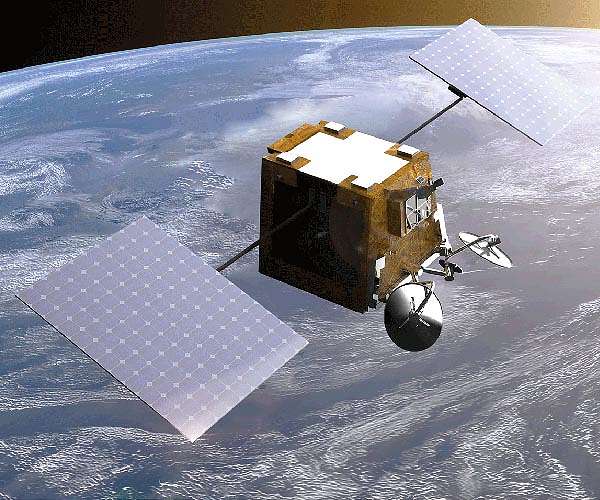
illustration only

Eutelsat orders 340 new OneWeb LEO satellites from Airbus

by Erica Marchand
Paris, France (SPX) Jan 13, 2026

Eutelsat has signed a new contract with Airbus Defence and Space for the manufacture of an additional 340 OneWeb low Earth orbit satellites, expanding its next generation constellation plan and securing long term service continuity for commercial and government customers. The new order follows a previous batch of 100 satellites announced in December 2024, bringing the total number of second generation OneWeb spacecraft on contract with Airbus to as many as 440 units.

The satellites will be produced on a newly installed production line at Airbus Defence and Space facilities in Toulouse, France, with initial deliveries scheduled to begin by the end of 2026. Establishing a dedicated line in Europe enables Eutelsat and Airbus to industrialize the build of the new constellation elements while maintaining tighter control over schedule, quality and supply chain resilience.

Eutelsat's OneWeb constellation currently operates more than 600 satellites in 12 synchronized orbital planes at an altitude of about 1,200 kilometers, providing global high speed, low latency connectivity. The incoming satellites will progressively replace the earliest spacecraft in the constellation as they reach end of operational life, ensuring uninterrupted services across fixed, mobile and government connectivity markets.

The new spacecraft incorporate upgraded technology, including advanced digital channelizers that significantly enhance onboard processing power and flexibility. These digital payloads will allow more efficient use of spectrum and dynamic allocation of capacity to match changing traffic patterns, improving overall network performance and resilience for users.

Airbus and Eutelsat have optimized the satellite architecture to maximize long term operational performance, focusing on reliability, maintainability and in orbit longevity. The design aims to sustain Eutelsat's LEO services well into the next decade while leaving room for incremental enhancements as components and software evolve.

Eutelsat plans to use the refreshed platform to explore new business opportunities, particularly through hosted payload capabilities that could support additional missions or services on board the satellites. Such hosted payloads could include specialized communications packages, space situational awareness sensors or other government related applications, leveraging the reach and revisit of the OneWeb orbital planes.

Fully oriented toward the professional business to business market, Eutelsat's OneWeb network is one of only two fully operational low Earth orbit broadband systems in service worldwide and the only one operated by a European based company. This position gives Eutelsat a strategic role in providing sovereign grade connectivity options for European and allied governments seeking diversified, secure satellite communications solutions.

The LEO system complements Eutelsat's fleet of 34 geostationary satellites, which together with the low Earth orbit constellation form an integrated GEO LEO architecture created when Eutelsat and OneWeb combined in 2023. The combined infrastructure supports four main verticals: video distribution, mobile connectivity, fixed connectivity and government services, using space and ground assets to deliver tailored solutions worldwide.

Eutelsat Chief Executive Officer Jean Francois Fallacher said the new Airbus order underpins the growth trajectory of the OneWeb business, which delivered about 80 percent topline expansion in 2025. He said the additional satellites will secure continuity for a growing base of customers and distribution partners who rely on the low latency LEO capacity for critical connectivity needs.

Alain Faure, Head of Space Systems at Airbus Defence and Space, said the contract reinforces Airbus's long standing relationship with Eutelsat, which spans more than three decades across multiple satellite programs. He described the deal as a strong endorsement of Airbus's design and manufacturing capabilities for large scale LEO constellations and confirmed the company's commitment to supporting the evolution of the OneWeb system.

Eutelsat positions the expanded LEO constellation as a key asset for meeting rising global demand for broadband and resilient communications in remote and underserved regions, over land, at sea and in the air. By combining GEO and LEO capacity, the operator aims to offer flexible, scalable services that can address commercial and government requirements, including defense, emergency response and critical infrastructure support.

The company emphasizes that its connectivity services are designed to be safe, resilient and environmentally responsible, with a commitment to helping bridge the digital divide. Eutelsat employs more than 1,600 staff in over 75 countries and is listed on both Euronext Paris and the London Stock Exchange under the ticker ETL, reflecting its broad international footprint and investor base.

Related Links
Eutelsat
Read the latest in Military Space Communications Technology at SpaceWar.com

Subscribe Free To Our Daily Newsletters
Tweet

RELATED CONTENT
The following news reports may link to other Space Media Network websites.
MILITARY COMMUNICATIONS
Europe backs secure satellite communications with multibillion euro package
Paris, France (SPX) Nov 28, 2025
European governments have backed a 2.1 billion euro funding package to expand secure satellite communications services, confirming support for space-based connectivity at the European Space Agency Council meeting at Ministerial Level in Bremen, Germany. The subscription will finance new and extended programmes intended to strengthen resilience, security and capacity in the satellite telecommunications sector for Europe and Canada. ESA will direct the funding through its connectivity and secure com ... read more

MILITARY COMMUNICATIONS
Netanyahu says Israel won't let Iran restore ballistic missile programme

Germany puts ballistic missile defence shield into service

What is Taiwan's T-Dome?

Space Force operationally accepts SciTec Forge missile warning ground system

MILITARY COMMUNICATIONS
North Korea tests hypersonic missiles, says nuclear forces ready for war

North Korea's Kim touts new rocket launchers that could target South

North Korea's Kim orders factories to make more missiles in 2026

Denmark starts work on rocket fuel facility for Ukraine

MILITARY COMMUNICATIONS
Tethered UAV system demonstrates autonomous knotting for heavy load aerial transport

RTX radar selected to support autonomous X 62A fighter testing

Spatiotemporal resilience model targets IoT unmanned fleets

Drones take thermal readings to track dolphin health

MILITARY COMMUNICATIONS
Europe backs secure satellite communications with multibillion euro package

SpainSat NG programme completed as second secure communications satellite launches

New Laboratory Showcases Advanced Satcom Capabilities for Australian Defence Force

European Response to Escalating Space Security Crisis

MILITARY COMMUNICATIONS
Cyviz awarded two classified NATO defense contracts for mission critical visualization systems

Japan govt approves record budget, including for defence

German defence giants battle over military spending ramp-up

NATO looking to be 'proactive' against Russian 'hybrid threats'; NATO to buy big from US to arm Ukraine

MILITARY COMMUNICATIONS
Trump says will ban US defense companies issuing dividends, stock buybacks

Trump seeks 50% hike in defense budget to $1.5 trillion

Netanyahu says wants Israel to cope without US aid within decade

Malaysian ex-army chief detained in military procurement graft probe

MILITARY COMMUNICATIONS
Trump says doubts 'NATO would be there for us' if needed

Timeline of Japan and China's spat

Could Trump's desire for Greenland blow up NATO?

Macron says allies agree 'robust' security guarantees for Ukraine; Germany could join multinational force

MILITARY COMMUNICATIONS
Bright emission from hidden quantum states demonstrated in nanotechnology breakthrough

Subscribe Free To Our Daily Newsletters


The content herein, unless otherwise known to be public domain, are Copyright 1995-2024 - Space Media Network. All websites are published in Australia and are solely subject to Australian law and governed by Fair Use principals for news reporting and research purposes. AFP, UPI and IANS news wire stories are copyright Agence France-Presse, United Press International and Indo-Asia News Service. ESA news reports are copyright European Space Agency. All NASA sourced material is public domain. Additional copyrights may apply in whole or part to other bona fide parties. All articles labeled "by Staff Writers" include reports supplied to Space Media Network by industry news wires, PR agencies, corporate press officers and the like. Such articles are individually curated and edited by Space Media Network staff on the basis of the report's information value to our industry and professional readership. Advertising does not imply endorsement, agreement or approval of any opinions, statements or information provided by Space Media Network on any Web page published or hosted by Space Media Network. General Data Protection Regulation (GDPR) Statement Our advertisers use various cookies and the like to deliver the best ad banner available at one time. All network advertising suppliers have GDPR policies (Legitimate Interest) that conform with EU regulations for data collection. By using our websites you consent to cookie based advertising. If you do not agree with this then you must stop using the websites from May 25, 2018. Privacy Statement. Additional information can be found here at About Us.